Security Stakeholders Urge Stronger Inter-agency Collaboration to Tackle Terrorism, Crime


Stakeholders in Nigeria’s security architecture have renewed the call for stronger institutional collaboration as a critical tool for counter-terrorism and crime control at a one-day inter-agency lecture and awards ceremony organised by Razornews in Lagos.
The conference, themed “Institutional Collaboration as a Tool for Counter-Terrorism and Crime,” was held at the event hall of Shoregate Hotel, GRA, Ikeja, on Tuesday, and attracted senior officers from the Nigeria Police Force, Nigerian Immigration Service, Nigeria Security and Civil Defence Corps (NSCDC), Nigerian Correctional Service, Nigerian Customs Service, National Drug Law Enforcement Agency (NDLEA), among other security and safety institutions.
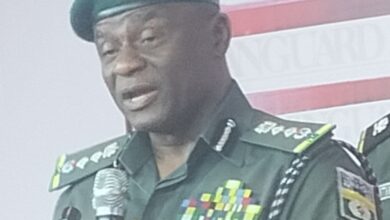
Delivering the keynote address, the Assistant Commandant of Corps (ACC) John Attah Onoja, Commander, Mining Marshal, stressed that no single agency could successfully combat Nigeria’s complex security challenges in isolation.
He noted that emerging security threats require coordinated intelligence sharing, joint operations and sustained partnerships across institutions to achieve lasting results.
One of the guest speakers, Dr. Bone Chinye Efoziem, the Managing Director of Strict Guard Security Services, underscored the increasing importance of public-private partnerships in internal security. He said private security outfits and host communities must complement government efforts through effective intelligence gathering and early warning systems.
At the end of deliberations, participants issued a communique capturing key resolutions and policy directions. The communique affirmed that Nigeria, as a social system, has institutions structurally established and entrusted with specific functions, particularly the Armed Forces, Police, Immigration, Customs, NSCDC and NDLEA.
It stressed the urgent need for inter-agency collaboration in tackling crimes such as terrorism, banditry, kidnapping, armed robbery and smuggling.
The communique stated:“Nigeria as a social system has institutions structurally established and entrusted with certain specific functions. Among such institutions are the security agencies of the state like the Armed Forces, Nigeria Police Force, Nigerian Immigration, Nigerian Customs Service, Nigeria Security & Civil Defence Corp, National Drug Law and Enforcement Agency.
“Criminality in Nigeria has no boundary; hence all security agencies should play inter-agency roles in combating all crimes like terrorism, banditry, kidnapping, armed robbery, smuggling etc.
“Inter-agency collaboration among the various security agencies is non-negotiable. Collaboration and partnership among state security agencies and non-state actors like community vigilante groups have become inevitable.”
The document further urged the promotion of patriotism and nationalism among both state and non-state security actors, stressing that insecurity knows no boundary and recognises no religion.
It noted:“Promotion of the culture of patriotism and nationalism among state security agencies and non-state actors is absolutely necessary.
“Since insecurity has no boundary and does not recognize religion, tribe, political or social class, the fight against it should be devoid of sectional bias or other mundane considerations. The national interest of Nigeria with respect to security should be placed over and above religion, tribe, political affiliation or social club interest.”
Participants also resolved that greater roles should be assigned to the nation’s traditional institution in the area of community policing, noting that traditional rulers must assist in identifying and reporting criminal elements within their domains.
The communique added: “More roles should be assigned to the nation’s traditional institution with respect to community policing. Since criminal elements often live in the communities, traditional rulers should be charged with the responsibility of communal security by ensuring that any criminal elements in their midst are reported or handed over to the law enforcement.
“Traditional rulers should learn to promote welfarism in their domain by ensuring that community resources are harnessed for the good of citizens but not a few greedy individuals. For example, community lands should be utilized equitably in a manner that the average citizen has land for agricultural purposes that can lead to food security instead of a situation where some traditional rulers connive with external land grabbers to dispossess the community of its land, thereby creating food insecurity which ultimately leads to other crimes.
“Traditional rulers should upscale their awareness creation highlighting the fact that not all non-indigenes in their community are criminals. The offense of one non-indigene resident in a community should not be used to generalize that all non-indigenes in the community are criminal suspects. For example, the nomadic Fulani herdsmen had lived peacefully for years in various communities in the South of Nigeria but advent of attacks by some criminally minded Fulani crime suspect has regrettably brought fears.”
In a major policy recommendation, the document suggested that the Federal Government could consider granting amnesty to armed bandits and terrorists willing to drop their weapons, alongside structured education for the largely illiterate population of the criminals.
It stated: “The Federal Government could consider granting amnesty to armed bandits and terrorists if they are ready to drop their weapons with a subsequent education of the largely illiterate population of the killer bandits and terrorists. This is because they are highly driven by illiteracy and lack of employment.”
The communique further identified availability of illicit funds, illegal arms and ammunition, unemployment and enhancing drugs as major drivers of criminality across the country. It also decried the lack of political will to check illegal mining of solid minerals, which it described as a major source of criminal funding.
It pointed out that the availability of illicit funds, illegal arms, Illicit drugs, and ammunition as well as unemployment are serious underlining reasons for the increase in number of criminals in Nigeria.
The communique also highlighted lack of political will to check the illegal mining of solid minerals in parts of the country like gold in Zamfara by unnamed retired military generals, noting that illegal mining is a major source of funding of criminality in those parts of the country.
It recommended that criminality can be checked through local and international collaborations such as setting of joint task forces, community policing initiative, public/private security partnership; Interpol, and cyber security partnership at the global level.
It further recommended tighter military-police synergy, stating that: “The military and police can collaborate and establish a control centre where decisions on quick responses can be taken to shorten decision and action periods if the agencies are operating independently.
It emphasised that the police should work out a way of collaborating with communities on how to get early and relevant intelligence that could enable field officers to reach where the criminals hibernate in community forests.
The communique declared that: “Security is no longer territory centred but people-centric. Therefore, security forces and non-state actors, like traditional rulers, civil society organisations, religious leaders should be highly engaged in any effort to checkmate criminality in the country.”
High-level contributions also came from His Imperial Majesty, the Oluwo of Iwo, Oba Adewale Akanbi Telu I, who spoke on community-based peacebuilding and traditional conflict resolution; Rear Admiral O. A. Bankole (rtd), who represented the former Chief of Defence Staff, General Christopher Musa; and the Commissioner of Police, Lagos State, CP Olanrewaju Moshood Jimoh, who represented the Inspector-General of Police, IGP Kayode Egbetokun.
The royal father emphasised the need for traditional institutions to remain central to grassroots security management, while the military and police representatives reaffirmed the commitment of the armed forces and the police to deeper inter-agency cooperation.
The conference concluded with the presentation of awards to deserving officers and members of the public in recognition of their outstanding service and contributions to national security.