
FG Unveils Barefoot Renewable Energy College, Green Hydrogen Pilot Plant in Kogi
...As ECN DG Says Vision Is to Build Highly Skilled Renewable Energy Workforce

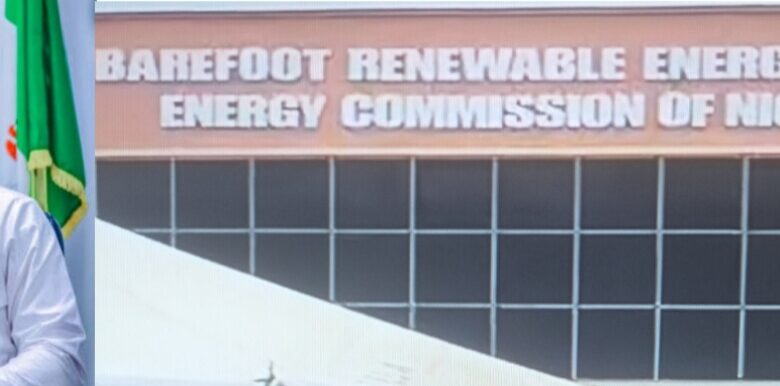
The Federal Government has commissioned the Barefoot Renewable Energy College and a Green Hydrogen Research Demonstration Pilot Plant in Kogi State as part of efforts to strengthen Nigeria’s renewable energy sector and develop a skilled workforce for the country’s energy transition.
Speaking at the commissioning ceremony on Tuesday, the Director-General of the Energy Commission of Nigeria (ECN), Dr. Mustapha Abdullahi, explained that the institution was established to equip Nigerians with practical skills, promote innovation, and support the implementation of the country’s National Energy Transition Plan.
Abdullahi described the college as a landmark institution designed to bridge the gap between non-formal practical skills training and university-based research through a hybrid training model that extends renewable energy education to rural communities and underserved populations.
“Our vision is clear: to build a highly skilled workforce that will support national development, create employment opportunities, stimulate entrepreneurship, and contribute to the successful implementation of Nigeria’s renewable energy agenda,” he said.
According to him, the college is equipped with state-of-the-art facilities, including smart classrooms, renewable energy laboratories, photovoltaic installation workshops, solar thermal training facilities, battery energy storage laboratories, inverter and power electronics laboratories, mini-grid simulation platforms, wind energy demonstration units, biomass and bioenergy training facilities, electric vehicle charging technology modules, energy efficiency laboratories, and digital monitoring systems.
He noted that complementing the college is the Green Hydrogen Research Demonstration Pilot Plant, one of the pioneering facilities in Africa dedicated to advancing hydrogen technologies and supporting Nigeria’s transition to a low-carbon economy.
The ECN boss stressed that the pilot plant would demonstrate the complete hydrogen value chain, including renewable electricity-powered electrolysis, hydrogen production, storage, utilisation, and safety management.
He added that the facility would serve as a national platform for research, technology validation, and demonstration in hydrogen production, fuel cell applications, industrial decarbonisation, long-duration energy storage, renewable energy integration, and hydrogen-powered mobility.
Abdullahi stated that the establishment of the institution reinforces Nigeria’s commitment to the Sustainable Development Goals (SDGs), the African Union’s Agenda 2063, the Paris Agreement, and the implementation of the National Energy Transition Plan.
He expressed appreciation to President Bola Ahmed Tinubu for what he described as his visionary leadership and commitment to advancing science, technology, and sustainable energy development in Nigeria.
The ECN Director-General also thanked Vice President Kashim Shettima, the Minister of Innovation, Science and Technology, the Kogi State Government, project partners, consultants, ECN staff, and other stakeholders for their support towards the successful completion of the project.
He emphasised that the commissioning marks the beginning of a new phase rather than the end of the project, with the goal of making the institution Africa’s leading vocational centre for renewable energy training, innovation, research, certification, technology incubation, and commercialisation.
To demonstrate its readiness, Abdullahi announced the immediate admission of the first 50 trainees, who will undergo specialised training in solar photovoltaic systems.
He also declared the trainees would receive instruction in four major modules — solar photovoltaic system theory and installation, solar thermal plant configuration, entrepreneurship and marketing opportunities, and professional ethics and safety in solar photovoltaic installations.
The ECN Director-General further disclosed that the college would establish strategic partnerships with universities, polytechnics, research institutions, industries, development partners, and the private sector to ensure its programmes remain globally competitive and responsive to the evolving demands of the renewable energy industry.
He called on young Nigerians, industry practitioners, investors, and development partners to take advantage of the opportunities provided by the institution in building the skilled workforce required to power Nigeria’s clean energy future.
Abdullahi described the commissioning as a significant milestone in Nigeria’s drive towards sustainable energy development and expressed confidence that the college would contribute meaningfully to economic growth, job creation, and the country’s transition to a cleaner and more resilient energy system.