
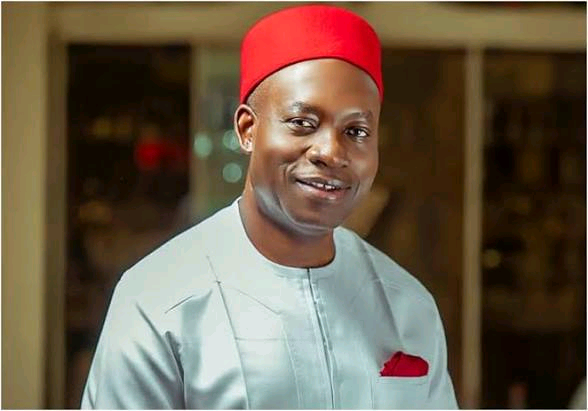
The Governor of Anambra State, Prof. Charles Soludo, has said that the proposed establishment of state police must be accompanied by far-reaching fiscal and judicial reforms to ensure a sustainable federal system in Nigeria.
Soludo stated this via Zoom while speaking at the Arise News Town Hall on State Police, held in Abuja on Thursday.
According to the governor, the debate has moved beyond whether Nigeria should establish state police to how the system should be implemented effectively within a truly federal structure.
While commending the National Assembly for advancing the constitutional amendment on state police and praising President Bola Tinubu’s commitment to federalism, Soludo argued that the conversation should not be limited to policing alone.
He asserted that the devolution of more responsibilities from the Federal Government to the states must be matched with a review of the country’s revenue allocation formula.
Soludo pointed out that states are increasingly assuming more responsibilities, including electricity regulation, local government administration, correctional services and, potentially, state policing, without receiving a corresponding increase in financial resources.
“We are having increasing devolution of functions from the Exclusive Legislative List to the Concurrent Legislative List, but without corresponding drastic revisions of the revenue allocation formula,” he said.
Soludo noted that the Federal Government currently retains about 53 per cent of federation revenue, while states receive about 26 per cent, arguing that such a structure is unsustainable if states are expected to shoulder additional constitutional responsibilities.
He advocated reducing the Federal Government’s share of federation revenue to no more than 40 per cent, with a larger share devolved to states and other tiers of government to strengthen fiscal federalism.
“The big elephant to be addressed is the revenue allocation issue. If we are going to have sustainable federalism, we need a lean centre and stronger federating units,” he remarked.
The governor also called for a comprehensive restructuring of Nigeria’s judicial architecture to complement the proposed state police system.
He argued that while security responsibilities are gradually being devolved, the country’s appellate judicial system remains largely unitary, resulting in prolonged litigation over matters that should be resolved at the state level.
Soludo proposed the establishment of state appellate courts and state supreme courts, particularly for issues that fall exclusively within the jurisdiction of states, such as land disputes.
He questioned why land-related cases originating within a state should proceed through the federal appellate system to the Supreme Court, sometimes taking decades before final resolution. “In the United States, where we copied this federal system from, they have state supreme courts. I don’t understand why issues like land disputes should go beyond the state.”
The governor stressed that judicial reform should form part of the “unfinished business” of constitutional restructuring, alongside state policing and fiscal federalism.
He maintained that Nigeria’s constitutional reforms should focus on building what he described as a more sustainable federal security and justice system, anchored on greater devolution of powers, equitable resource allocation, and an efficient judicial framework.
He further acknowledged the collaborative efforts of the National Security Adviser, the Attorney-General of the Federation, the Chief of Staff to the President, governors and other stakeholders working on the framework for state police, stressing that the focus should now be on ensuring the system is practical and effective.