
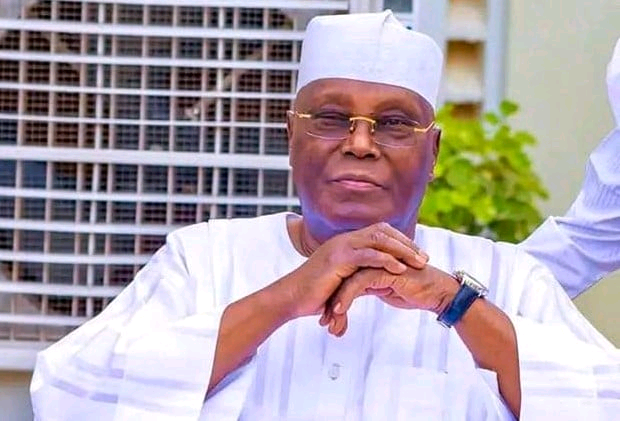
Presidential hopeful Alhaji Atiku Abubakar has unveiled a comprehensive agenda under the African Democratic Congress (ADC), pledging to address Nigeria’s worsening insecurity, economic hardship, and infrastructure challenges if elected.
Atiku made the disclosure after emerging as the ADC’s candidate for the 2027 presidential election following the party’s primary election.
In a statement outlining his policy direction, Atiku disclosed that his proposed government would be guided by clear national plans with measurable targets and timelines in line with the party’s manifesto.
He noted that his administration would strengthen cooperation with state governments to ensure minimum welfare standards and promote accountable leadership across all levels of governance.
On security, Atiku expressed concern over rising insecurity across the country, stating that all regions are affected by violent attacks and that government response has been inadequate. He also raised alarm over reported killings of security personnel, including senior military officers, describing the situation as deeply troubling for national stability.
He pledged that an ADC-led government would take decisive steps to restore security by strengthening the armed forces, police, and other security agencies through increased recruitment, improved welfare, modern equipment, and better intelligence coordination.
According to him, sustainable security can only be achieved alongside investments in education and economic opportunities for young people.
Regarding education, Atiku criticised the current state of schooling in Nigeria, noting that over 20 million school-age children are out of school. He described the situation as unacceptable and promised free and compulsory education at primary and secondary levels.
He revealed that his administration would focus on reviving the education sector through improved infrastructure, staffing, and teacher welfare, while also prioritising skills development in entrepreneurship, technology, and innovation.
On the economy, Atiku accused the current administration of worsening poverty despite claims of economic growth. He argued that wealth distribution remains heavily skewed, with citizens struggling to afford basic needs.
He promised to address Nigeria’s energy crisis as a foundation for industrial growth, saying stable electricity is essential for both large and small businesses. He also pledged to remove bottlenecks affecting investment and create incentives to attract both local and foreign investors.
Atiku further criticised the handling of fuel subsidy removal and rising debt levels under the administration of President Bola Tinubu, alleging lack of transparency in borrowing and public spending.
In relation to healthcare, he lamented poor funding of the health sector and pledged increased investment in primary healthcare, specialist medical centres, and improved staffing. He also proposed encouraging private sector participation to expand access to world-class medical services within Nigeria.
Atiku further called for unity within his political movement, urging aggrieved members and former rivals to close ranks ahead of the elections. He specifically invited key political figures, including Rotimi Amaechi and Mohammed Hayatu-Deen, to join his campaign to “rescue Nigeria” and strengthen democratic governance.
He reiterated the ADC’s commitment to building a party capable of delivering national transformation and restoring public trust in governance.
Atiku added that his vision represents a shift from what he described as “renewed hope” to “renewed action” aimed at addressing Nigeria’s pressing challenges.




unp9re