NAFDAC Warns Airlines, Shipping, Logistics Firms Over Counterfeit Imports
...Says Cosmetics, Beverages Account for 50% of Fake Products

The National Agency for Food and Drug Administration and Control (NAFDAC) has warned airlines, shipping companies and logistics operators that facilitate the importation of counterfeit products into Nigeria that they risk sanctions and possible prosecution, declaring that every platform used to distribute fake drugs and unwholesome products to Nigerians will face the full weight of the law.
The agency said counterfeiters are increasingly exploiting modern supply chains, online procurement platforms and cargo consolidation systems to flood the country with fake medicines, cosmetics, beverages and other regulated products, posing grave risks to public health and safety.
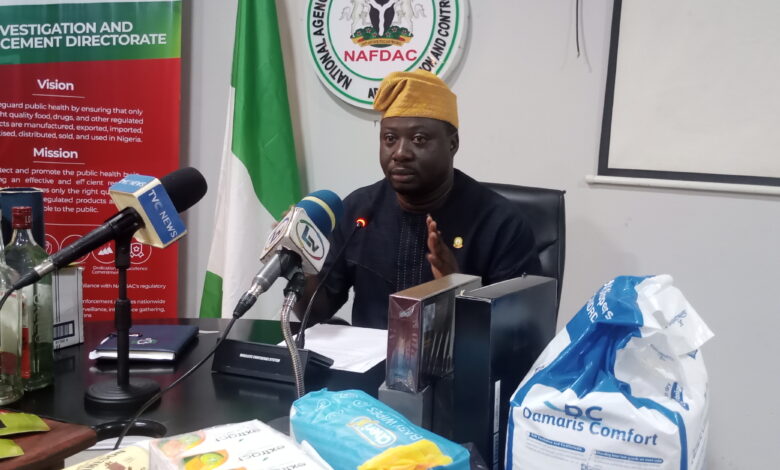
NAFDAC’s Director of Investigation and Enforcement, Dr Martins Iluyomade, who made this known while briefing journalists in Lagos on Wednesday to commemorate this year’s Anti-Counterfeiting Month, said the agency is backed by the Counterfeit and Fake Drugs and Unwholesome Processed Foods (Miscellaneous Provisions) Act (Cap C.34, Laws of the Federation of Nigeria 2004).
According to him, airlines, shipping firms and logistics companies that knowingly or negligently aid the movement of counterfeit products into the country would be held accountable under the law.
“Every platform that allows itself to be used for counterfeit and fake drugs and unwholesome processed foods to reach Nigerians will face the full wrath of the law.
“Airlines, shipping and logistics companies that allow counterfeiters use them to bring in counterfeit products into the country will be held accountable. It makes them accessories to crime,” Iluyomade said.
The enforcement chief disclosed that counterfeiters have become more sophisticated, cloning popular and fast-moving products consumed in Nigeria and manufacturing them abroad, particularly in Asia, with packaging designed to mirror genuine brands.
According to him, some operators also engage in local counterfeiting while importing packaging materials from China to give fake products the appearance of authenticity.
He explained that the growing use of e-commerce and online procurement systems has made it easier for individuals to order counterfeit products directly from foreign manufacturers without leaving Nigeria.
“Previously, importers had to travel abroad, inspect factories and arrange shipments themselves. Today, someone can sit comfortably in a shop in Nigeria, place an order online and have counterfeit products delivered to their doorstep through logistics companies.”
Iluyomade said counterfeiters also exploit cargo consolidation arrangements, popularly known as groupage, under which multiple importers share a single shipping container, making it more difficult for regulators to identify suspicious consignments.
“These companies have agents or suppliers that monitor products with high market demand and arrange for counterfeit versions to be manufactured abroad, particularly in Asia. These fake products often replicate the packaging of genuine brands so closely that consumers and even retailers struggle to distinguish them from authentic products,” he said.
Speaking on efforts to curb the menace, Iluyomade said NAFDAC’s strategic partnership with the Nigeria Customs Service had yielded positive results, noting that there is still room for improvement.
He called for stricter monitoring of bonded terminals and Free Trade Zones, noting that regulatory loopholes within such facilities are often exploited by counterfeiters.
He disclosed that the agency is strengthening collaboration with security agencies and improving verification systems to enable manufacturers verify whether imported consignments genuinely originated from their facilities.
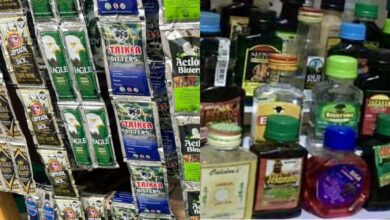
Iluyomade further revealed that cosmetics and beverages account for more than 50 per cent of counterfeit products circulating in Nigeria, making them the most frequently counterfeited regulated products in the country. He noted that the high demand for such items and the ease with which they can be replicated have made them prime targets for counterfeiters.
He said adulterated alcoholic and non-alcoholic beverages remain a growing concern, while adding that some counterfeit cosmetic products seized by the agency contained prohibited substances such as mercury and hydroquinone, which can cause severe health complications, including kidney damage and other long-term effects.
He described the proliferation of fake cosmetics as a major public health and security concern.
“People think cosmetics are harmless, but the skin is the largest organ in the body. Whatever is applied to the skin can be absorbed into the body and damage vital organs,” he said.
The agency noted that recent investigations led to the seizure of counterfeit medicines, cosmetics and adulterated beverages, while several illegal manufacturing and repackaging facilities were uncovered across the country.
According to NAFDAC, some counterfeit medicines intercepted by its operatives contained incorrect ingredients, insufficient active pharmaceutical ingredients or no active ingredients at all, exposing consumers to treatment failure, prolonged illness, antimicrobial resistance and death.
The agency also reported the seizure of counterfeit perfumes, skin-lightening creams, soaps, expired baby wipes and other beauty products falsely labelled as reputable brands valued at over N700 million.
NAFDAC said its enforcement operations had resulted in arrests, major seizures and ongoing prosecutions, while commending the judiciary for securing convictions against more than six individuals involved in the manufacture and distribution of counterfeit products.
On ongoing efforts to strengthen penalties against counterfeiters, Iluyomade said proposed amendments to the relevant laws were currently before the National Assembly.
“There is no country that jokes with its food and drugs because that is a serious health and security breach. You can kill anybody in the country by poisoning their food and their medicine. It is already in the National Assembly and we hope this current Assembly will treat it dispassionately and leave a lasting legacy for the country,” he said.
NAFDAC reaffirmed its commitment to combating counterfeit, falsified, substandard and unregistered products through enhanced surveillance, intelligence gathering, investigations and enforcement operations.
“The fight cannot be won by NAFDAC alone. Government institutions, manufacturers, importers, logistics companies, healthcare professionals, the media and consumers all have a role to play in safeguarding public health,” he added.