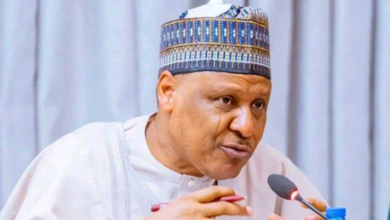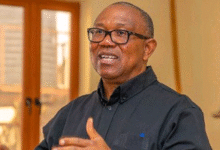

The Chairman/Chief Executive Officer of the National Drug Law Enforcement Agency (NDLEA), Brig. Gen. Mohamed Buba Marwa (rtd), has called for increased investment in mental health services, warning that drug abuse cannot be effectively addressed without tackling underlying mental health challenges.
Marwa made the call on Tuesday, October 13, 2026, while chairing the fifth edition of The Conversation Conference (TCC 5.0), organised by Intersect Consortium at Nicon Luxury Hotel, Abuja.
He warned that drug use and mental illness often reinforce each other, stressing that efforts focused solely on arrests would fail to address the root causes of substance abuse.
“In my work at the NDLEA, I see the cost of that silence daily. Behind many cases of drug abuse is untreated pain: depression nobody noticed, trauma nobody addressed, a young person who found a substance before finding help,” he said.
Marwa stated that mental health had for too long been treated as a private burden, noting that stigma and silence continued to prevent people from seeking necessary support.

Speaking on the conference theme of strategic investments, partnerships, and community-led action, the NDLEA boss mentioned that mental wellbeing could not be achieved in communities where poverty and hopelessness push people towards harmful practices.
He cited the Agency’s intervention in three pilot communities in Ondo State, where residents previously dependent on illicit cultivation were supported to develop lawful and sustainable livelihoods.
Marwa stressed that the initiative demonstrated the importance of working directly with communities to create solutions that improve economic prospects and strengthen resilience, adding that the NDLEA intends to expand the model nationwide.
He called on partners to support the proposed expansion, arguing that improved livelihoods could help reduce stress, stabilise families, and give communities a stronger stake in their future.
He also highlighted the Agency’s War Against Drug Abuse (WADA) campaign, which targets young people in schools, campuses and communities, as well as its 24-hour toll-free helpline for people seeking assistance.
Providing an update on rehabilitation efforts, Marwa disclosed that more than 53,843 persons had passed through the Agency’s 31 rehabilitation facilities across the country in the past five years.
He affirmed that the figures represented individuals who had been given opportunities to rebuild their lives, return to their families, and resume education or employment.
Marwa further advocated increased funding for mental healthcare, calling for more psychiatrists, psychologists, counsellors, and community health workers. He also urged the integration of mental health services into primary healthcare to improve access to treatment.
He emphasised that mental healthcare financing must be equitable, warning against a system in which access to treatment depends on a person’s financial capacity.
The NDLEA boss also called for greater attention to women, children, Persons with Disabilities (PWDs), survivors of violence, displaced mothers and families affected by conflict, noting that these groups were often overlooked.
He explained that recovery from drug abuse was more sustainable when support extended beyond the individual to include the family and household.
Marwa urged the health, education, security, justice and social welfare sectors to strengthen collaboration, emphasising that no single institution could address the challenges of drug abuse and mental health alone.

He commended Vice President Kashim Shettima, represented at the conference by Senator Ibrahim Hassan Hadejia as Special Guest of Honour, for his support, which he said reflected the importance attached to mental health as a national priority.
Marwa encouraged participants to commit to funding effective interventions, expanding successful community-based programmes, prioritising women, children and vulnerable populations, and ensuring accountability for results.
He expressed hope for a Nigeria where people could seek help without fear or stigma, recovery remained possible, and no one was left to suffer alone.