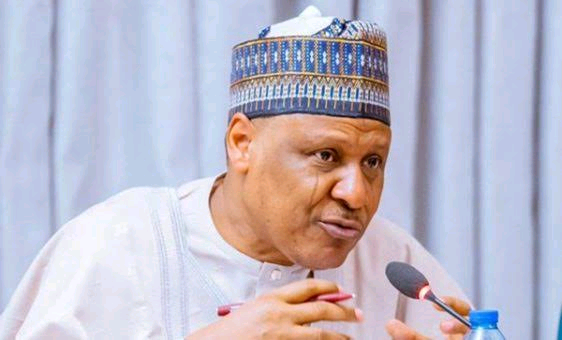
The Minister of Information and National Orientation, Mohammed Idris, has reaffirmed the Federal Government’s commitment to press freedom, stressing that journalists must balance their constitutional freedoms with responsibility in the discharge of their duties.
Idris stated this during a media chat in Abuja on Monday, October 12, 2026, where he also addressed issues relating to economic reforms, food security, local government autonomy, youth inclusion, and the government’s engagement with organised labour.
On press freedom, the Minister noted that freedom of expression remained essential to the country’s democracy, stressing that media practitioners must recognise the responsibilities attached to exercising that freedom.
“Press freedom is not just one thing that is just hanging in the air. It is also having something attached to it, and that is the responsibility of those who are exercising it,” he said.
Idris asserted that press freedom and responsibility are not mutually exclusive, insisting that both must be upheld together.
“You cannot leave one and you cannot take one and leave the other. You have to carry both of them and go with it that way,” he added.
The Minister recalled his engagement with the Nigerian Union of Journalists (NUJ) and the International Press Institute (IPI) in advocating press freedom, noting that he had worked with the President on related concerns about two years ago.
He also mentioned that he had never witnessed an instance in which the President directed him or any member of the presidential media team to preview a film.
While acknowledging that specific incidents required further verification, Idris urged stakeholders to assess the broader progress being made in the country’s tolerance of press freedom rather than focus exclusively on individual incidents.
“I think instead of amplifying an incident, we should look at this collective layer and now see, are we actually moving forward in terms of our tolerance for press freedom?”
He expressed optimism about Nigeria’s progress, describing democracy as a work in progress and maintaining that the country would continue to improve.
Economic reforms and poverty concerns
Addressing concerns about the impact of the administration’s economic policies, Idris defended the reforms introduced by President Bola Tinubu, arguing that the economy was showing signs of growth despite the challenges Nigerians continued to face.
He cited figures from what he described as the latest World Bank update, stating that Nigeria’s economy grew by 4.2 per cent in the first half of 2026, compared with 3.9 per cent in the corresponding period of 2025 and 3.5 per cent in 2024.
According to him, the figures indicated a positive trajectory for the economy, although he acknowledged that the challenges facing the country had not been completely resolved.
“Does that mean that the challenges are now over? Of course not,” he said, emphasising that the economy was moving steadily from one point to another.
Idris explained that the President’s reforms were intended to establish a stronger foundation for the economy rather than continue managing what he described as its deterioration over the decades.
He argued that the country needed a sound economic foundation capable of supporting sustainable growth, adding that international rating agencies and investors were showing renewed interest in Nigeria.
The Minister maintained that the government’s reform agenda was aimed at addressing longstanding structural weaknesses in the economy, while acknowledging that the benefits would not eliminate existing difficulties immediately.
Food security and commodity hoarding
On food security, Idris called on Nigerians to support government efforts to make food available and affordable, warning that the activities of middlemen and hoarders could undermine such interventions.
He recalled incidents in early 2024 when some traders allegedly bought large quantities of commodities from farmers and stored them in warehouses, making the goods difficult for consumers to access at affordable prices.
The Minister cited instances in Kano where security agencies reportedly intervened by opening warehouses in which commodities had been stored.
“Government can take these decisions. Government can create dis-enablers for Nigerians to have succour. But it is ultimately up to Nigerians to also support what government is doing,” he remarked.
Idris condemned the practice of purchasing food items in large quantities and withholding them from the market to exploit scarcity, describing it as contrary to the collective interest of Nigerians.
He pledged that the Federal Government, through the Ministry of Agriculture and Food Security, would continue working to address food supply challenges, including the use of government silos to release commodities when necessary.
He stressed that the objective was not merely to ensure that food existed in the country but also to guarantee its availability and affordability.
“The aim is that we don’t just have food. We have it available. We have it affordable. And we can also locate where the food is,” he said.
The Minister noted that the emphasis on food security was reflected in the renaming of the Agriculture Ministry to the Ministry of Agriculture and Food Security, adding that food security was essential to national development.
Local government autonomy
Idris also reaffirmed President Tinubu’s commitment to local government autonomy, particularly financial independence, saying the administration was working to address challenges affecting implementation.
He explained that the Federal Government had approached the Supreme Court to seek further clarification on the constitutional issues surrounding the matter.
He affirmed that a committee involving representatives of the Federal Government, state governments, local governments, and other stakeholders was established to facilitate implementation.
The process, he said, had revealed bottlenecks that needed to be resolved to ensure the effective operation of local government financial autonomy.
The Minister acknowledged that the process involved longstanding issues that could not be resolved simply through announcements, adding that consultations and efforts to address the challenges were ongoing.
He reiterated the President’s commitment to ensuring that state and local governments, particularly local governments, achieved the intended level of autonomy.
Youth inclusion in government programmes
On youth participation in government programmes, Idris stated that the Federal Government was committed to ensuring inclusiveness across political affiliations.
He dismissed suggestions that government youth initiatives were intended exclusively for members of the ruling All Progressives Congress (APC), saying the programmes were meant for Nigerian youths regardless of their political associations.
“It is for Nigerian youth wherever they may find themselves,” he clarified.
The Minister cited the government’s Nigerian Education Loan Fund (NELFUND) initiative as an example, arguing that beneficiaries were not required to declare their political party affiliation to participate.
Idris declared that about 1.6 million Nigerians had benefited from the initiative, adding that the government intended to maintain inclusiveness in its programmes and policies.
He assured that the Federal Government would continue to pursue policies that allowed Nigerians to benefit without discrimination based on political affiliation.
Engagement with organised labour
The Minister also promised that the Federal Government would continue engaging organised labour to address issues affecting workers and seek mutually acceptable solutions.
He described labour unions as an important part of the country and said they would not be excluded from discussions with the government.
Idris affirmed that the administration was prepared to continue consultations, examine the issues raised by labour leaders, and work towards resolving outstanding concerns.
He expressed confidence that labour unions shared the government’s interest in the country’s welfare, adding that dialogue remained important to addressing disagreements.
The Minister maintained that the administration would continue working to improve governance, strengthen the economy, promote food security, and protect press freedom.
While acknowledging that challenges remained in several areas, he expressed confidence that ongoing reforms and engagements with stakeholders would help the country make further progress.