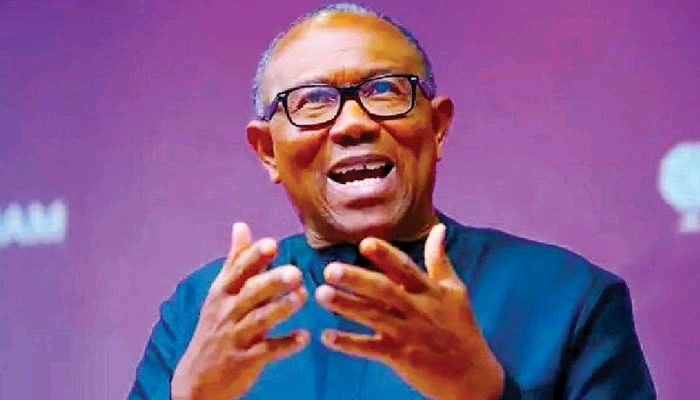
The 2023 presidential candidate of the Labour Party (LP), Peter Obi, has questioned the recent ₦3.3 trillion approval granted by President Bola Tinubu to clear outstanding debts under the Presidential Power Sector Financial Reforms Programme, covering the period from February 2015 to March 2025.
ThelensNG reports that President Tinubu announced the approval on Sunday, explaining that the debt repayment plan followed a final review of legacy debts that have burdened the power sector for over a decade.
Reacting to the development on Tuesday, Obi noted that this was not the first time such approvals had been made.
“On May 17, 2024, ₦3.3 trillion was approved for the same purpose. On July 25, 2024, another ₦4 trillion bond was approved to settle similar debts. There have also been other approvals in between, all targeted at addressing the same power sector liabilities,” he said.
According to him, this raises a fundamental question as to whether the previous approvals were merely announcements without execution.
“₦3.3 Trillion Again?” he asked, describing Nigeria’s power crisis as “one without end.”
Obi recalled that during the 2023 campaign, the President made a clear promise that if he failed to deliver stable electricity, Nigerians should not re-elect him.
“Today, the reality is that power supply has worsened, to the extent that there are even discussions about disconnecting the Presidential Villa from the national grid. Each time legitimate concerns are raised, what we see appears more like policy pronouncements than measurable progress,” he decried.
The former Anambra State governor also lamented that Nigeria is once again confronted with another ₦3.3 trillion approval to settle power sector debts, noting that the liabilities were largely accumulated under successive administrations of the All Progressives Congress (APC) between 2015 and 2025.
“This raises serious concerns about accountability, transparency, and effectiveness in public financial management,” he stated. “It is important to note that government institutions and agencies, including the Presidential Villa owe a significant portion of these debts. Year after year, budgets were made and funds appropriated.”
“Why then were these obligations not settled when due? And from what source will this new payment be made? Are we resorting once more to borrowing to service inefficiencies?” Obi asked.
He further queried: “How did the debt accrue? What is the actual total debt in the power sector? Which components of the debts are due to operators’ inefficiency and should be borne by them? Why have previous approvals not translated into tangible improvements? Who are the real beneficiaries of these repeated payments?
“Is the ₦3.3 trillion approved on April 6, 2026, the same as the ₦3.3 trillion approved in May 2024, and how does it relate to the ₦4 trillion bond approved in July 2024?”
Obi emphasised that Nigeria must move beyond repeated announcements and confront the power sector crisis with sincerity, transparency, and decisive reforms.
“Until we do so, we will remain trapped in a cycle of debt and darkness,” he stressed, adding that with discipline, accountability, and the right leadership, Nigeria can get it right.