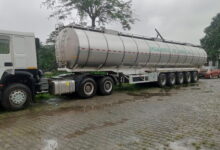
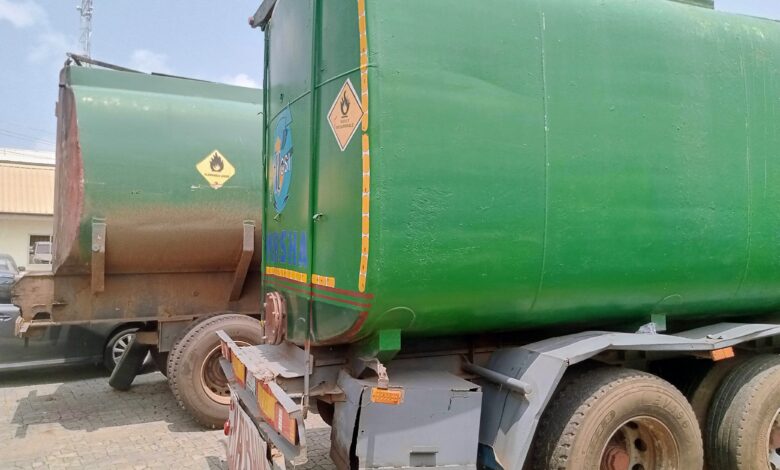
The National Agency for Food and Drug Administration and Control (NAFDAC) has impounded two tankers designated for the transportation of edible vegetable oil after they were allegedly found conveying Automotive Gas Oil (diesel) in Lagos.
The Agency said the tankers were intercepted during one of its recent enforcement operations across the state, describing the development as a serious breach of food safety regulations with grave implications for public health.
Dr Martins Iluyomade, NAFDAC’s Director of Investigation and Enforcement, who disclosed this to journalists on Monday in Lagos, explained that the manager of the company involved claimed ignorance of the colour-coding requirements for edible oil tankers and admitted that the vehicles had previously been used solely for transporting diesel.
Recall that in September 2025, NAFDAC, during a high-level meeting with edible oil manufacturers and members of the National Union of Edible Oil Tanker Drivers of Nigeria (NUEOTDN) in Lagos, introduced a dedicated regulatory framework for the transportation of edible oil, directing that only specially designated green-painted tankers should be used for conveying edible vegetable oil.
The Agency also gave a two-week ultimatum, which was later extended to about a month for operators to comply with the directive, warning that the use of petroleum tankers for edible oil posed serious health risks due to possible contamination from petroleum residues.
The regulation further prohibited manufacturers from allowing tankers previously used for transporting petroleum products into their facilities for loading edible oil.
“The two tankers, along with their drivers, are in our custody, while investigations are ongoing to determine the full extent of the violation and ensure appropriate regulatory action,” Iluyomade added.
NAFDAC reiterated its commitment to protecting public health by ensuring that only safe, quality and properly regulated products are available to consumers, assuring Nigerians that it would sustain its enforcement operations against violators of food safety regulations.