By Kemi Akintokun
Some health professionals in Lagos have called for increased support for nursing mothers, emphasising the critical role of breastfeeding, particularly exclusive breastfeeding for the first six months of life.
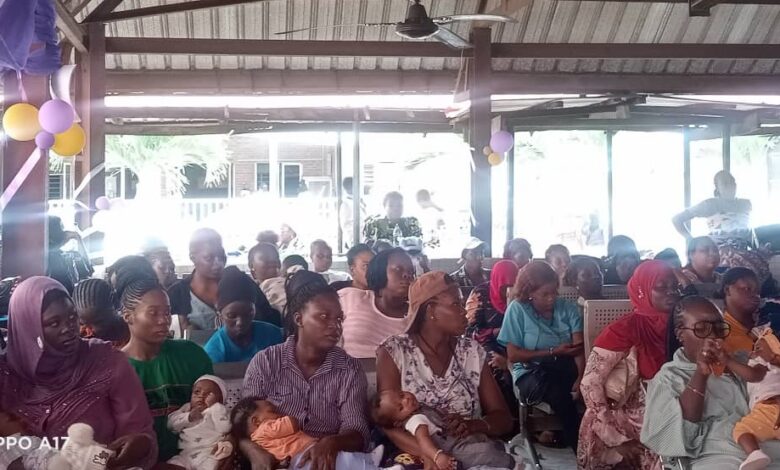
The professionals made the call on Tuesday at programme organised by Alimosho General Hospital, Lagos to mark the 2026 World Breastfeeding Week (WBW).
The News Agency of Nigeria (NAN) reports that WBW is marked annually in the first week of August to highlight the importance and impact of breastfeeding.
The theme for the 2026 WBW is, “Breastfeeding for a Sustainable Start in Life: Strengthen What Works”.
The theme focuses on tracking progress, scaling proven health interventions, and strengthening the global support chain.
A professor at the Lagos State University Teaching Hospital (LASUTH), Prof. Elizabeth Disu, said exclusive breastfeeding was a proven strategy for improving child health and survival.
Disu said that exclusive breastfeeding provided infants with the nutrients needed for healthy growth and development during the first six months of life.
She said the week-long programme was aimed at promoting, protecting and supporting breastfeeding through awareness campaigns targeted both nursing and expectant mothers.
“The theme for this year includes encouraging what really works, and what works is exclusive breastfeeding.
“Breastfeeding mothers should be encouraged and supported to breastfeed their babies exclusively in line with global health recommendations.
“Healthcare workers have been trained to engage mothers during antenatal clinics on the benefits of breastfeeding and the need to adopt recommended feeding practice,” she said.
Disu, who is also the Executive Director, Abiye Maternal and Child Health Foundation, stressed the importance of sustaining initiatives that promoted breastfeeding in healthcare facilities.
She added that hospitals should continue to implement and maintain baby-friendly hospital initiatives to create an enabling environment for breastfeeding.
“Healthcare institutions have a responsibility to provide the support mothers need to successfully breastfeed their children, ‘’ she said.
The expert further highlighted the need to uphold regulations that guided the marketing of breastmilk substitutes.
“The national code for marketing breastmilk substitutes has to be maintained; all these are things we can do to promote breastfeeding, ‘’ she said.
She said adherence to such measures would help protect breastfeeding practices and improve child health outcomes.
Also, a Consultant Paediatrician, Dr Temitope Adegboyega, reiterated the importance of breastfeeding as a critical intervention for child growth and development.
Adegboyega, who is the Head of the Paediatric Department at Alimosho General Hospital, noted that optimal infant breastfeeding remained essential in spite of challenges faced by working mothers.
He added that support systems were necessary to improve breastfeeding rates and child health outcomes.
According to him, institutions must continue to create enabling environments that allowed mothers to exclusively breastfeed their babies for the recommended six months.
He noted that some organisations had already introduced measures aimed at supporting nursing mothers in balancing work responsibilities and infant care.
“Breastfeeding helps to strengthen the bond between mothers and their children while contributing positively to emotional and social development.
“Presently, the university system has set aside six months for workers to adequately breastfeed their babies.
“We hope other organisations will join, so that we can fulfil six months of exclusive breastfeeding for newborns and continue breastfeeding them for two years,” he said.
The consultant added that breastfeeding remained important for families, communities and the nation’s overall development, urging healthcare facilities to continue promoting the practice.
Speaking on the importance of complementary feeding after six months, Adegboyega noted that breast milk alone was insufficient after the first six months of life.
“It is important that mothers know that after breastfeeding, there is something called complementary feeding because breast milk after six months will not be adequate for a child.
“Inadequate complementary feeding could expose children to malnutrition and other growth-related challenges,” he said.
A Dietician, Mrs Oludayo Sowoolu-Coates, said the first 1,000 days of a child’s life, from pregnancy to about three years oldwere crucial for healthy growth and development.
Sowoolu-Coates explained that exclusive breastfeeding was not a decision to be made after delivery, but one that should be planned and embraced during pregnancy.
“Pregnant women should prepare themselves ahead and make up their minds that they are going to practise exclusive breastfeeding,” she said.
The Dietitian, who Heads the Dietetics and Nutrition Department at Alimosho General Hospital, identified misconceptions about giving water to infants as one of the major barriers to exclusive breastfeeding.
According to her, breast milk contains sufficient water and all the nutrients required by an infant during the first six months of life.
She said breast milk provided carbohydrates, proteins, fats, antibodies and other nutrients necessary for healthy growth and brain development.
The HOD called for more support to breastfeeding mothers, noting that the family and communities would gain immensely from improved breastfeeding practices.
NAN reports that the programme also featured health talk, presentation of gifts to outstanding pregnant and lactating mothers and awareness walk within and outside the hospital.