Nigerian Airlines Have Ownership, Not Forex Problem — Nwuba
...Weak Governance, Opaque Balance Sheets Keeping Investors Away

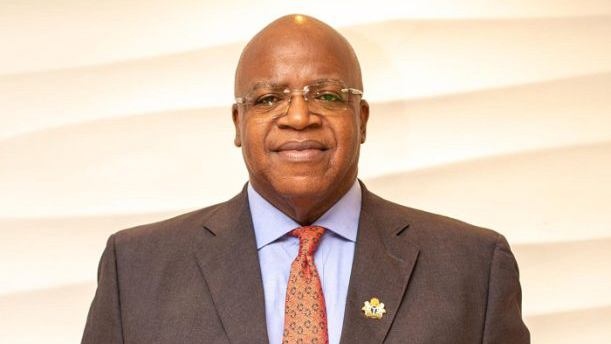
Nigeria’s aviation sector does not fundamentally have a foreign exchange problem but an ownership and corporate governance problem that is making airlines unattractive to serious investors and lessors, President of the Aircraft Owners and Pilots Association of Nigeria (AOPAN), Dr. Alexander Nwuba, has said.
Nwuba, in an opinion article, challenged the persistent attribution of Nigerian airlines’ financing difficulties to naira volatility, dollar scarcity and other foreign exchange challenges, arguing that currency exposure is a normal part of the global aviation business.
The aviation expert pointed out that airlines worldwide pay for fuel, aircraft leases and several other major obligations in dollars, making currency risk a routine cost of doing business rather than a uniquely Nigerian challenge.
The more fundamental problem, he said, is that international lessors, banks and other serious investors cannot establish with confidence who controls Nigerian carriers, what they owe and whether their boards have the independence and competence to respond transparently when problems arise.
“FX is a manageable risk. What Nigerian aviation has built is a structure no serious capital wants to touch.”
Nwuba identified ownership concentration as a major obstacle, noting that more than 10 airlines compete for a domestic market that barely grew four per cent last year, while most operators have resisted opening their equity to outside investors.
The preference for debt over equity allows airline owners to retain control of their businesses while transferring much of the balance-sheet risk to lenders. Some have subsequently taken on additional debt to service existing obligations rather than dilute their ownership.
The model, Nwuba contended, is unsustainable because it places the burden of financing airline operations on increasingly leveraged balance sheets without addressing the underlying cost and governance problems.
He also challenged the argument that Nigerian capital is unwilling or unable to provide equity financing for capital-intensive businesses, pointing to the proposed ₦2.15 trillion Dangote Refinery share offering as evidence that large Nigerian businesses can attract outside capital when investors have confidence in their structure and governance.
“If a refinery can raise $1.6 billion this way, the claim that aviation can’t is not about Nigerian capital. It’s about what Nigerian aviation is asking outside capital to trust.”
Corporate governance presents another major weakness. Many Nigerian airlines, Nwuba said, lack genuinely independent boards and continue to operate around founder-, family- or closely held ownership structures.
He explained that the concentration of ownership and management in the hands of the same individuals can undermine effective oversight, particularly where the owner also functions as chairman and de facto chief executive.
Such an arrangement makes it difficult for management teams or boards to challenge decisions, demand transparent financial reporting or insist on corrective action when businesses experience financial difficulties.
The AOPAN president also questioned the assumption that aviation experience as a pilot automatically translates into competence in running an airline as a business.
Flying an aircraft and running an airline, he noted, are different disciplines, with procurement, finance and fleet strategy requiring specialised expertise.
The problem, he said, is not peculiar to every Nigerian carrier, as several airlines are professionally managed. However, governance failures at one airline can affect the reputation of the entire sector, leaving better-run carriers to bear the risk premium created by the worst performers.
Nigerian airlines also face some of the highest fuel and handling costs on the continent. Rather than fundamentally restructuring around those costs, Nwuba said, the industry too often responds by borrowing to keep flying.
The lack of transparent balance sheets compounds the problem, making it difficult for banks, aircraft lessors and other financiers to determine the true financial position of prospective borrowers.
That, he argued, is the real credit story: not simply that Nigeria is risky, but that financiers cannot adequately verify what a company owes or who is accountable for its obligations.
No foreign exchange hedge or central bank intervention can resolve that structural problem, he said.
Nwuba also dismissed recurring calls for the establishment of a dedicated aviation bank, arguing that a new lender would not change the underlying weaknesses of the businesses seeking financing.
Airlines with the same ownership structures, governance practices and borrowing habits would simply approach the new institution with the same problems they take to existing lenders.
“Give the borrower a new lender and the borrower’s habits come with them.”
He posited that the priority should be to encourage airline owners to accept equity participation, strengthen corporate boards, improve financial transparency and professionalise management.
According to him, the aviation sector does not necessarily need more sources of money as much as it needs airlines capable of receiving and deploying capital responsibly.
“The uncomfortable implication is that the fix is not more money. It’s fewer owners insisting on keeping 100% of a company they cannot finance responsibly, more boards that exist to say no, more balance sheets built to survive an audit rather than avoid one, and a management culture that promotes competence over proximity to the cockpit.”
Nwuba maintained that funds, aircraft leasing companies and other sources of international financing are available, but remain in search of airline operators they can trust.
“Everything else — the funds, the leasing companies, the compacts — is financing looking for a borrower it can trust. Right now, it can’t find one. That’s not the world’s fault. It’s ours to fix.”