APM Terminals Signs MoU to Develop Badagry Deep Seaport
...As Oyetola Seeks Stronger Maritime Investment

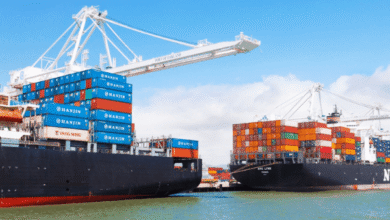
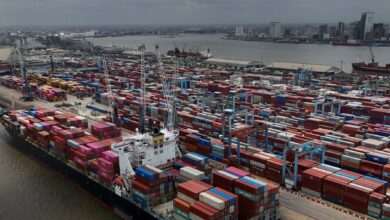
APM Terminals has signed a Memorandum of Understanding (MoU) to explore the development of the proposed Badagry Deep Seaport in Lagos, in a move expected to expand Nigeria’s deep water port capacity and strengthen its position as a regional transshipment hub.
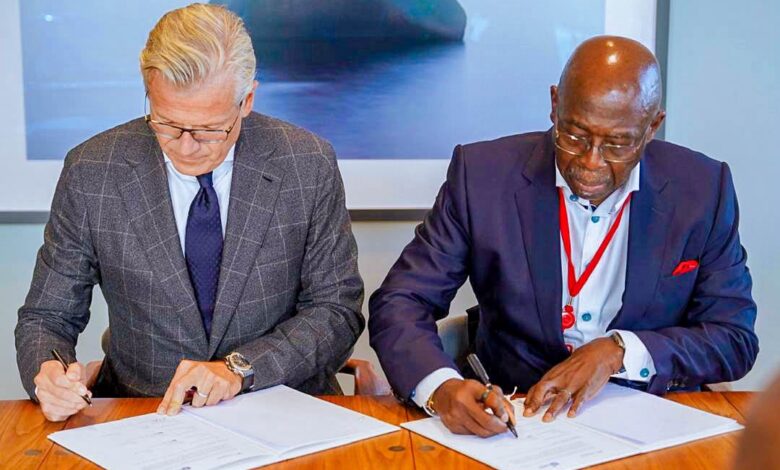
The agreement was signed in Copenhagen, Denmark, on Monday, September 7, 2026, by the Group Chief Executive Officer of A.P. Moller–Maersk, Vincent Clerc, on behalf of APM Terminals, and the Managing Director of Badagry Port Development Limited and Quinn McGrath Marine and Environmental Services Limited, Didi Ndiomu.
The MoU commits the parties to exclusive negotiations on the development of the greenfield port project, with APM Terminals expressing its commitment to taking the project forward.
The agreement was signed during a visit to Denmark by the Minister of Marine and Blue Economy, Dr. Adegboyega Oyetola, who led a Federal Government delegation to strengthen maritime cooperation and attract investment into Nigeria’s port infrastructure.
Oyetola said the Federal Government remains committed to modernising the country’s maritime infrastructure and creating an enabling environment for long-term private-sector investment in the sector.
“Our engagement in Denmark underscores the Federal Government’s commitment to modernising Nigeria’s maritime infrastructure and unlocking the full potential of our blue economy.
“Partnering with global terminal operators like APM Terminals to explore strategic greenfield developments such as the Badagry Port is central to President Bola Ahmed Tinubu’s vision of positioning Nigeria as West Africa’s premier trade and logistics hub,” Oyetola said.
As part of the engagement, the Federal Government and APM Terminals also discussed the extension of the company’s port concessions at the Lagos Port Complex, Apapa, and the West Africa Container Terminal (WACT), Onne.
The proposed Badagry Deep-Seaport is expected to complement existing port infrastructure by providing additional deepwater capacity, accommodating larger container vessels and creating new opportunities for transshipment to Nigeria and other West and Central African markets.
APM Terminals’ Managing Director, Africa & Europe, Igor van den Essen, said developing Badagry as a greenfield port could help ease congestion at city ports while creating new opportunities for Nigeria’s maritime and logistics sectors.
“APM Terminals is keen to contribute to Nigeria’s economic growth and position as a trade hub in West Africa. We believe further investing long-term in our concessions in Apapa and Onne helps doing that, and we were pleased to have a constructive dialogue about this today.
“Additionally, developing Badagry as a greenfield project will further ease congestions in city ports and further open new opportunities,” he said.
Van den Essen said APM Terminals was encouraged by the Federal Government’s ambition to expand trade, attract investment and strengthen Nigeria’s position as a leading maritime gateway in West Africa.
He said public-private partnerships would support long-term investment, improve the business environment and enhance Nigeria’s competitiveness.
“We strongly believe that public-private partnerships help us deliver results that support growth because they drive long-term investment, a better business environment and, thereby, competitiveness in a rapidly developing market,” he said.
Ndiomu described the proposed investment as the beginning of a new phase in Nigeria’s maritime development.
“Investing in maritime infrastructure and especially in Badagry as a greenfield port project together with APM Terminals is the beginning of Nigeria becoming the true maritime capital of sub-Saharan Africa in full alignment with the government of President Bola Ahmed Tinubu’s ambitious maritime growth strategy,” he said.
The proposed port is expected to strengthen Nigeria’s port network by enabling larger container vessels to call at the country while supporting increased cargo volumes and greater supply-chain resilience.
It is also expected to enhance Nigeria’s capacity to serve as a regional transshipment hub by allowing cargo destined for other West and Central African markets to be handled through a strategically located deepwater facility.