
Part 7: How We Fought Poverty Through Empowerment, Agriculture, Social Protection in Anambra – Obi

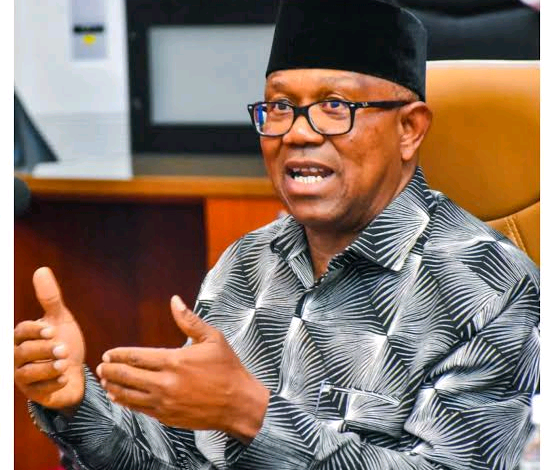
Former Anambra State Governor, Peter Obi, has recounted how his administration tackled poverty through economic empowerment, agricultural development, youth skills acquisition, and social protection programmes during his tenure between 2006 and 2014.
In the seventh instalment of his account of his administration’s interventions in Anambra, Obi stated that his government adopted a comprehensive approach to poverty reduction through the Anambra Integrated Development Strategy (ANIDS), recognising that development must translate into improved living conditions for ordinary citizens, particularly the poor and vulnerable.
He explained that his administration’s poverty alleviation strategy went beyond temporary financial assistance to focus on restoring dignity, creating economic opportunities, and equipping vulnerable people with the means to become self-reliant.
The presidential candidate of the Nigeria Democratic Congress (NDC) disclosed that his government conducted a poverty-mapping exercise to identify the most deprived local government areas and communities, with particular attention to Anambra West, Orumba South, Awka North, and Ogbaru.
According to him, the exercise revealed that some of the poorest communities were also major food-producing areas but faced challenges including inadequate access to markets, agricultural inputs, electricity, water, and other economic opportunities.
Obi said that the findings helped the administration direct infrastructure development, agricultural support, and social interventions towards neglected communities.
On women’s empowerment, he stated that financial assistance and productive support were provided to thousands of rural women, widows, and indigent households across the state’s 21 local government areas.
He explained that his government introduced revolving loan schemes and distributed equipment such as sewing machines, generators, ovens, cookers, hair dryers, shoe-making machines, and welding equipment to enable beneficiaries establish and expand businesses.
The former governor also highlighted his administration’s agricultural interventions through partnerships with the Federal Government, the World Bank, and other development partners, particularly under the FADAMA programme.
He recalled that in November 2009, his administration disbursed millions of naira to FADAMA Community Associations across the state, adding that by October 2010, the National FADAMA office had commended Anambra’s commitment to the programme and described it as the leading state.
On youth development, Obi noted that his administration established and equipped skill-acquisition centres and provided financial support of ₦100,000 each to 500 youths who had acquired productive skills to establish or strengthen their businesses.
He added that more than 500 specially designed wheelchairs were distributed to persons living with disabilities to improve their mobility, independence, and participation in society.
The administration also implemented conditional cash-transfer programmes under the Millennium Development Goals (MDGs) framework to support extremely poor households.
Addressing the welfare of retired public servants, Obi disclosed that his administration spent over ₦35 billion to clear inherited pension and gratuity arrears.
He further explained that a monthly social security stipend was introduced for indigent citizens aged 75 and above who were not pensioners and lacked financially capable children or dependable family support.
He stressed that the initiative covered approximately 30,000 beneficiaries and was institutionalised through the Anambra State Indigent Relief Law 2013.
Reflecting on the broader lessons from the state’s experience, Obi said that Nigeria needed a comprehensive poverty-reduction strategy that addressed the structural causes of poverty through investment in agriculture, rural infrastructure, small businesses, affordable credit, vocational skills, and social protection.
He cited China and India as examples of countries that had lifted hundreds of millions of people out of poverty through sustained economic reforms, productive investment, infrastructure development, education, and deliberate policies that expanded economic opportunities.
He maintained that Nigeria could achieve similar progress by studying the experiences of those countries and adapting successful development strategies to its own circumstances.
Obi noted that the achievements recorded in Anambra between 2006 and 2014 did not eliminate poverty but established a practical framework for confronting it, which he said could be adapted and expanded nationally.
He added that Nigeria’s ambition should be to move from managing poverty to systematically defeating it, stressing that a prosperous country must protect the dignity of its citizens and ensure that opportunities are not determined by geography.
He further stated that the next instalment would examine his administration’s achievements in commerce and industry.