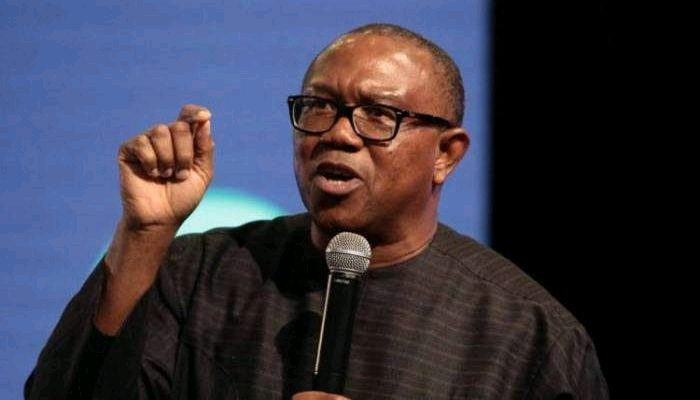
Former Anambra State Governor, Peter Obi, has highlighted the massive investments and reforms undertaken by his administration in the education sector, saying the interventions helped transform the state’s educational system and improve its performance in national examinations.
Obi, in the third instalment of his series on his administration’s achievements in Anambra State, said that his government prioritised education through investments in school infrastructure, teacher recruitment, technology, technical and vocational training, and higher institutions.
He stressed that education was never a political promise for him but a fundamental investment in human development and the future of society.
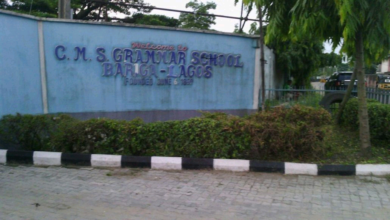
The presidential candidate of the Nigeria Democratic Congress (NDC) disclosed that one of his administration’s major policy decisions was the return of mission and privately owned primary and secondary schools to their original proprietors while retaining government support, including the payment of teachers’ salaries and assistance with infrastructure.
He stated that the government also provided billions of naira to rehabilitate the returned schools, restoring the partnership between government and religious institutions in the delivery of quality education.
Obi revealed that his administration constructed five-classroom blocks in virtually all the 177 communities in the state and renovated hundreds of dilapidated schools.
He cited Comprehensive Secondary School, Onitsha, and Oraukwu Grammar School as examples of institutions that benefited from the rehabilitation programme.
The former governor also noted that his administration distributed approximately 40,000 computers to schools, including more than 22,500 HP laptops, established Microsoft Academies in secondary schools, and connected schools across the state to the internet.
Other interventions included the provision of generators, libraries, boreholes in more than 300 schools, school buses, sporting facilities, and funding for the construction of sick bays and dispensaries.
He mentioned that his administration also recruited 2,000 teachers for primary schools and 7,000 teachers for secondary schools, comprising 5,000 regular teachers and 2,000 special-subject teachers.
According to him, financial provisions were made to cover the recruited teachers’ salaries for two years to prevent the incoming administration from inheriting an immediate financial burden.
He added that his government ensured prompt payment of teachers’ salaries and allowances, cleared outstanding pension and gratuity arrears, restored promotions, and removed the ceiling that prevented some teachers from progressing beyond Grade Level 16.
On technical and vocational education, Obi noted that his administration renovated and re-equipped government technical colleges in Onitsha, Nkpor, and Umuchu, strengthened adult education centres and market schools, and supported vocational training and youth empowerment initiatives.
He also disclosed that 53 nomadic and migrant schools were equipped as part of efforts to expand access to education, particularly for children in underserved communities.
At the tertiary level, Obi disclosed that his administration constructed or completed more than 40 projects at Chukwuemeka Odumegwu Ojukwu University, including faculty buildings, hostels, engineering workshops, laboratories, an administrative complex, and an e-learning and research centre.
He further stated that the government released ₦5 billion to the university for infrastructural development and facilitated the construction of two 250-bed hostels through the Central Bank of Nigeria.
The Nwafor Orizu College of Education, Nsugbe, and the College of Agriculture, Mgbakwu, also benefitted from infrastructural improvements, staff recruitment, and other institutional support.
Obi pointed out that his administration additionally built the Chukwuemeka Odumegwu Ojukwu Teaching Hospital from scratch, constructing more than 25 buildings.
Beyond government-owned institutions, he affirmed that his administration extended financial assistance to Madonna University, Paul University, Tansian University, and Peter University, with each receiving grants of approximately ₦100 million alongside vehicle support.
He equally recalled introducing a reward scheme under which every Anambra indigene who graduated with a First Class degree received ₦1 million, adding that more than 500 graduates benefitted from the initiative.
While assessing the outcome of the investments, Obi noted that Anambra had moved from lower positions in external and national examinations, including WASCE, GCE, NECO, and JAMB, to the top positions by the time his administration left office in 2014.
He attributed the improvement to sustained investments in school infrastructure, teachers, technology, and effective supervision.
The presidential candidate added that his commitment to education continued after leaving office through private interventions, including donations, classroom construction, and the provision of learning materials to schools and educational institutions across Nigeria.
Ahead of the 2027 election, Obi pledged to prioritise education at the national level, promising greater accountability in the management of education funds and effective performance by government agencies responsible for the sector.
He emphasised that his proposed national approach would extend support beyond government-owned schools to mission, private, and community-owned institutions, saying the responsibility for educating Nigerian children should not be determined solely by school ownership.
Obi explained that the experience of his administration in Anambra demonstrated what could be achieved through commitment, accountability, and prudent management of public resources.
He disclosed that the next instalment of the series would focus on his administration’s interventions in the health sector.