
Ex-Minister Fashola Says State Police Not Silver Bullet, Calls for Guardrails, Training

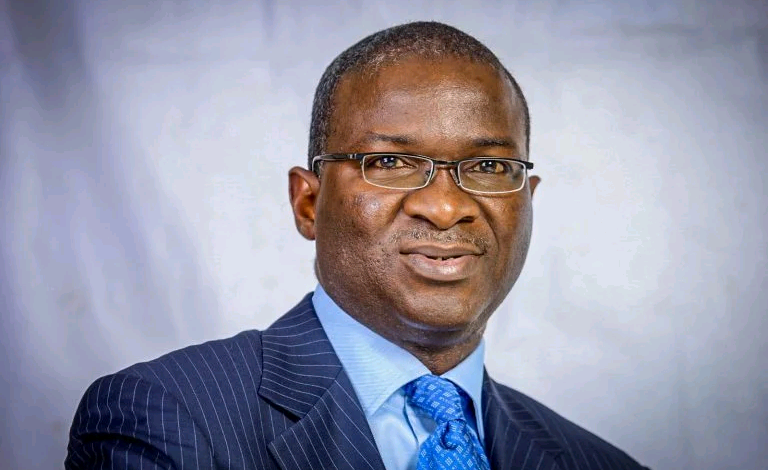
Former Minister of Power, Works and Housing, Babatunde Fashola, has cautioned against viewing state police as an immediate solution to Nigeria’s security challenges, pointing out that effective policing requires strong safeguards, proper training, and clear operational standards.
Fashola made the remarks on Friday during a panel session at The Platform, hosted by The Covenant Nation to commemorate Democracy Day, under the theme, “Governance. Democracy. National Security.”
Speaking on the country’s security challenges, the former Lagos State governor noted that governments around the world face enormous difficulties in combating crime because security agencies are expected to succeed at all times, while criminals need only one successful attempt to create the perception of failure.
“The odds are very adversely stacked against every government in the world. Government must be right every time, and the criminal needs to be right just once,” he said.
Addressing ongoing discussions on the establishment of state police, Fashola argued that the initiative should not be regarded as a “silver bullet” capable of instantly resolving insecurity.
“State police is further away than the necessity of today,” he asserted, adding that even if constitutional and legal hurdles were cleared, the creation of state police alone would not solve the country’s security problems.
He stressed the need for what he described as “guardrails” to guide the operation of any state policing system, including minimum training standards, civic education, empathy, and clear rules governing the use of firearms.
“We must have some guardrails that help set a minimum curriculum of what a policeman should experience before he is unleashed on society,” Fashola stated.
The former governor also raised questions about the conditions under which officers should be armed, noting that many crimes such as rape and domestic violence require effective policing and investigation without necessarily involving the deployment of firearms.
According to him, safeguards are necessary to prevent abuse and ensure professionalism, particularly amid concerns that state-controlled police forces could be used for political purposes.
Fashola stressed the importance of recruitment and manpower development, questioning whether enough young Nigerians are willing to join the police and describing personnel shortages as a key issue that must be addressed.
Citing other security interventions, he warned against creating institutions without first putting in place proper evaluation mechanisms, minimum standards, and accountability structures.
The former minister maintained that training, retraining, and continuous orientation are more critical than merely establishing new policing institutions.
“So it’s a lot of training and retraining and orientation, and that process is more important, if you ask me, than just setting up the institution itself.”
He further stated that while reforms aimed at improving security are necessary, their success would depend largely on the quality of personnel, effective oversight, and adherence to professional standards rather than merely creating new structures.