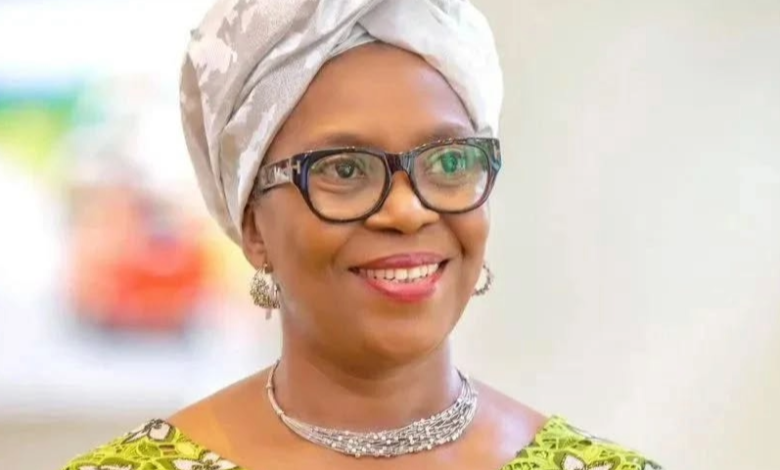
Former professionals should view retirement as a transition to a new phase of purposeful contribution rather than the end of leadership, a former Nigerian Ports Authority (NPA) executive, Mrs Funmilayo Loremikan, FCILT, has said.
Loremikan made the call while delivering a keynote address at the 8th Global Leadership Summit & Award 2026 in Lagos, with the theme, “Transformative Leadership for Sustainable Growth — Driving Innovation, Institutional Excellence and National Development.”
Speaking on the topic, “Leading Beyond Retirement: Reinventing Leadership, Building Visibility, and Creating Lasting Impact in a Changing World”, she urged retirees to deliberately reinvent themselves, acquire new skills and remain engaged in activities through which their experience can continue to benefit society.
She said retirement should no longer be understood as disengagement from productive activity, but as a transition from formal employment to purposeful contribution.
“Leadership does not end with retirement. It evolves — into a new season of influence, mentorship, visibility, service, and legacy. That evolution is itself a form of transformative leadership,” she said.
Loremikan, who spent more than three decades in maritime and logistics leadership at the NPA, said experienced professionals possess valuable knowledge, perspective, wisdom and credibility that could continue to support institutions and future generations long after formal employment had ended.
She identified mentorship, coaching, consulting, training, board service, public speaking, writing and community leadership among the avenues through which retirees could continue to contribute.
According to her, the transition should involve moving from positional leadership, which is based on authority, to legacy leadership, which is measured by the impact that continues because of an individual’s influence.
Loremikan also urged retirees to embrace lifelong learning and digital literacy, arguing that remaining relevant in a rapidly changing world requires deliberate reinvention rather than relying solely on past achievements.
She proposed a four-stage framework for reinvention: “Reflect, Reposition, Reinvent and Relaunch”, urging professionals approaching or already in retirement to assess their strengths and experiences, redefine their value beyond their former titles, acquire new competencies and pursue fresh opportunities.
The former NPA executive also stressed the importance of visibility, noting that expertise must be communicated effectively in an increasingly interconnected and digital professional environment.
“Visibility transforms expertise into influence. And influence creates opportunities for impact,” she said.
Loremikan identified knowledge transfer as one of the most important contributions retirees can make, warning that organisations risk losing valuable institutional memory and professional insight when experienced employees leave without structured mechanisms for passing on their knowledge.
She called for stronger mentoring, coaching, job-shadowing, succession planning and knowledge-transfer programmes to preserve institutional effectiveness and professional standards.
The speaker also urged organisations and professional bodies to create opportunities for retirees to serve on advisory boards, professional bodies and development initiatives, while promoting intergenerational collaboration and reverse mentoring.
She argued that retirees should be regarded as active contributors to national development rather than people whose usefulness had ended with formal employment.
“Retirees should not be viewed only as beneficiaries of development. They are active contributors to development. Their experience is a national asset. Their wisdom is a strategic resource. Their continued engagement is an investment in sustainable growth,” she said.
Loremikan said the continued contribution of experienced professionals was essential to sustainable growth, institutional excellence, innovation and national development, urging organisations to begin preparing professionals for retirement beyond pensions and paperwork.
She challenged stakeholders to promote lifelong learning, digital literacy, structured mentoring and knowledge transfer, as well as create pathways for experienced professionals to continue contributing their expertise after retirement.
Loremikan urged professionals to see retirement not as the conclusion of leadership but as the beginning of a new phase of influence, contribution and legacy.
“Leadership does not retire. Leadership evolves,” she added.