Nigeria at 66: Obi Decries Poverty, Insecurity, Hunger, Unemployment, Calls for Honest Reflection

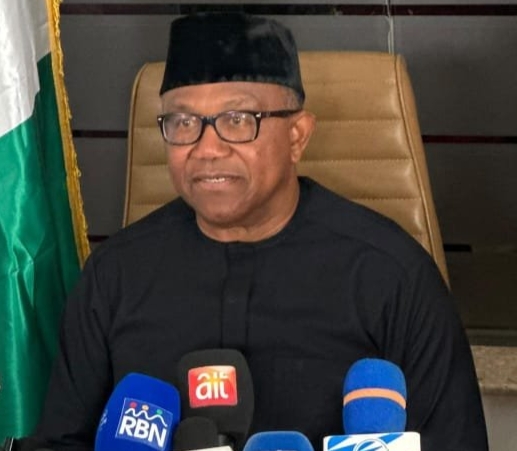
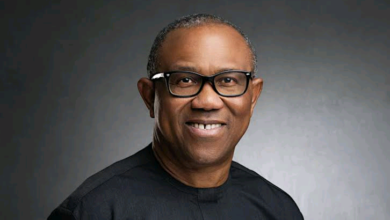
The presidential candidate of the Nigeria Democratic Congress (NDC), Peter Obi, has decried the worsening challenges of poverty, insecurity, hunger, unemployment, and other social problems confronting Nigeria, calling for honest national reflection as the country marks its 66th Independence Anniversary.
Obi made the remarks in Abuja on Thursday, October 1, 2026, in a speech delivered to commemorate Nigeria’s Independence Anniversary.
He asserted that the anniversary should not be reduced to a mere celebration but should serve as an opportunity for Nigerians to reflect on the country’s progress and consider whether the nation is moving in the direction envisioned by its founding fathers.
According to him, every serious nation must continually ask three fundamental questions: “Where are we today? Where do we want to be? How do we get from where we are to where we want to be?’
Obi noted that these questions had become particularly important in view of the challenges confronting the country despite the promises made by the APC-led government in 2023.
He listed widespread poverty and hardship, the large number of out-of-school children, insecurity, hunger and food insecurity, high infant and maternal mortality, youth unemployment and underemployment, drug abuse and low life expectancy, among the major challenges facing Nigeria.
He stated that more than 140 million Nigerians were living in poverty and severe hardship, while over 18 million children were out of school.
On insecurity, Obi noted that terrorism, banditry, and kidnapping continued to threaten lives and livelihoods, adding that 37 young Nigerians had recently lost their lives.
He also mentioned that over 40 million Nigerians would be in extreme hunger by the end of 2026, while describing Nigeria as “the worst place to be born” because of its unacceptably high infant and maternal mortality rates.
Obi further cited youth unemployment and underemployment, putting the number at over 35 million, while noting that drug abuse and substance misuse affected 14 per cent of the population, compared with a global average of six per cent.
He stated that life expectancy in Nigeria stood at 54 years, against a global average of 74 years.
Reflecting on the situation, Obi rejected the notion that Nigeria was cursed, arguing that the country was endowed with abundant human and natural resources, agricultural potential, and other blessings.
“The answer cannot be that Nigeria is cursed. We are a nation immensely endowed and blessed,” he said.
The former Anambra State governor argued that Nigeria’s greatest problem is not a lack of resources but the failure to convert its enormous resources into human development, productivity, security, and shared prosperity.
Obi disclosed that his concerns were reinforced by a recent two-day visit to Sokoto State with Senator Rabiu Kwankwaso, where they held consultations with people from different parts of the state on insecurity, out-of-school children, poverty, youth unemployment, and drug abuse.
He added that they also visited an Internally Displaced Persons (IDP) camp at Ramin Kura within Sokoto metropolis, where they encountered thousands of women and children living in what he described as deplorable conditions.
“Many of the children have no access to education. Mothers and children have limited access to basic healthcare,” he decried.
Obi emphasised that the displaced Nigerians should ordinarily be living in their communities, attending school, farming, conducting businesses and contributing to the economy, rather than living as IDPs in their own country.
Obi maintained that Nigeria’s independence anniversary should therefore provide an opportunity for sober reflection on the country’s present circumstances and the direction it intends to take in the future.
He further cited Socrates’ teaching that “the unexamined life is not worth living,” and applied the principle to the Nigerian state, saying “an unexamined nation cannot successfully chart its future.”