NIJ Alumni Get New National Executives as President-elect Akintunde Pledges Welfare, Opportunities

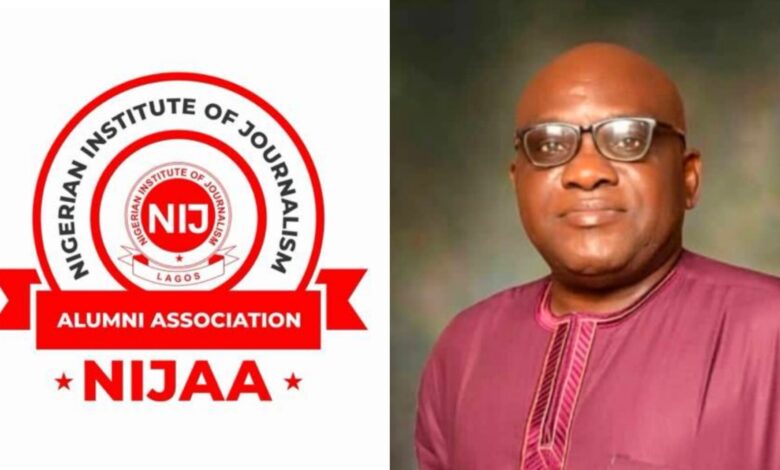
The Nigerian Institute of Journalism Alumni Association (NIJAA) has elected a new National Executive Council, with Muyiwa Akintunde emerging as the association’s National President.
Other members of the new executive are Adesola Isabella Omwen, Vice President; Dimeji Kayode-Adedeji, General Secretary; Chika Nnamani, Assistant Secretary; Mark Akhuetie, National Publicity Secretary; Pelumi Oluwayomi, Organising Secretary; and Adegbemi Adewale, Legal Adviser.
The results were announced by the Chairman of the Electoral Committee, Dr Adeboye Ola, on Sunday, following a two-day online election exercise.
In his acceptance speech on Sunday, Akintunde thanked members for the confidence reposed in him and his team, describing their election as a triumph for every NIJ graduate who believes the association, the school and the journalism profession can attain greater heights.
He commended the six-month caretaker committee, led by Matthew Idowu for providing a strong foundation for the new administration.
Akintunde also praised the election subcommittee headed by Ola, saying it conducted the process in a transparent manner, while acknowledging the contributions of the immediate past President, Dr Olusanya Awosan, and his team.
The President-elect pledged to prioritise members’ welfare and opportunities, promising to promote job opportunities, training, mentorship and welfare support.
“We will partner with media houses, PR firms, and corporate organisations to embrace our ‘Hire an NIJ Alumni’ campaign.”
Akintunde said his administration would be built around three pillars: leadership that listens, welfare and opportunities for members, and strengthening NIJ and the image of its alumni.
He promised to establish channels of communication, including town hall meetings, surveys and chapter consultations, while ensuring that every set, chapter and generation had a voice through representation in the association’s administrative structures.
On strengthening the institution, Akintunde pledged to support the Nigerian Institute of Journalism through infrastructure, scholarships and advocacy for its growth, while protecting the dignity and professionalism of NIJ-trained journalists.
He described NIJ as an institution that had given its graduates more than a certificate, saying it had given them “a voice”, discipline and the courage to speak truth to power.
Akintunde called on NIJAA chapters in Lagos, Abuja, Port Harcourt, the United Kingdom, the United States, Japan, Australia and other locations to play active roles in the association’s development.
He said his administration would seek to move NIJAA “from nostalgia to impact” and “from reunions to results”.