State Police Will Make Governors Accountable for Security – Zamfara Gov. Lawal
...Says He Refused to Pay ₦300m Ransom for His Kidnapped Brothers

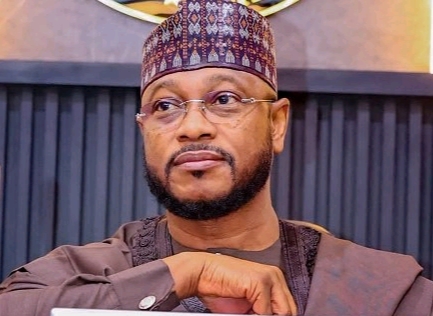
The Governor of Zamfara State, Dauda Lawal, has thrown his weight behind the establishment of state police, arguing that the move would make governors directly accountable for the security of lives and property in their states.
Speaking during a panel session at the Arise News Town Hall on State Police in Abuja on Thursday, Governor Lawal stated that the current security arrangement leaves governors in a difficult position because, although they are regarded as the chief security officers of their states, they lack the constitutional authority to direct security agencies.
“I am happy with this development because, in the past, part of my frustration was that although I am called the chief security officer of the state, I don’t have the command-and-control structure to determine what happens or give instructions to some of the security officers,” he said.
According to him, state police would address that contradiction by giving governors operational control over security while making them fully accountable to the people.
“If we are in control, Nigerians have every reason to question us as far as security is concerned. Security is fundamental. No matter the kind of development we want to bring into society, if there is no security, it is close to impossible to bring any meaningful change for the people,” he stated.
Lawal acknowledged concerns over funding and the possible abuse of state police but maintained that the advantages outweigh the risks. He also defended the Nigeria Police Force, saying its personnel are underfunded, inadequately trained, and poorly motivated despite the enormous risks associated with their duties.
“You will all agree with me that the police are not adequately funded, they are not properly trained, and their general welfare is not what it should be,” he said.
Citing Zamfara as an example, the governor noted that his administration has consistently invested heavily in supporting security operations despite lacking direct control over the agencies. He disclosed that the state government currently provides more than 30 per cent of the logistics used by security forces operating in the state.
“Within the last three years, I have bought over 500 vehicles merely for security,” he declared, adding that the Minister of Defence had recently commissioned 35 Armoured Personnel Carriers (APCs) and Mine-Resistant Ambush Protected (MRAP) vehicles procured by the state to strengthen security operations.
Lawal also revealed that his administration has invested in surveillance and attack drones to enhance intelligence gathering and combat criminal activities.
Reaffirming his hardline stance against banditry and kidnapping, the governor declared that he would never negotiate with criminals or pay ransom under any circumstances. “What I believe is that you can’t negotiate from a position of weakness. You can only negotiate from a position of strength,” he asserted.
Lawal recounted how his own brothers were kidnapped in 2019, with the abductors demanding about ₦300 million for their release. Despite the pressure, he disclosed that he refused to pay.
“My own brothers were kidnapped in 2019, and the criminals demanded about ₦300 million. I said I was not going to pay a dime. If you like, go and kill them,” he recalled.
According to him, his brothers were eventually released after spending three months in captivity without any ransom being paid. “I refused to pay that ransom. In the end, they released them after three months of captivity. I still stand on that. I will not negotiate, and I will not pay ransom to any criminal, no matter what happens,” he maintained.
The governor stressed that paying ransom only emboldens criminal groups by providing them with more resources to acquire weapons and expand their operations.
He further emphasised that if state police are established, governors are prepared to provide the necessary funding, equipment, and training required for effective policing.
“There is a need to have state police. That way, you can hold us responsible and accountable. We are ready to provide funding and even more to support them in fighting criminals in their respective states,” Lawal added.