‘Lead Africa’s Economic Transformation Beyond Oil,’ Pan-Africanist Patrick Lumumba Tells Delta Governor Oborevwori
...Says Development Without Energy Is Impossible

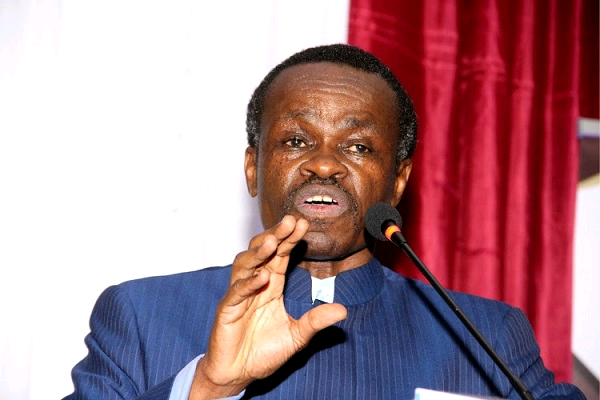
Renowned Kenyan lawyer, Pan-Africanist and public speaker, Prof. Patrick Lumumba, has challenged the Delta State Government to leverage its vast natural and human resources to become a model for Africa’s economic transformation, urging the state to move beyond its dependence on oil and embrace innovation, industrialisation, and intra-African investment.
Prof. Lumumba made the call while speaking as a guest speaker at the Delta State Economic and Investment Summit 2026, held in Asaba on Monday.
He commended the state government’s efforts to identify strategic sectors for economic growth but stressed that Delta must set higher ambitions by measuring its progress against global standards rather than comparing itself with less-developed economies.
The public speaker noted that despite Delta’s economy being larger than those of more than 20 African countries, the state must determine whether it is fully harnessing its strengths in agriculture, minerals, oil and gas, pharmaceuticals, and the blue economy to meet the demands of the 21st century.
“The question is, with all the resources that we have…what are we doing that is keeping with the demands of the 21st century?” he asked.
Lumumba urged the state to emulate resource-rich nations such as Norway by using oil revenues to build long-term prosperity through prudent investments and sustainable wealth creation.
He also challenged African leaders to rethink their approach to development, arguing that the continent remains overly dependent on external expertise and investment while overlooking its own intellectual and financial capacity.
“We still don’t think that fellow Africans are investors. We think that our investors must be Malaysians, Brazilians or Chinese. That is not the case,” he said.
The Pan-Africanist called for stronger continental economic integration, saying Africa’s development would accelerate if governments removed barriers to trade, investment and the movement of people across borders.
He envisioned a future where African investors could travel freely across the continent without restrictive visa requirements, noting that such integration would strengthen the implementation of the African Continental Free Trade Area (AfCFTA).
Lumumba equally urged Delta State to position itself as a destination for investors from across Africa, expressing hope that future editions of the summit would attract participants from countries including Kenya, Ghana, Sudan, Ethiopia, Morocco, and Egypt.
He asserted that greater African participation in the continent’s development would create more balanced partnerships with countries outside Africa.
“It is only when we do so that our friends of goodwill from Brazil, China, Europe, and the United States will begin to believe that the relationship between us and them is symbiotic rather than parasitic,” he stated.
While acknowledging the progress made by the Delta State Government, Lumumba encouraged Governor Sheriff Oborevwori to ensure that the state’s development model becomes a template that can be replicated across Nigeria and the African continent.
He also called for increased investment in research and development, urging the government to strengthen universities by supporting academics to produce research capable of driving innovation in agriculture, energy, and other critical sectors.
Lumumba, however, identified energy as the foundation of sustainable economic growth, insisting that industrialisation and competitiveness cannot be achieved without reliable electricity.
“You can talk development all you want. But if you don’t have energy, you are going nowhere,” he said.
Comparing Nigeria and China, he noted that Nigeria generates only about 5,000 megawatts of electricity, while China generates millions of megawatts, giving its manufacturers a significant competitive advantage through lower production costs.
He therefore urged Delta State to prioritise investment in energy infrastructure and alternative energy sources, arguing that affordable and reliable power would enhance industrial production and attract investors.
Lumumba further encouraged the state to build on its current achievements, describing Delta as a state with enormous potential capable of inspiring similar economic reforms across Nigeria and Africa.
“Delta looks good. Make it good. Allow it to remain good,” he added.