US Mining Deal: Nigeria Must Not Sign Away Future Generations, Shehu Sani Warns
...Says El-Rufai's Detention Price for Misgovernance

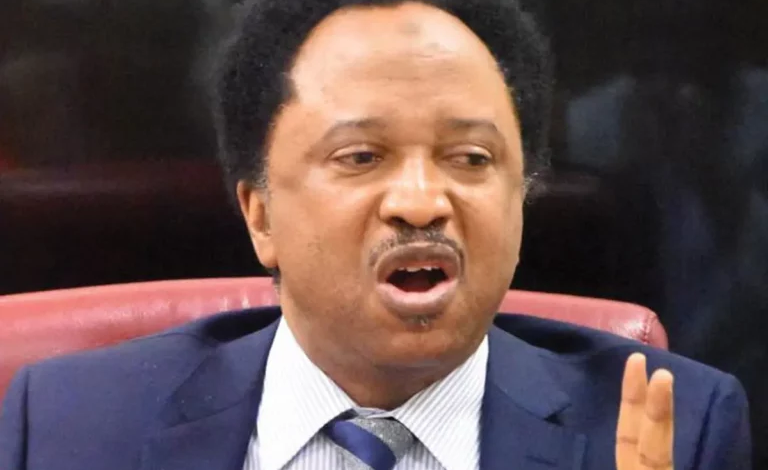
Former Kaduna Central Senator, Shehu Sani, has called for greater scrutiny of the mineral deal between Nigeria and the United States, warning that the country must not enter into a long-term agreement without public debate and legislative oversight.
Sani stated that Nigeria’s abundant mineral resources could contribute significantly to the country’s economy if properly exploited and refined, while also helping to curb illegal mining.
He made the remarks during an interview on Channels Television’s Politics Today on Friday, September 25, 2026.
However, Sani expressed concern about the lack of publicly available details of the agreement, saying Nigerians needed to know its terms before the country committed itself to a deal that could have consequences for future generations.
“If we are going to go into a mineral deal with the United States that spans decades, there is need for that document to be presented to the Senate and the House of Representatives to debate over it,” he said.
According to him, experts should also be allowed to examine the agreement before it is implemented.
Sani argued that a deal of such magnitude could potentially remain binding for decades, making it necessary for Nigeria to understand its obligations before signing.
“You can’t sign a deal with a superpower, and then tomorrow you say you want to pull out of it,” he said, stressing the need for public scrutiny.
He noted that the government deserved commendation for engaging the United States over Nigeria’s mineral resources, particularly because “formal exploitation” could generate wealth and reduce the activities of illegal miners.
However, he maintained that the potential benefits of the agreement should not prevent Nigerians from examining its terms.
“The danger of it is that we are going into a deal without public debate,” he remarked.
The former Senator also argued that Nigeria needed to be cautious when entering agreements with powerful countries, citing previous disputes involving international agreements as reasons for greater scrutiny.
On the reform of the United Nations, Sani argued that Africa should have a permanent seat on the UN Security Council, arguing that the current structure does not adequately reflect the realities of the 21st century.
He stated that African leaders had continued to advocate reform and expansion of the Security Council, adding that Nigeria was among those seeking greater African representation.
Sani equally defended Vice-President Kashim Shettima’s representation of Nigeria at the United Nations, saying although the president should ideally attend such major international gatherings, the Constitution permits the president to send his vice-president to represent him.
He described Shettima as competent, saying he had represented the country effectively.
On Nigeria’s 2027 presidential politics, Sani maintained that the southern part of the country should be allowed to complete an eight-year tenure in the presidency before power returns to the North.
He acknowledged that the arrangement was not a constitutional requirement but, in his view, would promote fairness, equity, and political stability.
“When the South has the eight-year, the North should have the eight-year.”
Sani asserted that allowing a southern candidate to “succeed” President Bola Tinubu in 2027 and serve until 2031 would make it easier for a northern candidate to seek the presidency thereafter without what he described as resistance from the South.
He stressed that his position did not amount to saying that anyone should be constitutionally prevented from contesting the presidency.
“Constitutionally, he has the right to run for any election,” Sani said while responding to Atiku Abubakar’s candidacy.
He maintained that political parties should consider regional balance in selecting their presidential candidates.
The human rights activist also addressed criticism of President Tinubu, saying Nigerians had a constitutional right to protest and express opposition to the government.
However, he argued that criticism of the Tinubu administration should be considered alongside comparisons with previous administrations, particularly on security and other areas of governance.
On the political situation in the North, Sani noted that people had the right to express their views, including through protests, but argued that insecurity and poverty were not problems that began with the current administration.
He emphasised that Nigerians should assess the present government based on its record compared with the situation it inherited.
Sani further defended Governor Uba Sani’s administration in Kaduna State, describing it as inclusive and saying the government had provided a sense of belonging to people across religious and ethnic groups.
He expressed confidence that Sani would be re-elected as governor, citing what he described as interventions in health, education, and infrastructure.
On former Kaduna Governor Nasir El-Rufai’s detention, Sani mentioned that the former governor was “paying the price” for what he described as his misgovernance and record in public office. He recalled cases involving arrests and detention during El-Rufai’s tenure, arguing that those in public office should remember that political power is temporary.
Sani, who also discussed the relationship between FCT Minister Nyesom Wike and the President, pointed out that the relationship has implications for both the APC and opposition candidates.
He explained that while Wike’s support for Tinubu could benefit the President, APC candidates contesting governorship and legislative seats could be affected if voters became confused about the distinction between the APC and the PDP.
He reiterated that political actors should be mindful of the long-term consequences of decisions taken while in office, particularly when entering agreements involving Nigeria’s natural resources and future economic interests.