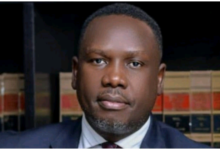

The presidential candidate of the Young Progressives Party (YPP), Peter Agada, has outlined plans to improve Nigerians’ standard of living through ward-based economic development, increased local production, procurement reforms, and higher crude oil output if elected in 2027.
Agada stated that the country’s improving macroeconomic indicators had yet to translate into better living conditions for many Nigerians, citing widespread poverty, low purchasing power, and challenges in the health and education sectors.
He made this known during an interview on Channels Television’s Politics Today on Friday, October 16, 2026.
“The macroeconomy is doing well based on the numbers, but the microeconomy is not doing very well at all,” he said, arguing that the economic realities of ordinary Nigerians differed from the positive figures being reported.
Agada outlined his approach to addressing the challenges, focusing on strengthening grassroots economic activities and developing each ward according to its resources and economic potential.
He explained that his proposed ward intervention programme would involve preparing a master plan for each of Nigeria’s 8,809 wards and developing economic clusters around agriculture, small and medium-sized enterprises, and solid minerals, depending on local endowments.
The YPP candidate stressed that the initiative is designed to make wards independent economic entities capable of generating wealth and creating opportunities for residents.
Using his home ward in Benue State as an example, Agada noted that local agricultural production and the processing and sale of “Okpa” could be developed into a viable business capable of creating employment and expanding economic activities.
He proposed allocating land for farming and housing while encouraging young people to participate in food production beyond subsistence agriculture.
Agada also pledged that his administration would prioritise the involvement of Nigerian professionals and businesses in the country’s infrastructure development, arguing that local expertise could deliver projects at lower costs.
He described his proposed implementation strategy as “Labour Direct,” which he said was informed by his experience in private practice and his assessment of engineering, procurement, and construction processes in Nigeria.
The presidential candidate maintained that greater reliance on Nigerian professionals and contractors would reduce waste and improve the execution of public projects.
As part of his proposed reforms, Agada disclosed that he would establish a National Council on Procurement to address what he described as longstanding weaknesses in government contracting procedures.
He asserted that reforming the engineering, procurement, construction, and finance process could help recover nearly ₦8 trillion lost to wasteful contractual practices.
Agada argued that Nigeria faced both revenue and expenditure challenges but emphasised that poor spending decisions were a major part of the problem.
“We have both, but mostly a spending problem,” he said when asked about the country’s fiscal challenges.
On crude oil production, the YPP candidate stated that Nigeria should increase output from its current level of approximately 1.8 million barrels per day to three million barrels per day.
He stressed that higher production would provide additional resources to address the country’s power challenges, supply domestic refineries, and improve the government’s capacity to manage its financial obligations.
Agada equally questioned the cost and prioritisation of major infrastructure projects, including the Lagos-Calabar Coastal Highway, arguing that public expenditure should be directed towards projects that offer greater value to the economy.
On national security, he proposed establishing an integrated network through which the armed forces and intelligence agencies could share information and coordinate their operations.
He pointed out that the system would monitor the country’s borders, highways, and entry and exit points, adding that he still held a licence for the security initiative, which he said had been signed by the Ministry of Defence.
Agada, who previously served as Director of Finance of the Obidient Movement, noted that his differences with his former principal, Peter Obi, centred largely on policy implementation rather than ideology.
He maintained that his campaign would focus on translating policy proposals into practical programmes aimed at improving economic conditions and creating opportunities for Nigerians.