Murray-Bruce Urges Tinubu to Overhaul Power Sector, Proposes Community-Based Electricity System

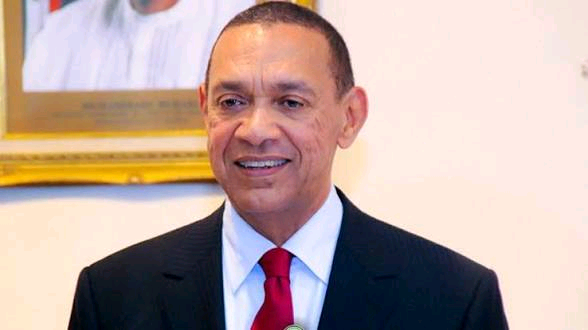
Former Senator Ben Murray-Bruce has urged President Bola Tinubu to overhaul Nigeria’s power sector, proposing a community-based electricity system to address the country’s persistent power challenges.
Murray-Bruce made the call in an open letter to the President titled, “Start the Dance on Electricity. The Privatisation Failed. The Owners Are Billing Darkness.”
He noted that Nigeria’s electricity sector requires a fundamental change, arguing that the 2013 privatisation of the power sector failed to deliver the expected results.
Murray-Bruce asserted that the privatisation amounted to “a transfer of custody”, as the investors who acquired the generation and distribution companies lacked the financial capacity to effectively operate and develop the assets.
“The men and women who bought the GenCos and the DisCos had enough money to purchase the assets. They did not have enough money to run them,” he said.
He argued that Nigeria should have sold the electricity assets to multinational operators with the financial and technical capacity to invest heavily in the sector.
Murray-Bruce described the privatisation as “a monumental catastrophe”, urging the country to stop dwelling on its failure and focus on developing a new model for electricity supply.
He also criticised the level of metering among electricity customers, noting that 5.1 million of Nigeria’s 12.31 million active electricity customers remained unmetered as of February 2026.
He stated that the situation had enabled electricity distribution companies to rely on estimated billing despite the absence of meters for millions of customers.
“A meter is a machine that tells the truth. An estimated bill is a machine that does not,” he said.
Murray-Bruce further criticised the practice of estimated billing, saying, “An industry that cannot generate power has discovered it can still generate revenue by billing darkness.”
He, however, acknowledged the financial challenges facing generation companies, noting that the GenCos were owed substantial sums.
According to him, the companies could not operate as private businesses when tariffs increased and expect the government to act as a public financier when their invoices were unpaid.
On his proposed alternative, Murray-Bruce remarked, “Every village, every estate, every community in Nigeria should have its own PHCN.”
He proposed that communities could secure bank financing to establish metered solar power generation systems capable of supplying their electricity needs.
Using Dolphin Estate in Lagos as an example, he suggested that an estate with about 5,000 families could obtain a ₦3 billion loan to build metered solar generation capable of supplying the estate fully.
He explained that state governments could guarantee such loans, while residents would pay their associations for electricity at cost plus a regulated margin.
“Multiply that across every estate, every ward, every community in this country,” Murray-Bruce said.
He also proposed that state governments should use solar power to provide electricity for streetlights, police stations, primary healthcare centres, schools and secondary roads, while the Federal Government should focus on powering federal roads, hospitals, universities, and other federal institutions.
Murray-Bruce stressed that the Minister of Power should supervise the Commissioners of Power in the 36 states and the Federal Capital Territory, rather than act as “the electrician of the Federal Republic.”
He argued that Nigeria was already spending heavily on unreliable electricity, noting that households and small businesses spend about $12 billion annually buying and operating generators.
“The funds exist,” he stated, adding that the country was already paying for electricity through some of the “most expensive, dirtiest and least reliable” means.
Murray-Bruce also pointed to the Electricity Act of 2023, which he said removed electricity from the Exclusive Legislative List and provided the legal basis for states to regulate their electricity markets.
He cited the example of Aba, where he pointed out that residents remained supplied during the national grid collapse on January 23, 2026, because Geometric Power’s generation and metered network did not depend on Abuja.
“One city solved it. Not with a policy paper. With a plant and a meter,” he remarked.
Murray-Bruce urged Nigerians to hold state and local governments accountable for electricity responsibilities, saying electricity had become a concurrent responsibility since 2023.
He also emphasised that the Federal Government, governors, DisCos, and GenCos all had responsibilities for the current situation, but argued that President Tinubu had the authority to “end the pretence and reset the model.”
Murray-Bruce reiterated that the proposed changes could significantly improve electricity supply across the country.
“Do this, and I will say it publicly and plainly: within four years, seventy per cent of Nigeria will have power,” he added.