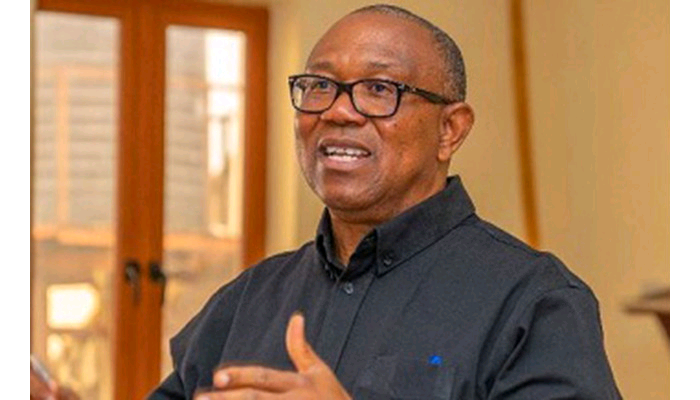
The presidential candidate of the Nigeria Democratic Congress (NDC), Peter Obi, has questioned President Bola Tinubu’s move to withhold records concerning his past from a United States court.
President Tinubu had asked the court to reject a motion seeking the release of records relating to investigations allegedly involving him, stressing that the documents are protected by privacy provisions under US law.
He also asked the court to deny Aaron Greenspan’s motion for summary judgment and allow the Federal Bureau of Investigation (FBI) and Drug Enforcement Administration (DEA) to maintain redactions and withholdings in records already released.
Reacting to the development, Obi expressed dissatisfaction, describing the situation as profoundly embarrassing.
He noted that, as a citizen of no other country who has never sought foreign citizenship even when doing so became fashionable, his loyalty to Nigeria and his faith in its destiny remain unshaken.
“Yesterday, 30th of August, being Sunday, I fervently prayed for our nation and for those entrusted with the solemn responsibility of leadership. I found myself deeply saddened by the direction in which our country is heading.
“It is profoundly embarrassing that we have reached a point where a sitting President is asking a foreign court to withhold records concerning his past, particularly records relating to matters of legitimate public interest,” he decried.
Obi asserted that leadership demands the courage and humility to confront one’s history, including acknowledging mistakes, providing candid explanations where questions arise and, where necessary, apologising and seeking forgiveness.
He stated that true authority is strengthened, not diminished, when a leader accepts responsibility rather than seeking to shield uncomfortable aspects of the past from legitimate scrutiny.
This, he explained, becomes particularly important when questions concern educational credentials.
Obi argued that issues surrounding foundational schooling — primary and secondary — should not remain unresolved or be addressed primarily through legal proceedings.
He emphasised that Nigerians deserve clear, credible and verifiable explanations, especially when such records had been submitted in the past.
The former Anambra State governor expressed concern over the example this sets for more than 200 million Nigerians, particularly the over 30 million young people in schools.
According to him, the nation’s highest office should exemplify integrity, accountability, transparency, and ethical leadership.
While acknowledging that an imperfect past is part of the human condition, Obi affirmed that what matters is the willingness to confront it with humility, honesty and a deep sense of apology, make amends where necessary and, when circumstances so demand, place the interests of the nation above personal ambition.
“When will our political class fully appreciate that individual ambitions are temporary, while the nation endures?” he asked.
Obi said that the presidency is an office held for a season, maintaining that the moral standards established by those who occupy it can influence generations.
He added that Nigeria is greater than any one person and that the integrity of the Republic must always come before the interests of the individual.