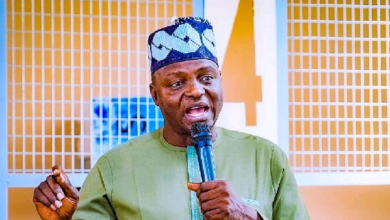

The Governor of Oyo State, Seyi Makinde, has explained why he lost confidence in President Bola Tinubu, citing concerns over economic management, national unity, political priorities, and the handling of economic reforms.
Makinde made this known in a newsletter on Thursday, November 12, 2026, where he justified his decision to challenge Tinubu in the 2027 presidential election, despite having supported him during the 2023 general election.
He stated that his decision was not motivated by any personal disagreement with the President or an ambition to occupy the presidency, but by his concerns about Nigeria’s future and the opportunities available to its citizens.
The governor disclosed that he initially supported Tinubu because he believed the President’s political experience and ability to build alliances would help establish a government of national unity and competence capable of addressing the country’s economic challenges.
However, Makinde said that developments under the Tinubu administration over the past three years had made him lose confidence in the President’s leadership direction.
He identified four major areas of concern, including economic stability without corresponding development, governance by excuses, the pursuit of political power at the expense of national unity, and economic reforms implemented without adequate protection for Nigerians.
On the economy, Makinde acknowledged improvements in some macroeconomic indicators but argued that increased government revenues and external reserves had not translated sufficiently into productive businesses, employment, better incomes, and improved living conditions for ordinary Nigerians.
He also criticised what he described as the administration’s tendency to offer explanations for inherited challenges, including poverty, insecurity, and electricity problems, instead of demonstrating measurable progress in addressing them.
The governor further expressed concern that Tinubu’s political alliances were serving his political objectives more than the national interest, warning that the weakening of opposition parties posed a threat to the country’s democracy.
Commenting on economic reforms, Makinde affirmed that he supported the removal of petrol subsidy and reforms to the foreign-exchange system but believed they should have been implemented with adequate preparation and measures to cushion their effects on Nigerians.
Using the petrol subsidy removal as an example, he said that he would have utilised the presidential transition period to prepare a coordinated intervention involving the Federal Government, state governors, and local governments.
He emphasised that such an arrangement would have enabled governments to identify necessary interventions, determine funding sources, and establish mechanisms for accountability before implementing the policy.
Makinde also cited his administration’s response to subsidy removal in Oyo State, noting that additional Omituntun buses were deployed, existing transport fares were maintained, and half-price travel was introduced for students and senior citizens within 11 days of the announcement.
He added that the state subsequently introduced the Sustainable Actions for Economic Recovery (SAfER) programme in August 2023 to provide food relief to 200,000 vulnerable households, subsidise public transportation, and support small businesses and farmers.
The governor stressed that leadership required not only making economically sound decisions but also understanding their impact on the people.
While explaining his decision to contest the 2027 presidential election, Makinde stated that he was concerned about the consequences of allowing the country to continue on its current trajectory for another four years.
He also dismissed suggestions that he should postpone his presidential ambition until 2031 or 2035, reiterating that the challenges facing the country required urgent attention.
Makinde noted that his experience as governor had strengthened his belief in the possibility of building a Nigeria that provides opportunities for its citizens while unveiling his proposed Reset Nigeria Agenda.
He urged Nigerians to examine his record in Oyo State and scrutinise his proposals, stressing that anyone seeking the mandate to lead the country must explain what they intend to do, how and when they plan to do it, and how their performance would be measured.
The governor also reaffirmed his commitment to serving only one four-year term if elected president, saying he would lead a transitional government of national unity focused on measurable progress.
Makinde called on Nigerians not to lose faith in the electoral process, urging them to use the 2027 election to determine the country’s future direction.
He maintained that his presidential ambition was driven by his desire to ensure that the opportunities that enabled him to build his career and business would remain accessible to millions of Nigerians.