
Nigeria’s headline inflation rate declined to 14.63 per cent in September 2026 from 15.39 per cent in August, while food inflation remained high at 19.59 per cent, leaving many households struggling to afford their usual meals.
For many families across the country, the decline in inflation has not necessarily translated into cheaper food prices or improved purchasing power. Instead, some households have reduced the quantity of food they buy, switched to cheaper alternatives or skipped meals to manage their budgets on a ₦70,000 minimum wage.
In Ajangbadi, Ojo Local Government Area of Lagos State, Mrs Iguobadia, a school teacher and mother in a household of eight, disclosed that the family now spends approximately ₦70,000 monthly on food, compared with ₦50,000 in 2025.
She said the cost of ingredients used in preparing soup has particularly become expensive and difficult to manage. She believes increasing the minimum wage in both the public and private sectors would help workers cope with the rising cost of living.
For Mr Adaramola, who lives in a household of three, the increase in food expenses has also become noticeable. He said the family’s monthly food expenditure has risen from approximately ₦30,000 in 2024 to ₦90,000 in 2026.
He explained that some foods no longer fit the family’s budget because their income can no longer support their previous consumption patterns.
Mr Kenneth, a mechanic who has worked in the profession for more than 15 years, also describes the pressure of providing for his household of seven.
He said feeding the family has become increasingly difficult as food prices continue to rise, despite receiving financial support from his wife.
According to him, the family now spends about ₦20,000 weekly on food, often reducing the quantities they buy to ensure that the money also covers other household expenses.
He added that he struggles to meet other financial obligations, including electricity bills, transportation, school fees and healthcare costs.
“When there is not enough money to feed everyone, the adults go without food so the children can eat,” he said.
In another household of four adults, Emeka said the family had to change its eating habits because of the rising cost of food.
He explained that they have replaced chicken, turkey and fish with cheaper protein sources such as crayfish and eggs.
Emeka said the family’s weekly food expenditure increased from approximately ₦10,000 in 2024 to ₦25,000 in 2025 and ₦30,000 in 2026. According to him, a pot of soup now costs about ₦10,000, yet it may only last two days.
He said that although the prices of some food items have declined, the changes have not significantly improved his financial situation, as members of his household still cannot afford some of the foods they prefer.
For some households, however, maintaining their usual diet remains a priority despite rising food costs.
Mrs Amen, a banker, said her family spends approximately ₦30,000 weekly on food, an increase from previous years.
Despite the rising expenses, she said the household has not significantly changed its eating habits because meeting the nutritional needs of the children remains a priority.
She added that the additional food expenses have not prevented the family from meeting its other financial responsibilities, although items such as chicken and turkey remain particularly expensive.
She believes government intervention is necessary to make food more affordable for average Nigerians.
These experiences show how households are adjusting their food consumption and spending as the cost of feeding continues to rise.
According to the National Bureau of Statistics (NBS), headline inflation stood at 14.63 per cent in September 2026, down from 15.39 per cent in August. This represented a decline of 6.35 percentage points from the 20.98 per cent recorded in September 2025.
However, the decline does not mean that prices have returned to previous levels. Rather, it indicates that prices are increasing at a slower rate than they did a year earlier.
The NBS report also showed that food inflation stood at 19.59 per cent in September 2026, compared with 20.16 per cent recorded in September 2025, on a year-on-year basis.
On a month-on-month basis, food inflation stood at -1.55 per cent in September 2026, compared with 1.02 per cent in August, representing a decline of 2.57 percentage points.
NBS state-level figures showed that year-on-year food inflation was highest in Lagos at 34.40 per cent, followed by Imo at 33.79 per cent and Ondo at 31.49 per cent.
Meanwhile, Taraba (-7.47 per cent) and Yobe (-0.37 per cent) recorded declines, while Borno, at 2.18 per cent, recorded the slowest increase.
On a month-on-month basis, Imo (5.15 per cent), Ondo (4.46 per cent) and Oyo (3.82 per cent) recorded the highest food inflation rates in September 2026.
In contrast, Adamawa (-13.84 per cent), Kano (-11.01 per cent) and Bauchi (-10.21 per cent) recorded the highest declines.
The NBS Selected Food Price Watch Report also showed changes in the average prices of selected food items between September 2023 and September 2025.
The average price of one kilogramme (roughly 1.2 to 1.3 derica tins, a standard local unit of measurement used for dry food items in Nigerian markets) of loose brown beans rose from ₦716.97 in September 2023 to ₦2,738.59 in September 2024, representing an increase of 281.97 per cent.
Although the price dropped to ₦1,815.76 in September 2025, it remained significantly higher than its 2023 level, it declined further to ₦1,344.93 in May 2026, according to the NBS Selected Food Price Watch Report.
Rice, however, recorded a more modest increase. The average price of one kilogramme of locally produced short-grain rice rose from ₦757.06 in September 2023 to ₦1,914.77 in September 2024. It increased slightly further to ₦1,952.94 in September 2025, representing a 1.99 per cent year-on-year increase, before declining slightly to ₦1,905.43 in May 2026.
Similarly, the average price of white garri dropped from ₦1,170.25 in September 2024 to ₦871.78 in September 2025, representing a 25.51 per cent decrease, by May 2026, the price had declined further to ₦813.24.
However, the report showed a different trend for some other food items. The average price for a kilogramme of boneless beef increased by 21.79 per cent, rising from ₦5,633.60 in September 2024 to ₦6,861.25 in September 2025. It increased further to ₦7,171.41 in May 2026.
Tomato prices also declined, with the average cost of one kilogramme falling from ₦1,430.87 in September 2024 to ₦1,279.84 in September 2025, representing a 10.56 per cent decrease. However, the May 2026 report recorded an increase to ₦1,560.56.
The figures show that while the prices of some food items declined, others continued to rise.
Consequently, lower food prices do not necessarily mean that food has become more affordable, particularly for households whose incomes have not increased. For families already struggling to meet their daily needs, feeding remains a challenge even when the prices of some food items fall.
The World Bank’s October 2025 Nigeria Development Update highlighted the disproportionate impact of rising food prices on poorer households, noting that food inflation is particularly harmful to economically vulnerable families, whose food expenditure accounts for up to 70 per cent of their total consumption.
It further noted that although inflation had shown signs of easing, food price pressures remained high. According to the report, the average price of food items mostly consumed by poorer households increased fivefold between 2020 and 2024, compared with a threefold increase in overall food prices and more than a twofold increase across all products in the Consumer Price Index (CPI) basket.
The Bank expects inflation to gradually ease but remain high, stressing that sustained monetary discipline and structural reforms are necessary to address food price pressures.
Samer Matta, the World Bank’s Senior Economist for Nigeria, described rising food prices as “the biggest tax on the poor.”
Similarly, the International Monetary Fund (IMF), in its July 2026 publication, noted that although Nigeria was benefiting from improved macroeconomic stability and favourable terms-of-trade effects, higher prices of essential goods were likely to worsen poverty and food insecurity.
These economic pressures are reflected in the choices some households now make when planning their food budgets.
Traders’ Experiences
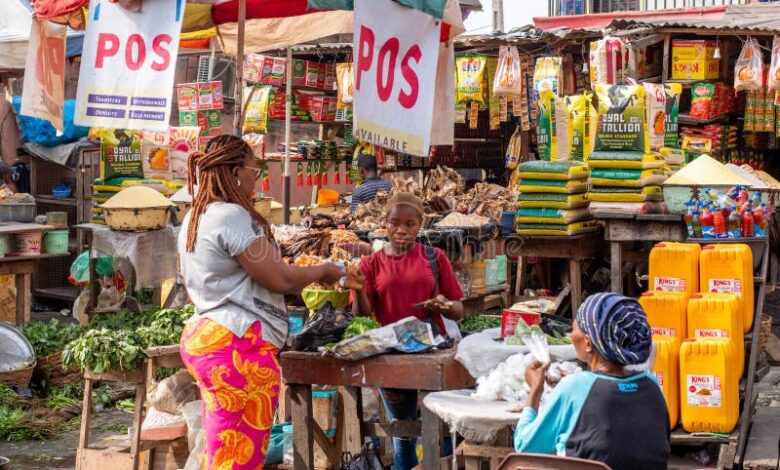
Traders offered different accounts of price movements, depending on the food items they sell and the periods under consideration. Some identified fuel and transportation costs, while others also pointed to insecurity as factors contributing to rising food prices.
At Ile-Epo Market, located along the Lagos-Abeokuta Expressway in Abule Egba, Alimosho Local Government Area, Mrs Edna, who has sold foodstuffs for 15 years, described significant fluctuations in the prices of rice, beans and garri.
She said a bag of rice, which sold for about ₦100,000 in late 2024, dropped to between ₦60,000 and ₦70,000 between mid-2025 and late 2025 before rising to ₦112,000 in early 2026.
By late 2026, however, prices had fallen to between ₦51,000 and ₦62,000, depending on the type and brand. She added that in 2024, a paint rubber (a standard local unit of measurement used for dry food items in Nigerian markets) of rice sold for ₦7,000, while a derica cost ₦1,200.
According to her, a bag of garri cost ₦28,000 in 2025, with a paint rubber selling for ₦2,000 and a derica for ₦500. A bag of beans, she said, cost ₦120,000, while a paint rubber sold for ₦6,000 and a derica for ₦800.
She explained that seasons and border policies influence food prices. While garri prices typically rise during the dry season and fall during the rainy season, she said rice prices are affected by border closures and festive periods.
She also identified fuel prices as a major factor, explaining that petrol is required for various stages of garri production and that labourers often increase their charges when fuel prices rise.
Another foodstuff trader at Ajangbadi Market, Samuel, who has been in the business for about four years, described a different price trend.
According to him, a bag of local rice cost ₦45,000 in 2024 before increasing to ₦62,000 in 2025. He currently sells it for about ₦65,000 in 2026.
He also observed that customers often reduce the quantities they buy when prices increase but purchase more when prices decline.
For Mrs Samuel Abasiama, a foodstuff trader in Akwa Ibom with more than 10 years of business experience, rising costs have significantly affected her operations.
She disclosed that after selling handbags until 2024, she moved into foodstuff trading in 2025 because of difficulties raising capital for her previous business.
However, increasing commodity and transportation costs have made it increasingly difficult to maintain profit margins.
Abasiama explained that she initially supplied food items in bags but switched to selling smaller quantities in cups in 2026 because of the rising cost of restocking and transporting goods.
She also recalled buying a bag of honey beans for ₦130,000 before the price increased to ₦150,000 the following week.
The increase, she said, made it difficult to continue selling beans profitably, forcing her to stop stocking the commodity.
She attributed rising food prices to fuel costs, transportation expenses and insecurity, particularly because some food items are transported from northern parts of the country.
She also acknowledged that traders who purchase goods at high prices could suffer losses when market prices suddenly decline.
Mrs Ekeh, a frozen food seller of five years at Ajangbadi Market, said a kilogramme of frozen chicken increased from ₦5,000 in 2024 to ₦5,500 in 2025 and ₦7,000 in 2026.
She said frozen turkey wings rose from ₦6,500 in 2024 to ₦8,500 in 2025 before dropping to ₦8,000 in 2026.
She also added that, Titus (mackerel) which was sold at ₦4,500 per kilogramme in 2024, increased to ₦8,500 in 2025 and between ₦9,200 and ₦12,000 in 2026, depending on size.
She identified changes in wholesale prices, exchange rates, rising fuel prices and unreliable electricity supply as some of the challenges affecting her business.
The traders’ accounts suggest that food prices vary depending on the type of commodity, location, quality, quantity and bag size. Their individual experiences, however, may not necessarily reflect prices across entire markets.
Why Food Remains Expensive
Beyond the experiences of households and traders, broader economic factors continue to influence the prices consumers pay for food.
Dr Marcel Okeke, a former chief economist of Zenith Bank and former editorial board member of The Guardian Newspapers, who now works as an independent economic analyst, identifies insecurity as one of the major factors affecting food production in Nigeria.
According to him, insecurity has displaced farmers from their farmlands in several food-producing communities, preventing them from carrying out their agricultural activities.
“One is the pervasive insecurity in the land,” he says.
He explained that some farmers have been forced to abandon their farms because of attacks by terrorists and bandits, while others are afraid to return to their communities.
He also identified poor infrastructure and transportation costs as factors contributing to rising food prices.
Exchange rate fluctuations, he added, contribute to imported inflation because importers require more naira when the value of the dollar increases.
He further pointed to weather conditions, including flooding in some areas and inadequate rainfall, as factors affecting agricultural production and harvests.
On the difference between headline and food inflation, Okeke said the figures indicate that food remains a particular problem for Nigerians.
“That gap now shows you that there’s a problem with the food,” he said.
He argued that the NBS figures appear not to be in tune with the reality experienced by many Nigerians, noting that headline inflation is around 14 per cent while food inflation is close to 20 per cent.
According to him, food prices are likely to remain high in the foreseeable future because insecurity and poor road infrastructure cannot be addressed overnight.
Nigeria’s reported economic growth has also raised questions about why many households continue to struggle with basic necessities.
Okeke observed that although the country’s economic indicators appear encouraging, the experiences of ordinary Nigerians tell a different story, describing the gap between economic growth and household welfare as a paradox.
While government officials have pointed to improvements in economic indicators following recent reforms, the experiences of many Nigerians suggest that the benefits have yet to translate into better living conditions for a significant proportion of households.
Okeke acknowledged that government reforms over the past three years have helped stabilise some aspects of the economy but argues that they have also increased poverty and hunger among Nigerians.
On his part, Professor Ekundayo Mesagan of the School of Management and Social Sciences, Pan-Atlantic University, also acknowledged the short-term difficulties associated with the government’s economic reforms, particularly the removal of fuel subsidy and the liberalisation of the foreign exchange market.
He explained that although the policies were intended to change how resources are allocated in the economy, their immediate effects included higher prices, reduced real household incomes and declining purchasing power.
According to him, the benefits of such reforms may take time to become visible, particularly if the policies are sustained.
However, he cautioned that the immediate pressure on households should not be overlooked when assessing their overall impact.
Okeke similarly argued that rising transportation costs, petrol prices and the cost of essential goods have weakened households’ purchasing power.
“When whatever is happening in the economy weakens your purchasing power, you become poorer, and that is what the majority of Nigerians have been experiencing,” he said.
He maintained that although the prices of goods and services have increased, many people’s incomes have not risen at a comparable rate.
“Everything has gone up, but has their income gone up like that? No,” he asked.
For households already struggling to meet their daily needs, the widening gap between income and expenditure has made it increasingly difficult to maintain their previous standard of living.
Food Affordability and the 2027 Elections
With Nigeria’s Presidential and National Assembly elections scheduled for January 16, 2027, the rising cost of living is likely to remain an important issue in public discussions about the administration’s economic performance.
For households struggling to afford food, the cost of basic necessities may influence how they assess government policies and performance.
However, Professor Mesagan cautioned against assuming that economic hardship alone will determine how Nigerians vote.
He explained that voting decisions may also be influenced by political loyalty, ethnic considerations, party affiliations and other social factors.
This means that although the cost of living remains an important concern, its influence on voting decisions may differ among individuals and communities.
The election period also raises questions about the effectiveness of food distribution and other forms of assistance by politicians.
Mesagan argued that distributing food during election campaigns does little to address the underlying causes of food insecurity.
He describes such gestures as temporary political activities that do little to improve people’s long-term access to affordable food.
According to him, giving people small quantities of food or money cannot replace sustainable measures that improve food production, household incomes and access to basic necessities.
Okeke also expresses concern about the distribution of food items by politicians during election periods.
He noted that politicians often distribute items such as rice, beans, yam, beverages and cooking oil to residents, particularly as elections approach.
“Those things are just trying to manipulate voters,” he said.
He cautioned Nigerians against confusing temporary food handouts with lasting improvements in food affordability, stressing the need to look beyond such gestures when assessing the country’s food situation.
Outlook: What Lies Ahead?
Looking ahead, Okeke expresses concern that food prices may remain high in the coming months if the factors affecting production and distribution are not adequately addressed.
He said insecurity, transportation costs and poor infrastructure will continue to affect food supply and prices unless meaningful improvements are made.
He described the situation as a food crisis and warns that it could persist for several months.
Despite these challenges, Mesagan expects food prices to continue moderating if current economic conditions remain favourable.
He explained that seasonal changes often influence food prices, with increases sometimes recorded towards December. However, he notes that food prices declined during the same period in 2025 and expresses hope that a similar trend could occur this year.
He identified government support for farmers, increased agricultural production and improved access to farmlands as important measures that could help reduce food prices.
However, he warned that renewed insecurity could disrupt production by preventing farmers from accessing their farms.
He also identified global developments, including geopolitical tensions and changes in crude oil prices, as factors that could affect the cost of imported food and other commodities.
For Nigerian households, however, the immediate concern remains how to cope with the rising cost of feeding while meeting other essential financial obligations.
Ultimately, the real measure of an improving economy may not be limited to declining inflation figures or other macroeconomic indicators, but whether ordinary Nigerians can afford to put nutritious meals on their tables without sacrificing other basic needs.