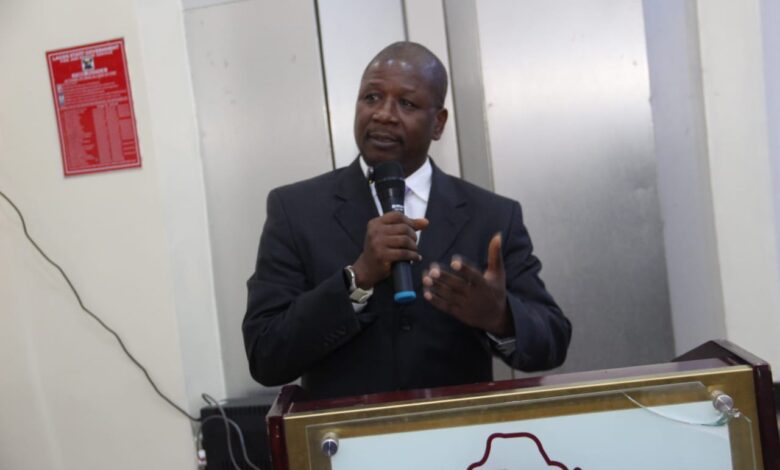
The Director, International Ocean Institute (IOI) Nigeria Centre and Marine Research Officer at the Nigerian Institute for Oceanography and Marine Research (NIOMR), Akanbi Williams, says Nigeria must place marine science at the centre of fisheries management and investment to unlock the economic potential of its waters, strengthen domestic fish production and build a sustainable blue economy,
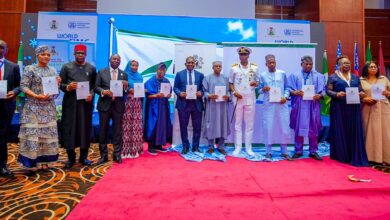
Williams, who spoke at the National Conference organised by the Maritime Correspondence Organisation of Nigeria (MARCON), on Sustainable Fishing in Nigeria, said the country’s extensive marine resources has not translated into adequate domestic fish production, with local output currently meeting less than 40 per cent of national fish demand.
He made the submission while presenting a paper titled “Marine Science and Sustainable Fisheries Development in Nigeria: Bridging Research, Policy and Practice,” in which he stressed the need to move scientific knowledge beyond research institutions and into fisheries management, investment decisions and fishing practices.
Nigeria has an 853-kilometre Atlantic coastline across four coastal geomorphic zones and an Exclusive Economic Zone (EEZ) covering about 210,900 square kilometres. The country also gained an additional 16,300 square kilometres of seabed following a 2023 ruling by the United Nations Commission on the Limits of the Continental Shelf.
According to Williams, the size of Nigeria’s marine space makes scientific understanding critical to determining how its fisheries resources can be exploited without undermining the ecosystems and communities that depend on them.
He said marine science provides the evidence required to understand fish stocks, biodiversity, oceanography, fishing technology, coastal processes and the livelihoods of fishing communities, but stressed that data collection alone would not deliver sustainable fisheries.
The real value of research, he argued, lies in translating scientific information into management decisions, responsible investment, improved fishing practices and community action.
He cited the management of Nigeria’s inshore fishing zone as an example of how scientific information can be applied to fisheries management, while also identifying bycatch as an area where research can produce practical innovations that improve fishing practices and reduce undesirable catches.
He also warned that climate change and marine ecosystem degradation were changing the conditions under which fisheries operate, making it necessary for management decisions to respond to changing marine environments and the health of the ecosystems that sustain fish stocks.
Williams further identified illegal, unreported and unregulated (IUU) fishing as a major enforcement challenge, noting that weak control of fishing activities can undermine both resource management and the effectiveness of scientific assessments.
On the commercial opportunities in the sector, Williams drew attention to Nigeria’s tuna potential but stressed that expansion must be preceded by adequate scientific knowledge of the resource.
He summed up the approach as “science before expansion,” stressing that Nigeria must first understand the health and sustainability of its fish stocks before opening the sector to large-scale commercial exploitation and investment.
He said the country already has strong marine scientific capacity and a long history of fisheries and ocean research, meaning the challenge was not simply the absence of knowledge but the failure to consistently move that knowledge into policy and practice.
He called for a stronger link between research institutions, policymakers, fishing operators, investors and coastal communities so that scientific evidence can influence management decisions and ultimately produce practical results on the water.
According to him, the desired model for Nigerian fisheries development must manage the resource, ecosystem and people together, rather than treating fisheries as an isolated economic activity.
Such an approach, he said, should deliver healthier fish stocks and protected marine ecosystems, while providing safer livelihoods, stronger fishing communities and resilient fisheries enterprises capable of creating food and economic opportunities for future generations.
Williams said the measure of success should, therefore, not be how much research Nigeria produces, but how effectively that knowledge guides action.
“Knowledge creates value only when it guides action,” he stated, stressing the need to translate research into updated data, management decisions, responsible investment, better fishing practices and community action.
The Marine Research Officer ultimately underscored the need to connect research with policy and practical action if Nigeria is to unlock the full potential of its fisheries sector.
According to him, “Sustainable growth would depend not only on the country’s rich marine resources and growing body of scientific knowledge, but also on how effectively these are translated into responsible economic opportunities.”