Efficient Waterways Can Transform Nigeria’s Fisheries, Coastal Livelihoods – LASWA
…Seeks New Economic Role for Inland Infrastructure

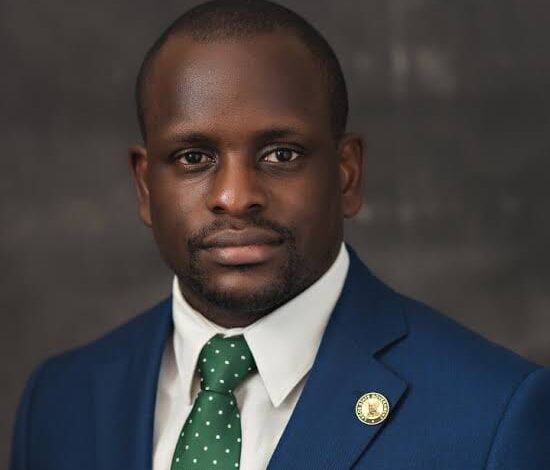
The General Manager of the Lagos State Waterways Authority (LASWA) and Special Adviser to the Lagos State Governor on Blue Economy, Mr. Oluwadamilola Emmanuel, has called for greater integration of inland waterways infrastructure with Nigeria’s fisheries and coastal economic activities.
Emmanuel stated that efficient, safe, and well-regulated waterways could significantly improve market access, strengthen fisheries value chains, and create more opportunities for coastal and riverine communities.
He made the remarks while delivering a paper titled “Unlocking the Potential of Inland Waterways for Sustainable Fisheries and Coastal Livelihoods” at the National Conference on Sustainable Fishing organised by the Maritime Correspondents’ Organisation of Nigeria (MARCON) on Wednesday, September 30, 2026.
The conference, held at the Rockview Hotel, Apapa, Lagos, was themed “Sustainable Fishing in Nigeria: Pathways to Growth, Food Security, and Coastal Livelihoods.”
Emmanuel, who was represented at the event by the Head of Operations, LASWA, Ibrahim Oladayo, noted that waterways should no longer be viewed merely as routes for passenger transportation but as infrastructure capable of connecting producers, traders, and communities to wider markets.
He mentioned that the condition of waterways directly affects fishing communities, from access to fishing grounds and transportation of aquaculture inputs to the evacuation of fresh catches and movement of fish products to urban markets.
“A waterway is not merely a wet highway across which boats slide. It is connective economic infrastructure,” he said.
Emmanuel stressed that improving waterways through channel clearance, safety measures, and modern infrastructure could transform the economic activities taking place around aquatic corridors.
He affirmed that Lagos was already witnessing the economic benefits of structured waterway development, citing LASWA’s commercial waterways network, which he said currently comprised over 30 active commercial ferry routes, more than 520 certified commercial watercraft, 28 operational jetties and modern terminals, as well as 10 Waterways Monitoring and Data Management Centre surveillance hubs.
The LASWA boss disclosed that the water-transport sector in Lagos currently sustains approximately 10,120 direct and indirect livelihoods, involving boat captains, deckhands, terminal personnel, boat-yard builders, marine engineers, fuel suppliers, ticket vendors, beach masters, and other waterfront enterprises.
He argued that the experience demonstrated how functioning and regulated waterways could stimulate wider economic activities within communities.
Turning to fisheries, Emmanuel explained that fishing remained deeply rooted in the economic life of communities in Epe, Ikorodu and Badagry, adding that the livelihoods of families in these areas were closely connected to the aquatic environment.
He emphasised that while LASWA was neither a fisheries regulator nor a commercial fishing enterprise, the operational condition of the waterways remained important to fishers, fish farmers, processors and traders.
Citing Epe as an example, he noted that the economic journey of fish extended beyond harvesting to transportation, landing, cold storage, processing and access to consumers.
“Suddenly, what sounded like an exclusive fisheries issue becomes an infrastructure, cold-chain, and waterways connectivity challenge,” he said.
Emmanuel also highlighted the experience of Ofin in Ikorodu, where he said the construction of a community bridge through a FADAMA intervention was followed by what the Baale reported as an immediate and measurable increase in local fish-farming enterprise.
According to him, the experience demonstrated that infrastructure outside a fish pond could have a direct impact on fisheries production and profitability.
“Often, the most powerful infrastructure intervention for fisheries lies completely outside the fish pond,” he said.
He consequently advocated an integrated approach to waterfront infrastructure, proposing that, where zoning and available space permit, facilities could accommodate passenger mobility alongside artisanal landing points, solar-powered cold storage, gear-repair workshops, processing areas, and regulated waterfront markets.
He emphasised that such facilities should be designed to stimulate economic activity in the communities they serve without compromising their primary functions.
The LASWA boss also identified safety as a critical component of economic development on the waterways, stressing the importance of surveillance, marine-guard deployments, search-and-rescue capacity, vessel seaworthiness audits, and enforcement of life-jacket requirements.
He mentioned that LASWA had expanded its Waterways Monitoring and Data Management Centre through high-definition radar, Automatic Identification System (AIS) tracking and camera coverage across key channels.
On the Omi Eko Project, Emmanuel described the initiative as an example of large-scale public investment in waterways infrastructure, noting that it was a mass-transit mobility project with wider implications for the Blue Economy.
He declared that the project, implemented by LASWA with international development financing, was backed by a €410 million Team Europe financing package comprising €170 million from the European Investment Bank, €130 million from Agence Française de Développement and a €60 million investment grant from the European Union.
According to him, the project includes 15 structured commercial ferry routes covering roughly 140 kilometres, 25 upgraded, expanded and climate-resilient ferry terminals, and a fleet of 75 electric vessels, each capable of carrying up to 440 passengers.
Emmanuel noted that the wider significance of such infrastructure lay in its potential to reshape economic connectivity across waterfront communities.
“When you dredge channels, deploy smart surveillance, upgrade shoreline terminals, introduce zero-emission electric craft, and link remote waterfronts to commercial city centres, you redefine the economic geography of the entire aquatic basin,” he said.
He further called for greater use of empirical data in planning interventions, saying authorities needed accurate information on navigational bottlenecks, fish landing points, cold-chain gaps, and communities affected by tidal changes.
He highlighted six principles from Lagos’ experience, including governance, infrastructure, safety, value creation, community participation, and broader impact.
The LASWA boss argued that the value of waterways should be assessed not only by the number of boats using them but also by the wealth, food security, and livelihoods generated around them.
Extending the argument beyond Lagos, Emmanuel maintained that Nigeria’s inland waterways and coastal assets represented significant opportunities for fisheries, aquaculture, transportation and other aquatic economic activities.
He, however, acknowledged that the conditions and opportunities differed across the country’s river basins.
“Lagos does not claim to offer a one-size-fits-all blueprint for every state. Every river basin possesses distinct ecological, cultural, and market conditions.”
He urged stakeholders to treat inland waterways as core economic infrastructure by mapping them, maintaining navigability, improving security, linking riverine communities to commercial centres, using reliable data, and strengthening coordination among relevant institutions.
Emmanuel also called for waterways development that would connect fishers to markets, support food security, create opportunities for small businesses and coastal communities, and protect aquatic ecosystems.
He reiterated that the future of Nigeria’s fisheries was closely linked to the development of its inland waterways, adding that a combination of safety, data, and economic planning could turn the Blue Economy into a driver of growth and livelihoods.