Modern Infrastructure, Skilled Personnel, Knowledge Sharing Critical to Nigeria’s Maritime Future – Omole

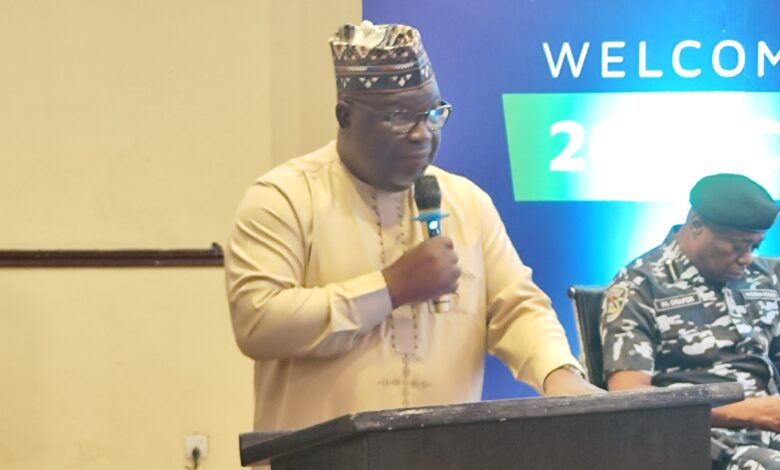
Nigeria’s maritime industry needs modern port infrastructure, a highly skilled workforce and effective knowledge sharing to compete in a rapidly changing global shipping environment.
This was the position of the Managing Director, Ports Operations SBU, Dangote Industries Limited, Simeon Omole, who urged stakeholders to invest in all three areas to build a more efficient sector.
“Maritime is no longer simply about moving cargo from one place to another. The future belongs to ports and maritime systems that are faster, safer, cleaner and smarter,” Omole said.
He identified infrastructure as one of the critical foundations for maritime development, citing the development of Dangote Refinery’s Single Point Mooring (SPM) complex as an example of what could be achieved when infrastructure is designed around the demands of modern shipping.
The SPM complex, comprising five buoys located about 15 kilometres offshore, was developed to handle Very Large Crude Carriers and operate around the clock.
According to him, the project required the development of solutions suited to Nigeria’s operating environment, including collaboration with regulators, the delineation of the Lekki anchorage, the deployment of high-bollard-pull tugs and the establishment of marine safety protocols.
“Technology and infrastructure must respond to the realities of the environment in which they are deployed. That is innovation — solving a problem that had no precedent,” he explained.
Omole also stressed the importance of skilled personnel, warning that infrastructure and technology would deliver little value without people with the knowledge and competence to operate them.
He recalled how Dangote Industries invested in training indigenous Mooring Masters and crews to global SPM standards, culminating in the successful berthing of the first crude vessel, MT OTIS, by Nigerians.
“The future maritime professional must be digitally literate, safety-conscious and commercially aware. If we don’t build them, we will import them,” he said.
Beyond infrastructure and people, he identified knowledge sharing as another pillar necessary for the growth of the maritime industry, noting that the sector could not progress if professionals continued to operate without access to relevant local knowledge and experience.
Omole recalled that he authored Containerisation: An Aspect of Shipping Practice in 2004 because of the scarcity of local reference materials on the subject, stressing that the need to share knowledge had become even more important as the industry embraces data, port community systems, artificial intelligence and alternative fuels.
He said Nigeria’s maritime future would also be shaped by smart ports, greener vessels and the country’s ability to position itself as a major African logistics gateway, particularly with the opportunities presented by the African Continental Free Trade Area.
“Ports that digitise will win. Ports that don’t will be bypassed,” he said, urging government, terminal operators, shipping lines and academic institutions to regulate for innovation, invest in people and collaborate through knowledge and data sharing.
Omole said Nigeria could become a major West African logistics hub if the country improved efficiency, reduced costs and strengthened connectivity across its maritime and logistics systems.
“The sea does not care about our history. It only responds to how well we prepare today,” he added.