Nigeria Risks Losing Shipping Wealth Amid Declining Indigenous Fleet, Foreign Dominance — Adewumi


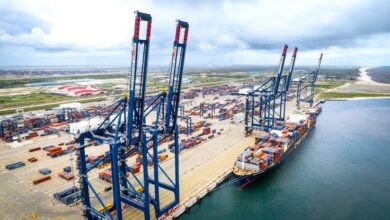
Nigeria risks losing out on enormous economic opportunities in the global shipping business as its indigenous shipping capacity continues to weaken, leaving foreign-owned vessels to dominate the transportation of the country’s international trade.
The Chairman, Planning Committee of the 2026 Nigeria Maritime Expo (NIMAREX), Otunba Sola Adewumi, raised the concern, warning that Nigeria cannot achieve a globally competitive blue economy without rebuilding its indigenous shipping fleet and strengthening local participation in maritime transportation.
Adewumi, who spoke at the opening of NIMAREX 2026 at the Oriental Hotel, Lagos, on Tuesday, lamented that the country’s substantial international trade volume had not translated into commensurate participation in vessel ownership and operations.
He said Nigeria was gradually losing its position in indigenous shipping despite the sector’s capacity to generate employment, retain foreign exchange, develop local expertise and create wealth.
He challenged industry stakeholders and policymakers to address the declining fortunes of indigenous shipping, asking: “Where are our indigenous vessels? Where is the strong Nigerian shipping fleet that should be carrying our cargo, creating employment for our seafarers and generating wealth for our economy?”
According to him, a country that generates substantial maritime trade but relies largely on foreign-owned vessels to move its cargo is surrendering enormous economic opportunities to other nations.
He argued that Nigeria must move beyond being a market for international shipping services to becoming a significant participant in the global shipping business.
Adewumi identified inadequate access to financing, policy inconsistencies, high operating costs, infrastructural deficiencies and regulatory bottlenecks as major constraints undermining the growth of indigenous shipping companies.
He, however, noted that the industry’s challenges were not entirely economic and regulatory, attributing part of its inability to make meaningful progress to personal interests, individual ambitions and institutional rivalries among stakeholders.
“We cannot build a strong maritime industry when we are divided. The industry is bigger than any individual, association or institution. We must put our differences aside and work together to reclaim our position,” he said.
His concerns come against the backdrop of longstanding calls by indigenous shipowners for improved access to affordable financing, effective implementation of the Coastal and Inland Shipping (Cabotage) Act and the disbursement of the Cabotage Vessel Financing Fund (CVFF) to boost local vessel ownership.
He called on the Federal Government to take deliberate steps to reverse the situation through affordable long-term financing, consistent maritime policies, improved infrastructure and an enabling regulatory environment.
He particularly stressed the need for the CVFF to translate into tangible growth in indigenous fleet capacity and stronger Nigerian shipping companies rather than remain an unfulfilled promise to local operators.
While acknowledging the establishment of the Ministry of Marine and Blue Economy by President Bola Tinubu as a positive development, Adewumi said its creation must produce measurable improvements in indigenous shipping, maritime investment, employment generation and Nigeria’s participation in the global maritime economy.
He added that government initiatives would achieve little without genuine collaboration with private-sector operators, who remain central to investment, innovation and the development of maritime capacity.
Beyond the structural challenges confronting the industry, Adewumi expressed concern over what he described as attempts by some individuals within government institutions to promote competing maritime exhibitions and initiatives capable of undermining existing private-sector platforms.
He maintained that NIMAREX was conceived as an industry-driven platform to encourage engagement, collaboration, investment and the advancement of Nigeria’s maritime sector, noting that considerable resources, commitment and sacrifice had gone into sustaining the initiative.
While acknowledging the importance of competition in a free-market economy, he distinguished legitimate private-sector competition from the use of public office, institutional influence or government resources to undermine privately driven initiatives.
“Government should be a facilitator of private enterprise, not a competitor with the very businesses and industry platforms it is expected to support,” he said.
He appealed to the Minister of Marine and Blue Economy and the ministry to promote collaboration rather than rivalry, strengthen existing industry platforms and encourage private-sector initiatives.
According to him, public office should be exercised in the collective interest of the industry and the nation rather than to advance personal interests, institutional rivalries or individual ambitions.
“NIMAREX is not an adversary of government. It is a partner in national maritime development.
“We must build institutions, not personalities; promote collaboration, not rivalry; and create opportunities, not obstacles,” he added.
The NIMAREX chairman urged participants at the two-day expo to move beyond speeches and exhibitions to develop practical solutions to the structural weaknesses confronting the maritime industry.
He listed rebuilding indigenous shipping capacity, attracting investment into vessel acquisition, improving access to maritime financing, strengthening regulatory frameworks and developing human capital among priority areas requiring urgent attention.
He also called for stronger cooperation among shipowners, maritime associations, government agencies, financial institutions and international partners, stressing that while government must provide the enabling environment, industry stakeholders must demonstrate unity, professionalism and commitment to collective progress.
“Nigeria cannot achieve a globally competitive blue economy without a strong indigenous shipping industry,” he declared.
NIMAREX 2026, themed “Strengthening Strategic Partnership for a Globally Competitive Blue Economy”, brought together government representatives, maritime regulators, shipowners, operators, investors and other industry stakeholders to deliberate on the future of Nigeria’s maritime sector.
Adewumi said the expo was conceived in 2011 to provide a platform for meaningful engagement, collaboration, investment and the advancement of the country’s maritime industry.
He commended the Nigeria Shipowners Association for sustaining the vision of the expo and providing a platform for stakeholders to collectively address challenges confronting the sector.
He also appreciated the sponsors, exhibitors, speakers, partners and members of the Planning Committee for their contributions to the successful organisation of the event.
He urged stakeholders to place the collective interest of the industry above personal considerations, warning that Nigeria could not afford to sacrifice its maritime future to individual ambitions and institutional rivalries.
“Let us not merely discuss the future of our maritime industry. Let us unite to reclaim it, strengthen it and build it into an industry that future generations of Nigerians will be proud of,” he said.