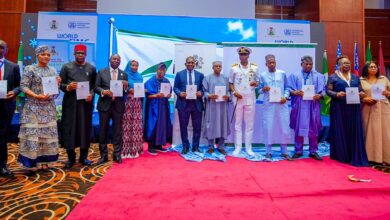
The Nigerian Maritime Administration and Safety Agency (NIMASA) has reaffirmed its commitment to strengthening Nigeria’s shipbuilding and shipyard development as part of efforts to deepen the blue economy and curb capital flight.
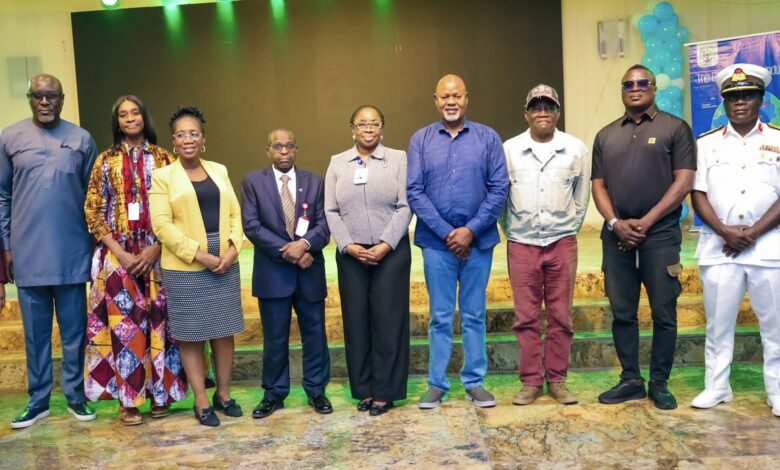
This assurance was given at a stakeholders’ breakfast meeting organised by the Agency with the theme “Dissecting the Issues, Challenges, and Prospects in the Shipbuilding Segment – Discussing Funding Models, Incentives, and Policy Support for Shipyards Growth”, held at the Nigerian Maritime Resource Development Centre (NMRDC), Kirikiri, Lagos.
Chairman of the occasion, the Executive Director, Operations, NIMASA, Engr. Fatai Adeyemi noted that shipbuilding remains a capital-intensive, cyclical and technically demanding sector that requires deliberate policy and financial interventions to achieve sustainable growth.
Adeyemi, who was represented by the Director, Marine Environment Management, Dr. Oma Offodile said the breakfast meeting was designed to provide a clear assessment of the structural challenges confronting the shipbuilding segment and to collectively agree on pragmatic funding models, incentives and policy options capable of driving competitive shipyard growth in Nigeria.
“Shipbuilding is a strategic pillar of Nigeria’s maritime and blue economy aspirations. It is capital-intensive, technically demanding and highly competitive, which is why deliberate funding models, targeted incentives and consistent policies are critical.
“Through engagements like these, NIMASA is working with industry stakeholders to address structural constraints, build local capacity, curb capital flight and position Nigerian shipyards to compete sustainably, while supporting decarbonisation, job creation and our obligations at the International Maritime Organisation,” he said.
Engr. Adeyemi explained that global developments such as maritime decarbonisation and fuel transition, supply chain fragility and geopolitical concerns have reshaped the shipbuilding landscape, increasing the demand for strong domestic capacity to support shipping, offshore energy, defence and other critical maritime assets.
He identified key challenges facing the sector to include restricted access to capital due to high capital expenditure and cyclical revenues, shortage of skilled manpower, underinvestment in automation and green technologies, insufficient scale to compete globally, as well as policy inconsistency and procurement uncertainty.
He added that shipyards are pivotal to maritime decarbonisation, as they are responsible for building energy-efficient vessels that meet the standards of the International Maritime Organisation (IMO), stressing the need to sustain Nigeria’s recent return to Category C of the IMO Council.
According to him, a vibrant shipbuilding industry remains critical to job creation and the overall blue economy matrix.
The Managing Director of Starz Marine Limited, Engr. Greg Ogbeifun, in his keynote address, commended the Federal Government for the creation of the Ministry of Marine and Blue Economy, describing it as a strategic step towards unlocking the full potential of the maritime sector.
He also called for deliberate government support for shipyard operators to enhance capacity, improve competitiveness and attract investment.
Earlier in their goodwill messages, shipyard owners in Nigeria expressed willingness to collaborate with NIMASA to curb capital flight and build local capacity within the sector. They emphasised the importance of targeted support, skills development and policy stability to enable shipyards compete effectively.
Other stakeholders at the meeting expressed strong support for NIMASA’s renewed drive to support shipyard operators and deepen local shipbuilding capacity. Participants agreed on the need for coordinated funding mechanisms, incentives and policy consistency to address near, medium and long-term challenges in the sector.
The Agency stated that its renewed focus on shipyard development aligns with the provisions of the NIMASA Act, 2007, which mandate it to promote maritime safety, shipping development and capacity building within Nigeria’s maritime industry.
It added that supporting shipyard operations, indigenous shipbuilding capacity and associated infrastructure remains central to its statutory responsibility to facilitate sustainable growth of the maritime sector and advance Nigeria’s blue economy objectives.