‘Address Hardship, Not Attack Critics’, Obi Urges Presidency
...Says No Democracy Can Flourish Where Truth-Tellers Are Vilified

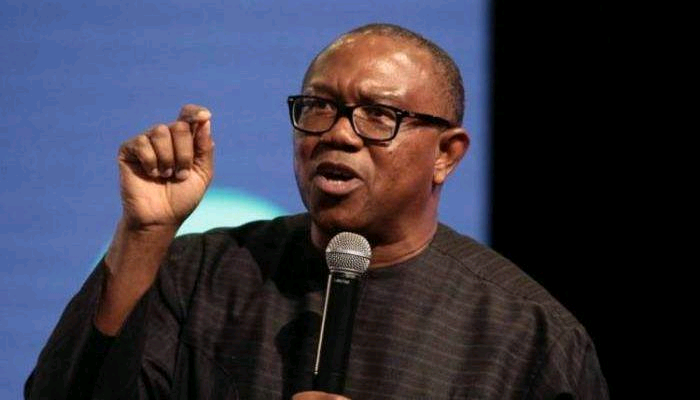
The presidential candidate of the Nigeria Democratic Congress (NDC), Peter Obi, has urged the Presidency to focus on addressing the economic hardship facing Nigerians rather than attacking critics of President Bola Tinubu’s administration.
Obi made the call while reacting to the backlash that followed remarks by the Catholic Bishops’ Conference of Nigeria (CBCN) on the country’s worsening economic and security situation.
The controversy began after the Catholic bishops met with President Tinubu at the Presidential Villa in Abuja. Following the meeting, the Archbishop Emeritus of the Catholic Archdiocese of Abuja, Cardinal John Onaiyekan, disclosed in an interview on Arise Television that the bishops raised concerns over worsening insecurity, deepening poverty, economic hardship, and governance.
According to Cardinal Onaiyekan, President Tinubu disagreed with the bishops’ assessment, insisting that the country was on the right path.
The cardinal’s remarks subsequently drew sharp reactions from presidential aides and supporters of the administration, with some accusing him of being partisan in his assessment of the state of the nation.
Reacting to the development in a statement, Obi recalled a recent remark by United States President Donald Trump, who described Nigeria as “a now disgraced country,” saying the country’s challenges continue to deepen.
“The painful reality is that Nigeria’s challenges continue to deepen. Each passing day reveals deeper signs of decline, especially when a government becomes increasingly intolerant of truth and hostile to those who speak about the suffering of the people,” he said.
Obi defended the Catholic Bishops’ Conference of Nigeria, maintaining that the Church had never functioned as an opposition party but had consistently served as the nation’s moral conscience by speaking truth to successive governments, irrespective of political affiliation.
He noted that the bishops’ intervention was consistent with the tradition of major religious organisations in Nigeria, including Jama’atu Nasril Islam (JNI), the Supreme Council for Shari’ah in Nigeria (SCSN), the Christian Association of Nigeria (CAN), and the Nigerian Supreme Council for Islamic Affairs (NSCIA), all of which have repeatedly expressed concern over insecurity, inflation, unemployment, and worsening living conditions.
Obi asserted that religious leaders are often among the first to witness the hardship endured by ordinary Nigerians because they live and interact closely with the people.
Recounting his experience as Governor of Anambra State, Obi affirmed that constructive criticism from traditional rulers and religious leaders contributed significantly to the success of his administration, particularly in the education and health sectors.
He described the attacks on the CBCN and Cardinal Onaiyekan as disturbing, arguing that respected religious leaders should not be vilified for expressing concerns about national issues.
Obi further criticised what he described as attempts by some presidential aides to portray the bishops’ observations as a religious matter, insisting that insecurity, poverty, unemployment, inflation, and economic hardship affect all Nigerians regardless of religion or ethnicity.
“The bishops merely expressed what millions of Nigerians experience daily: insecurity has worsened, poverty is deepening, inflation is crippling families, businesses are struggling, and hope is fading,” he stated.
He maintained that rather than respond with personal attacks, the government should have addressed the issues raised by the bishops and explained the measures being taken to tackle the country’s challenges.
Obi warned that rewarding sycophancy while discouraging honest criticism would disconnect leaders from reality and undermine good governance.
“Good governance depends on truth. When governments punish truth-tellers and reward sycophants with appointments, honest advisers withdraw, sycophancy thrives, and leaders become disconnected from reality. This is our situation today,” he decried.
The former Anambra State governor stressed that the CBCN had not insulted the President but merely gave voice to the suffering of Nigerians.
He added that democracy cannot thrive where respected citizens are attacked for speaking the truth.
“When respected figures like Cardinal Onaiyekan are vilified for speaking the truth, the message sent to citizens is that silence is safer than honesty. No democracy can flourish under such a culture,” Obi said.
He urged religious leaders not to remain silent in the face of the country’s challenges, describing truth-telling as part of their moral responsibility.
Obi also stated that the greatest service those around President Tinubu could render him was to provide an honest assessment of the country’s situation, warning that a leader who hears only praise will never fully understand the pain of the people or have the clarity needed to address the nation’s problems.