Africa Needs to Adopt Integrated Approach to Maritime Manpower Development – NSML Boss Ahmed

Africa must adopt a holistic approach to maritime manpower development that combines quality training, international certification, practical sea-time, technology, research and industry partnerships to close the continent’s persistent skills gap.
The approach is necessary to address longstanding challenges limiting the ability of African maritime professionals to compete effectively in the global labour market, including inadequate access to quality training, limited simulator facilities, accreditation challenges and insufficient sea-time opportunities.
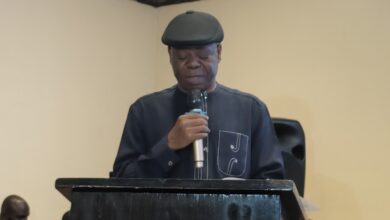
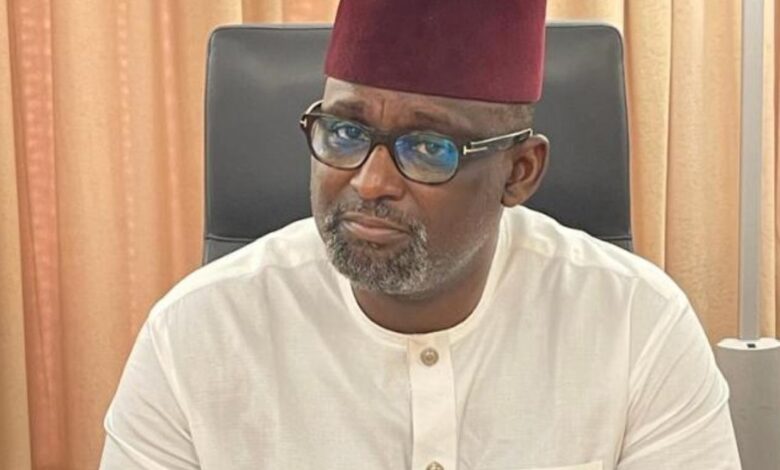
The Managing Director of NSML, Abdulkadir Ahmed, made the submission in a paper titled “Overview of the NSML MCOE: Positive Disruption in Africa’s Maritime Manpower Development”, presented at the 2026 Maritime Training Summit of the Association of Maritime Journalists of Nigeria (AMJON) in Lagos on Friday with the theme, “The Power of Innovation in a Future-Ready Maritime Training Agenda.”
Ahmed, who was represented by the Manager, Maritime Centre of Excellence (MCOE), Dr. Effiong Ekanem-Attah, said conventional classroom-based training alone could no longer adequately address the complexities of modern maritime operations.
He said effective manpower development requires an ecosystem that brings together education, certification, practical exposure, mentorship, technology, research and industry collaboration.
According to him, the maritime industry is increasingly shaped by digitalisation, decarbonisation, automation and enhanced safety requirements, making it necessary for professionals to acquire competencies that extend beyond theoretical knowledge.
He said the NSML Maritime Centre of Excellence was established as a one-stop maritime research, consultancy and training institution designed to respond to some of the structural deficiencies in Africa’s maritime manpower development.
Ahmed explained that the centre’s approach combines maritime training with simulator-based learning, sea-time development, professional certification support, maritime research, consultancy and industry collaboration.
He said the integrated model was designed to create a structured pathway from classroom learning to practical vessel operations while improving the ability of African professionals to obtain qualifications that meet international standards.
The paper noted that the MCOE’s existing international accreditations and training facilities have helped expand access to specialised maritime training locally, while its Seafarers Continuous Development Programme has provided structured sea-time opportunities for cadets.
Under the programme, 272 cadets have completed sea-time training, while another 54 are currently either at college or onboard vessels progressing towards professional certification.
Ahmed also highlighted NSML’s Nigerianisation drive, noting that the company employs more than 700 seafarers as of August 2026 and remains a major employer of qualified Nigerian seafarers.
Beyond training, the MCOE also provides maritime research, intelligence and consultancy services, including shipbuilding supervision, commercial project evaluation, dry-docking supervision, vessel lifecycle support and crew and vessel management advisory services.
According to Ahmed, the centre’s planned expansion, supported by the Nigerian Content Development and Monitoring Board (NCDMB), is expected to increase training capacity, introduce additional courses and broaden its services, with the long-term objective of making most, if not all, international maritime certifications obtainable in Nigeria.