
Former Minister of Interior and the Managing Director of Integrated Oil and Gas Limited, Captain Emmanuel Iheanacho, has underscored the pivotal role of the media in driving sustainable growth in Nigeria’s maritime sector.
According to him, responsible journalism can accelerate reforms, boost investor confidence, and strengthen national competitiveness.
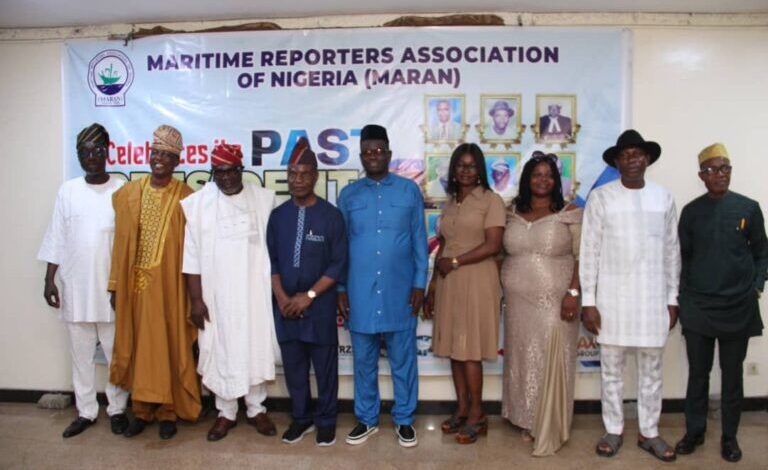
Captain Iheanacho made this known at a reception organised by the Maritime Reporters Association of Nigeria (MARAN) in honour of its past presidents.
Iheanacho, who was represented by Maritime Lawyer, Emeka Akabogu, SAN, commended MARAN for sustaining professional engagement in a sector he described as “vital to the Nigerian economy but often insufficiently understood by the wider public.”
Speaking from nearly five decades of experience across private enterprise, industry associations and public service, Ihenacho said the media plays four critical roles in maritime development: agenda-setting, accountability, public education, and stakeholder mobilisation.
On agenda-setting, he explained that consistent media attention has historically helped elevate key industry challenges such as port congestion, cargo delays, multiple checkpoints, and high transaction costs, from private complaints to national policy concerns.
However, he cautioned against episodic reporting, urging journalists to sustain coverage beyond crisis moments and follow reforms through to implementation.
On accountability, the former minister described media scrutiny as indispensable in a sector that intersects with public revenue, international trade and infrastructure.
He acknowledged that maritime journalists have exposed administrative bottlenecks, corruption risks and policy inconsistencies over the years, but warned that reporting based on incomplete facts or insufficient technical understanding could undermine investor confidence and distort policy debates.
Iheanacho also highlighted public education as a core responsibility of the media, noting that the technical nature of maritime operations often limits public understanding despite its direct impact on prices, jobs and trade flows.
“Nigeria cannot build a strong blue economy with a poorly informed public,” he said.
He called for simpler explanations of policy reforms, more data-driven reporting, and greater focus on inland waterways, coastal economies, and maritime education.
On stakeholder mobilisation, he emphasised the media’s role in fostering dialogue and alignment among government, regulators, operators and investors.
According to him, media platforms have historically helped bring critical issues into national discourse, but he urged journalists to go further by tracking commitments and ensuring follow-through after industry engagements.
“Too often, conferences end with excellent speeches but limited follow-through. The media can help by revisiting promises and sustaining momentum,” he noted.
Delivering a direct message to maritime journalists, Iheanacho described their role as a “strategic national assignment,” given the sector’s importance to trade, energy, logistics, food security and industrialisation.
He urged practitioners to deepen their technical knowledge, interrogate data rigorously, and maintain credibility in order to enhance the sector’s development.
“Your words can attract confidence or discourage it. Your analysis can clarify choices or deepen confusion,” he added.
He added that industries progress faster where the media is responsible, informed and courageous, and called for a journalism culture that is “fearless but fair, critical but constructive, and independent but informed.”
On his part, Secretary General of Memorandum of Understanding on Port State Control for the West and Central African Region (Abuja MoU), Captain Sunday Umoren commended MARAN for its sustained role in promoting transparency and amplifying stakeholder engagement within Nigeria’s maritime space.
Captain Umoren, who was represented by Head of Technical, Abuja MoU, Engineer Richard Owolabi reaffirmed the organisation’s commitment to deepening cooperation with MARAN, especially in enhancing journalists’ capacity for accurate and informed reporting on port state control and maritime safety across West and Central Africa.
He added that such partnerships remain critical to achieving safe, secure and environmentally sustainable shipping, while also improving the global competitiveness of the region’s maritime industry.







n54m0x