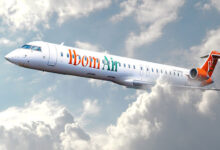

The Nigerian Safety Investigation Bureau (NSIB) has said the implementation of its safety recommendations has helped prevent the recurrence of similar accidents and incidents in the aviation sector, as it moves to strengthen investigation and safety oversight across other transport modes.
To sustain the gains recorded in aviation and extend them to the maritime, rail and road sectors, the Bureau is proposing the establishment of an Office of Safety Recommendations that will track the implementation of recommendations and coordinate follow-up with regulators, ministries and other relevant stakeholders.
NSIB Director-General, Captain Alex Badeh Jnr., disclosed this while speaking at a virtual press briefing with journalists on the activities and achievements of the Bureau in the last six months.
Badeh said the Bureau’s experience in aviation showed that when its investigation reports and safety recommendations were taken seriously by industry stakeholders, the same causes of accidents or incidents were less likely to recur.
He, however, noted that the Bureau currently lacked the statutory powers to compel regulators or other responsible bodies to implement its recommendations, describing this as one of the issues the proposed Office of Safety Recommendations was designed to address.
According to him, the proposed office would report directly to the Director-General and comprise personnel with the requisite technical knowledge, while representatives from the Presidency, ministries and other relevant institutions would be involved in developing a coordinated mechanism for following up safety recommendations across the transport sectors.
The DG also disclosed that the Bureau had begun coding its safety recommendations according to the relevant transport mode to make them easier to track and ensure that they were directed specifically to the agencies or organisations responsible for implementation.
While the aviation sector had recorded progress in applying safety recommendations, Badeh said recurring accidents and fatalities on the nation’s waterways remained a concern, particularly incidents involving the use of life jackets.
He said the NSIB was therefore deepening its maritime accident investigation capacity through the deployment of specialist maritime investigators, acquisition of relevant equipment and stronger collaboration with maritime agencies.
Badeh said the Bureau was pursuing Memoranda of Understanding (MoUs) with relevant maritime agencies to facilitate smoother investigations, particularly because NSIB did not have the resources to immediately access some accident locations.
He explained that the MoU with the National Inland Waterways Authority (NIWA) would help ensure that evidence at accident scenes was preserved and that the Bureau was promptly briefed.
He added that the NSIB was also strengthening collaboration with the Nigerian Maritime Administration and Safety Agency (NIMASA) and the Nigerian Navy, which have provided boats to support the Bureau’s investigations.
According to him, the Bureau has also been given a seat on the Falcon Eye maritime surveillance platform managed by NIMASA and the Nigerian Navy, providing another avenue for collaboration and access to information relevant to maritime accident investigations.
Badeh said the Bureau was working with NIWA and other stakeholders to reduce accidents, incidents and fatalities on the nation’s inland waterways, adding that the objective was to replicate the safety gains recorded in aviation across the maritime sector.
He disclosed that several maritime investigation reports were currently with stakeholders for review, with the Bureau targeting the release of final reports within 12 months of an occurrence.
He explained that the delay in completing some earlier maritime investigations was partly due to the Bureau’s initial reliance on aviation investigators to handle maritime cases, noting that the deployment of dedicated maritime investigators had now accelerated the process.
Badeh said the Bureau was also strengthening its rail investigation capacity through collaboration with the Nigerian Railway Corporation and other technical experts, as part of efforts to build a genuinely multimodal accident investigation system.