
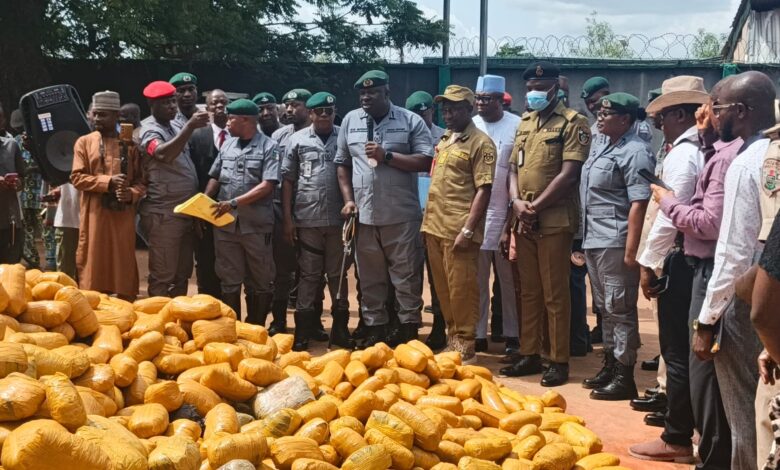
The Ogun I Area Command of the Nigeria Customs Service (NCS) has intercepted contraband items with a cumulative Duty Paid Value (DPV) of N6.77 billion within five weeks, including over 10,000 parcels of cannabis indica popularly known as “Ghana Loud.”
The Acting Customs Area Controller, Deputy Comptroller Olukayode Afeni, who made this known during a press briefing in Idiroko on Tuesday, said the seizures were made through enhanced intelligence gathering, inter-agency collaboration and renewed enforcement strategies across the Command’s Area of Responsibility.
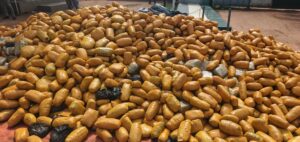
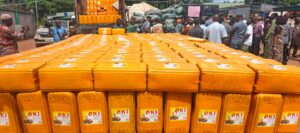
Afeni disclosed that the Command recorded 73 seizures in 41 days, comprising 1,759 bags of foreign parboiled rice, 10,126 parcels of cannabis indica weighing 4,627kg with an estimated street value exceeding N5 billion, 2,685 kegs of vegetable oil, 14,550 litres of Premium Motor Spirit (PMS), and several other prohibited items.
Other seized items included cartons of basmati rice, footwears, second-hand clothing, foreign sugar, expired food products, Analgin injections without NAFDAC registration, organic honey, used vehicles, handbags, spaghetti, macaroni and six live pangolins already handed over to the appropriate agency.
Afeni said the Command had earlier, on March 16, handed over 2,543 parcels of cannabis sativa to the National Drug Law Enforcement Agency (NDLEA), adding that the latest seizures underscored the Command’s determination to sustain pressure on smugglers.
“We did not retreat nor surrender; instead, we refined our tactics and restrategised,” he said.
He noted that from January to date, the Command had taken 26,002 parcels of cannabis off the streets, describing the seizures as a critical intervention against rising drug abuse and associated crimes.
“This isn’t just a seizure; it’s a preventive measure. Without this intervention, our society would face a wave of drug-related crises that our already overstretched healthcare and rehab systems cannot manage,” Afeni stated.
The Acting Controller also defended the Federal Government’s policy banning rice importation through land borders, saying persistent smuggling continued to undermine local production and economic growth.
“Rice is a staple food eaten in many homes in the country. Its importation through the land borders was prohibited by the Federal Government to encourage local production and self-sufficiency,” he said.
On vegetable oil smuggling, Afeni disclosed that officers intercepted a DAF truck along the Shagamu Interchange/Ogere axis on May 5 laden with 2,185 kegs of vegetable oil following intelligence-driven operations.
He warned that excessive dependence on imported vegetable oil posed risks to local industries, jobs, public health and agricultural development.
“The influx of foreign vegetable oil into the country is creating a ripple effect of negative consequences that demands immediate attention,” he said.
Afeni further revealed that another truck intercepted on May 7 along the same corridor contained 77 cartons of Analgin injections without NAFDAC registration numbers, 50 cartons of expired Maggi cubes, 226 sacks of basmati rice, footwears, used clothes and other prohibited goods.
Besides anti-smuggling operations, the Command generated N125.43 million between March 16 and May 12 through baggage assessment and auction of seized petroleum products.
He added that the Command also facilitated the export of 95 metric tonnes of goods with a Free On Board (FOB) value of N1.004 billion.
Afeni said the Command was entering “a new era of digital enforcement” through the deployment of advanced geospatial technology in line with the modernisation agenda of the Comptroller-General of Customs, Bashir Adewale Adeniyi.
According to him, the transition from conventional patrol methods to intelligence-led operations would strengthen border surveillance, improve transparency and support legitimate trade.
He commended the support of sister security agencies including the NDLEA, DSS, Nigeria Immigration Service and the Nigeria Police Force, as well as officers and stakeholders contributing to the Command’s operations.








pprydb