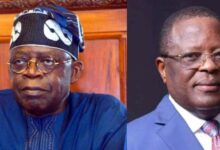
President Tinubu Reaffirms Commitment to Ending Drug Abuse, Lauds NDLEA’s Crackdown on Cartels
...As Three Winners Receive ₦1m in Agency's National Essay Competition

President Bola Tinubu has reaffirmed Nigeria’s commitment to eliminating the menace of substance abuse and illicit drug trafficking through evidence-based and innovative interventions.
President Tinubu gave the assurance during the grand finale of activities marking the 2026 International Day Against Drug Abuse and Illicit Trafficking, held in Abuja on Friday.
The President was represented at the event by the Attorney General of the Federation and Minister of Justice, Prince Lateef Fagbemi, SAN.
Reflecting on this year’s theme, “The World Drug Problem: Persisting Issues, New Challenges, Innovative Responses,” Tinubu emphasised that the evolving nature of the global drug problem demands constant vigilance, adaptability, and collective action.
He noted that the consequences of the drug scourge extend far beyond individual users, severely disrupting families, schools, workplaces, and national security.
President Tinubu disclosed that the Federal Government is confronting these challenges through a well-coordinated, multifaceted approach.
“My administration remains committed to creating an environment in which young Nigerians can thrive and succeed. Through the Renewed Hope Agenda, we are expanding access to education, promoting skills development, supporting entrepreneurship, creating employment opportunities and implementing social interventions that address some of the underlying factors that make individuals vulnerable to substance abuse and criminal recruitment.
“At the same time, we recognize that reducing demand must be matched by decisive action to disrupt supply. This requires stronger border management, enhanced surveillance of ports, airports, seaports and land crossings, improved intelligence gathering and closer collaboration among national, regional and international law enforcement agencies. Criminal organizations operate across borders, and our response must be equally coordinated and effective,” he said.
He affirmed that science, technology, and reliable data have become indispensable tools in this effort, stressing that Nigeria must continue to strengthen its capacity to collect, analyse, and apply data so that emerging trends are identified early, interventions are properly evaluated, and strategic decisions are informed by facts.
“As illicit drug markets evolve, our ability to detect and identify drugs and precursor chemicals must evolve as well. Strengthening forensic laboratories, enhancing technological capabilities and supporting scientific research will remain essential if we are to stay ahead of emerging threats.
“Our criminal justice system must continue to receive the support it needs to deal effectively with drug-related crimes. Law enforcement officers, investigators, prosecutors and the courts all have important roles to play in ensuring that criminal organizations are disrupted and offenders are held accountable under the law,” he stated.
The President also commended the leadership and personnel of the NDLEA for their relentless crusade against drug cartels.
“This is a fitting occasion for me to convey my strong commendation to the officers, men and leadership of the National Drug Law Enforcement Agency under the able leadership of Brigadier General Mohamed Buba Marwa (Rtd.), CON, OFR.
“I wish to particularly highlight the remarkable strides made by the Agency in terms of increased arrests and seizures, successful convictions, multi-billion-naira forfeitures, extensive rehabilitation and advocacy campaigns, as well as the dismantling of organized drug cartels and trafficking networks, including the one behind the largest methamphetamine laboratory in Nigeria.”
He stressed that these achievements stand as a testament to his administration’s zero tolerance for organised crime and its unwavering commitment to safeguarding society from the devastating effects of narcotics.
“However, as commendable as these achievements are, government cannot win this battle alone. The complexity and scope of the drug problem demands that every segment of our society plays an active role.
“We call on parents and families to provide loving homes, moral guidance, and open communication; on our educational institutions to strengthen drug prevention education and character development; on religious and traditional leaders to continue using their influence to discourage substance abuse while supporting those in recovery; on the media to raise awareness responsibly and avoid glamorizing drug use; and on the private sector to partner with government through job creation, prevention initiatives, and support for treatment and rehabilitation programmes,” he stated.
Tinubu argued that through collective action and shared responsibility, Nigeria can protect its youth, strengthen communities, and secure a healthier and safer future for the country.
He reminded the audience that the world drug problem is a shared challenge requiring a shared response while calling on civil society, international partners, and individual citizens to reinforce their commitment to creating safer, healthier, and drug-free societies for future generations.
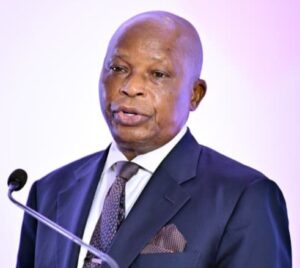
Delivering the guest lecture titled “Celebrating Progress and Inspiring Collective Action Against Drug Abuse,” Prof. Oluwatoyin Odeku of the Department of Pharmaceutics and Industrial Pharmacy, University of Ibadan, noted that there is reason to celebrate the milestones achieved in the fight against illicit drugs over the past five years.
“First, let us celebrate, because celebration fuels courage. When NDLEA was re-energised in 2021, many thought the drug war was unwinnable. Today, the data tells a different story, and we have reasons to celebrate,” Prof. Odeku said.
In his remarks, the United Nations Office on Drugs and Crime (UNODC) Country Representative, Chiekh Touré, who was represented by Dr. Akanidomo Ibanga, commended the FG for its continued commitment to addressing the drug problem through a balanced and coordinated approach.
“The leadership of institutions such as the National Drug Law Enforcement Agency (NDLEA), the Federal Ministry of Health, and other critical stakeholders demonstrates a growing recognition that effective drug control must integrate both supply and demand reduction, underpinned by evidence and respect for human rights.
“At UNODC, we are privileged to support these national efforts by advancing innovative, evidence-based responses that align with global standards and national priorities,” Touré remarked.
He reiterated UNODC’s commitment to supporting Nigeria in this critical endeavour, adding that “we stand ready to continue providing technical expertise, fostering partnerships, and promoting innovative solutions that respond to the realities on the ground.”
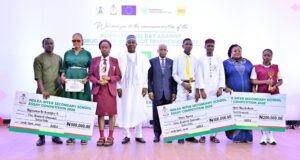
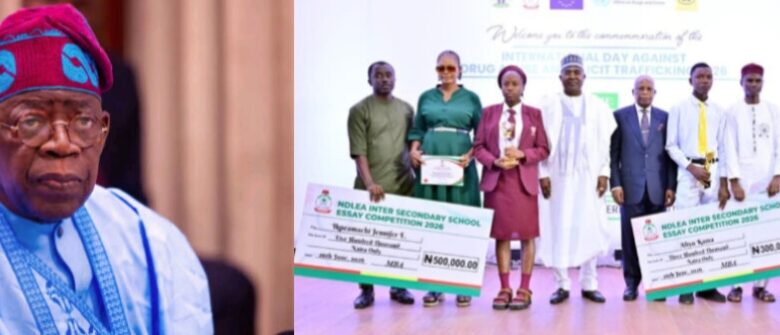
The event also featured the presentation of prizes to the three winners of the NDLEA Inter-Secondary School Essay Competition. The first prize of ₦500,000 and a trophy went to Ikpeamachi Jennifer of Federal Government College, Enugu, while Aliyu Kama of General Murtala Muhammed College, Yola, received the second prize of ₦300,000 and a trophy. Chiagoziem Ikechukwu of Mimshak Academy, Mbawsi, Abia State, won the third prize of ₦200,000 and a trophy.
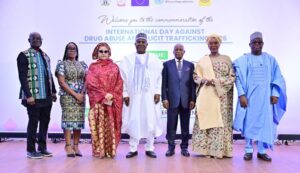
Others who expressed their support for ongoing drug control efforts included the Senate President, Senator Godswill Akpabio, represented by Senator Sadiq Sulaiman Umar; Hon. Lanre Okunola of the House of Representatives Committee on Drugs and Narcotics; the First Lady of Kwara State and Chairperson of the Nigeria Governors’ Spouses Forum, Amb. (Mrs.) Olufolake AbdulRazaq; and the Coordinating Minister of Health and Social Welfare, Prof. Ali Pate, represented by Mrs. Adeola Olufowobi-Yusuf.

Support equally came from the Mandate Secretary, Health and Environment, FCTA, Dr. Adedolapo Fasawe; the Chairman of the MTN Foundation, Mrs. Mosun Belo-Olusoga, represented by Mrs. Odunayo Sanya; and representatives of NACA and NAFDAC, among others.