Flight Disruption: NCAA Warns Air Peace, Max Air Over Recurring Incidents, Demands Better Passenger Care

The Nigeria Civil Aviation Authority (NCAA) has warned airlines over recurring flight delays, cancellations, crew shortages and other consumer-related infractions, urging operators to align their flight schedules with available aircraft and crew.
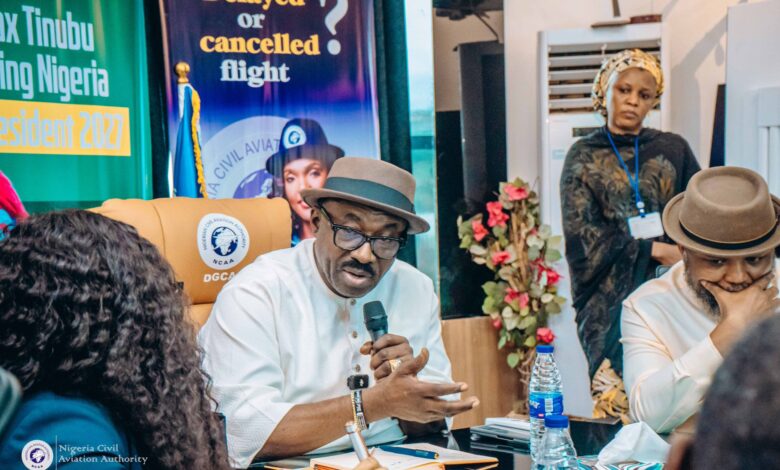
The Director-General of Civil Aviation (DGCA), Capt. Chris Najomo, gave the warning during separate interactive sessions with Air Peace and Max Air at the NCAA Headquarters in Abuja on Thursday.
Najomo questioned the effectiveness of airlines’ operational buffers in view of recurring delays and cancellations, while acknowledging weather, diversions and airport restrictions as possible causes of disruptions.
He stressed the need for effective contingency planning and timely communication with passengers whenever disruptions occur.
The Director, Public Affairs and Consumer Protection, Michael Achimugu, said NCAA monitoring had revealed instances where passengers were left without adequate information or assistance.
He reminded Air Peace of its obligations to provide refreshments after two hours, meals after six hours, as well as accommodation, refunds and compensation where applicable.
Achimugu also raised concerns over flight merging and urged the airline to respond promptly to consumer complaints.
Responding, the Chief Operating Officer of Air Peace, Mrs Oluwatoyin Olajide, disclosed that while the airline had 20 aircraft – five are Aircraft on Ground (AOG) while 15 are serviceable.
She explained that Air Peace deliberately operated between 80 and 85 flights daily to maintain a buffer against disruptions.
Olajide attributed some of the disruptions to technical issues, including bird-strike damage, component shortages and a cracked windshield, as well as weather and airport restrictions.
She maintained that Air Peace provided hotel accommodation and other assistance to affected passengers.
At the Max Air session, the General Manager, Ground Operations/Business Development, Raymond Omadiagbe, disclosed that the airline had three Boeing 737 aircraft available for domestic operations, all of them serviceable, but only two were being operated due to crew limitations.
He added that the international fleet comprised two Boeing 747s and one Boeing 777, which were undergoing checks.
Omadiagbe said Max Air had reduced its flight schedule to match available resources, while also discontinuing late-night Kano operations following passenger feedback.
With pilot retention identified as a major challenge by both airlines, Najomo said the NCAA was supporting training-bond arrangements and considering measures to facilitate foreign crew validation.
He, however, stressed the importance of proper licence verification and simulator checks.
The DGCA assured operators of the NCAA’s continued support but stressed that airlines must maintain realistic schedules, comply strictly with regulations and improve passenger care.
While acknowledging that some disruptions may be beyond an airline’s control, Najomo maintained that effective planning, timely communication and mitigation remained the responsibility of operators.