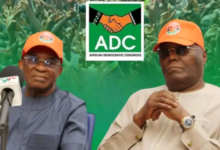

The Lagos State governorship candidate of the African Democratic Congress (ADC), Gbadebo Rhodes-Vivour, has explained how he intends to finance his proposed 100,000 housing units for graduates in the state if elected.
Rhodes-Vivour, who spoke during the Lagos governorship debate on Sunday, had promised that his administration would provide self-contained apartments for graduates until they are ready to get married, after which they would be given two-bedroom apartments.
The proposal generated mixed reactions from Lagos residents and Nigerians on X (formerly Twitter), with some commending the initiative while others questioned its feasibility, particularly in terms of funding and land availability.
Responding to a question from an X user, @thicktimah, on how he intended to source the land and finance the project, Rhodes-Vivour said that there was sufficient land in Lagos East to accommodate more than the proposed 100,000 housing units.
On funding, the ADC candidate stated that his administration would redirect more than ₦500 billion in government expenditure towards housing over three years by curbing corruption and waste.
He cited government expenditure of about ₦1.3 trillion on miscellaneous expenses and consulting fees between 2021 and the third quarter of 2025.
He also claimed that the state government spent ₦19 billion on refreshments, entertainment, hospitality, honoraria, and sitting allowances within the first six months of 2026.
Rhodes-Vivour further questioned the ambiguity surrounding some government expenditure, particularly the ₦601 billion reportedly spent on Special Duties Expenses between 2021 and 2024.
He clarified that the figure was separate from the ₦102 billion spent by the Ministry of Special Duties and Inter-governmental Relations between 2021 and the third quarter of 2025.
The governorship candidate also noted that the state spent almost ₦400 billion on professional fees and entertainment within the period under review, arguing that savings from such expenditures could be channelled into social housing.
In addition to reducing government spending, Rhodes-Vivour proposed introducing a tax on luxury developments, which he said could generate about ₦100 billion over three years for social housing.
He also disclosed plans to tax vacant buildings, particularly in Ikeja, Victoria Island, Ikoyi, and Lekki, to encourage property owners to make such buildings available in the market or pay taxes that would directly fund social housing.
Other measures outlined by the ADC candidate include guaranteeing financing for the Lagos State mortgage institution to provide liquidity for affordable housing projects.
He also promised to significantly increase government spending on housing, adding that investment in construction would provide shelter, create thousands of employment opportunities, and stimulate economic activities in the state.