
‘Nothing to Show for Billions Spent’, Atiku Decries as NNPCL Admits Port Harcourt Refinery Revamp Was Wasteful

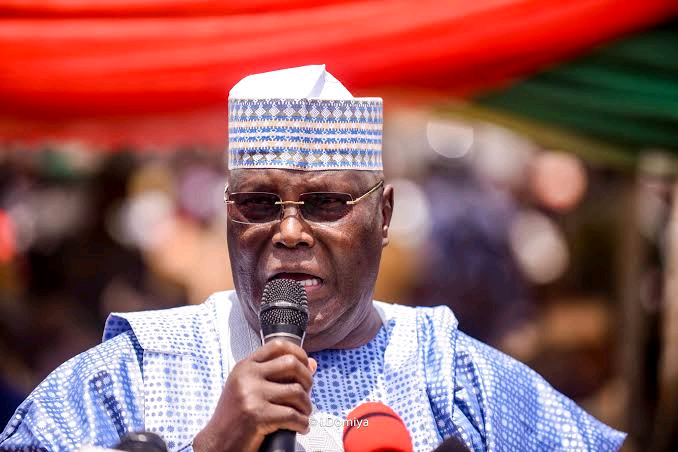
The 2023 presidential candidate of the Peoples Democratic Party (PDP), Alhaji Atiku Abubakar, has decried the huge amount of money spent on the reopening of the Port Harcourt Refinery, stating that there is nothing to show for the billions of dollars expended on the project.
Atiku’s reaction comes after the Group Chief Executive Officer (GCEO) of the Nigerian National Petroleum Company Limited (NNPCL), Engr. Bayo Ojulari, acknowledged a few days ago that the reopening of the Port Harcourt Refinery was a waste of money.
ThelensNG reports that the refinery was reopened in November 2024 following a revamp that cost $1.5 billion during the tenure of Mele Kyari as GCEO of the NNPC. However, the facility was later shut down in May 2025 due to financial setbacks.
Reacting to the development on Sunday, Atiku said: “After gulping $1.5bn, the Nigerian National Petroleum Company Limited has now admitted that reopening the Port Harcourt Refinery is a waste of scarce resources. This belated admission validates my long-held position that Nigeria’s refineries should be privatised.
“It is instructive that the Tinubu administration has finally come to terms with an inevitable truth: pouring public funds into moribund refineries is economically indefensible. Paying billions in salaries to facilities that produce not a single litre of petrol does not serve the national interest. For years, I advanced this patriotic position and was vilified and accused of plotting to sell public assets to ‘friends’.”
He noted that facts have now caught up with rhetoric, lamenting that “decades of so-called turnaround maintenance have swallowed billions of dollars with nothing to show for it, exposing deep deficits in capacity, technical know-how, and financial discipline.”
Atiku also stated that the latest push to “revive” the refineries was driven by political pressure rather than economic sense, stressing that politics must never substitute for sound and transformative policy decisions.
The former Vice President emphasised that any proposed refinery deal, including arrangements with foreign partners, should be discontinued, arguing that such moves merely repeat failed models.
He added that Nigeria would have been better served by selling the refineries before rehabilitation, in order to avoid ballooning debt and the steady depreciation of assets that have effectively become liabilities.



A really good blog and me back again.