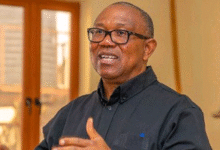

The presidential candidate of the Accord Party, Gbenga Olawepo-Hashim, has declared that petrol can sell for ₦605 per litre in Nigeria, insisting that the cost of producing crude oil by the Nigerian National Petroleum Company Limited (NNPCL) is overstated.
Olawepo-Hashim also stated that President Bola Tinubu would not secure 20 per cent of the votes if a presidential election were held at the time of his statement.
He made the remarks during an interview on Channels Television’s Politics Today on Tuesday, October 13, 2026.
On petrol pricing, Olawepo-Hashim argued that Nigeria could achieve the proposed pump price by considering the cost of crude oil production, refining, and other logistics rather than pricing petroleum products solely by international market benchmarks.
He put the NNPC’s crude oil production cost at $30 per barrel, which he described as high, and said some local oil companies could produce crude at lower costs.
“The cost of producing a barrel of crude with all the high price of the NNPC is not $100,” he said.
Olawepo-Hashim explained that his calculation was based on $30 for crude oil production, $10 for refining, and additional cost for other logistics.
He maintained that Nigeria’s status as an oil-producing country should translate into more affordable petroleum products for the domestic market.
The Accord candidate also called for domestic crude oil allocation to refineries supplying the Nigerian market, arguing that access to locally produced crude could help reduce petrol prices.
He noted that Nigeria had previously allocated 250,000 barrels of crude oil for domestic consumption, with the volume later increasing to 400,000 barrels at a point.
Olawepo-Hashim further disputed the description of lower domestic petroleum prices as fuel subsidy, asserting that the distinction depended on the cost of production.
“Subsidy arises when you sell a product below its cost of production,” he stated.
On the 2027 presidential election, Olawepo-Hashim stressed that the contest would be shaped by Nigerians’ assessment of the Tinubu administration rather than established assumptions about candidates’ popularity.
He mentioned that many Nigerians had yet to decide whom to support, adding that voters would make their choices in the period leading up to the election.
“Most Nigerians know who they are not going to vote for,” he remarked.
Olawepo-Hashim attributed his position to what he described as the administration’s poor handling of the economy, rising insecurity, and weakening national unity.
He equally criticised the government over the hardship faced by Nigerians, emphasising that the administration’s performance would be a major issue in the forthcoming election.
“If the election holds today, President Tinubu will not win 20% of the votes.”
He added that the election would provide Nigerians with an opportunity to assess the performance of the incumbent administration and decide who should lead the country.