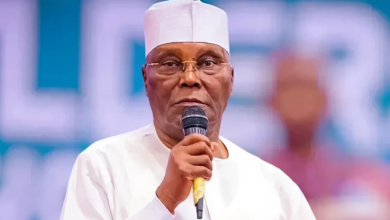

Former Senator representing Bayelsa East, Ben Murray-Bruce, has urged President Bola Tinubu to appoint more “mad men” into his administration, describing them as individuals who are bold enough to confront Nigeria’s entrenched interests, challenge bureaucratic obstacles, and deliver measurable results.
Murray-Bruce made the call in a letter to Tinubu on Tuesday, stressing that he was making the appeal as a supporter of the administration who wants the President to succeed.
He stated that supporting the government should not amount to sycophancy, reiterating that a true supporter should be willing to tell the President what others around him might be unwilling to say.
“Mr President, Nigeria needs more mad men in your government,” he said.
Explaining what he meant by “mad men,” Murray-Bruce described them as people “crazy enough to confront a broken system, step on powerful toes, offend entrenched interests and refuse to accept mediocrity simply because mediocrity has become normal.”
The founder of Silverbird Group maintained that Nigeria needs officials who are obsessed with results and willing to become unpopular if doing so would benefit the country.
He cited the Governor of the Central Bank of Nigeria, Olayemi Cardoso, and the National Security Adviser, Nuhu Ribadu, as examples of what he described as “mad men” in government.
Murray-Bruce acknowledged that there could be disagreements over individual policies at the Central Bank, but pointed out that the institution had undergone a “serious reset”, with discipline and credibility returning to monetary policymaking.
He also commended Ribadu for what he described as seriousness, coordination and strategic direction in the country’s security architecture, while acknowledging that Nigeria still faced significant security challenges.
“Two mad men are not enough for a country of more than 200 million people,” he said, urging Tinubu to find more people with similar qualities, particularly in the petroleum sector.
Murray-Bruce called for renewed efforts to make Nigeria’s government-owned refineries commercially viable, specifically mentioning the Port Harcourt, Warri, and Kaduna refineries.
He argued that Nigeria could no longer afford to act “like a poor country sitting on the assets of a rich country”, given its crude oil reserves, petroleum expertise, and decades of investment in refining infrastructure.
According to him, the country must move beyond repeated explanations about turnaround maintenance, contractors, technical reviews and timelines, and focus instead on getting the refineries to produce refined petroleum products.
“If government cannot operate them efficiently, find the structure that can. Bring in world-class technical partners. Introduce private capital where necessary. Restructure them. Concession them if that produces the best outcome,” he advised.
“But whatever model is chosen, the objective must be brutally simple: Make the refineries work.”
He also pointed to the Dangote Refinery as evidence of what could be achieved in Nigeria, noting that the facility has a nameplate refining capacity of 650,000 barrels per day.
Murray-Bruce challenged the Federal Government to set an ambitious target for its three government-owned refineries, proposing a combined minimum reliable throughput equivalent to 50 per cent of Dangote Refinery’s capacity, or about 325,000 barrels per day.
He emphasised that Nigeria should aim beyond meeting domestic demand and position itself as a major refining hub for Africa and an exporter of refined petroleum products.
On crude oil production, Murray-Bruce urged Tinubu to appoint someone capable of driving the administration’s ambition of increasing production to four million barrels per day by 2030.
“Find the mad man who will deliver it,” he said, arguing that such an official must be willing to tackle oil theft, bureaucratic delays, high production costs, dormant assets and obstacles to investment.
He asserted that Nigeria needed officials who would focus on solving problems rather than spending years explaining why targets could not be achieved.
Murray-Bruce further warned ministers, regulators, agency heads, and other presidential appointees responsible for critical sectors that they must be prepared to deliver or leave office.
“This is not a retirement home,” he said. “If you cannot deliver, leave. If you are afraid of stepping on toes, leave. If protecting friendships is more important than protecting Nigeria’s interests, leave.”
He advised Tinubu to give the officials measurable targets, presidential backing, and deadlines while allowing them the freedom to confront obstacles standing in the way of results.
“Give Nigeria a mad man for petroleum production. Give us another mad man whose only obsession is refining.”
Murray-Bruce equally called for an administration focused on four million barrels of oil production per day, functional refineries, and a Nigeria capable of refining its crude and exporting petroleum products.
“No excuses. No clowns. No passengers. Only results,” he added.