Lagos-Calabar Coastal Highway Not New Idea, Dates Back to 1900 – Afenifere SG, Ebiseni
...Says He Joined APC to Align with Tinubu in National Interest


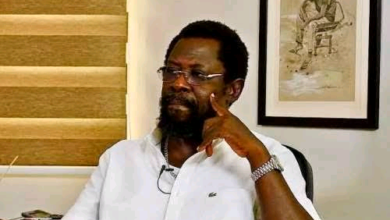
The Secretary-General of Afenifere, Sola Ebiseni, has said that the Lagos-Calabar Coastal Highway is not a new idea, arguing that its historical origins date back to 1900, when the then Governor of Lagos, MacGregor, sought to connect the Lagos Colony with southern Nigeria.
Ebiseni made the remarks during an interview on Channels Television’s Politics Today on Friday, October 16, 2026, while defending the historical basis of the proposed highway and explaining his decision to join the All Progressives Congress (APC).
He disclosed that the coastal route had been conceived more than a century ago, with telegraphic lines, and poles running from Lagos to Warri along the proposed corridor.
“This route started since 1900 when MacGregor was governor of Lagos, trying to link the Lagos Colony with southern Nigeria then at Warri,” he said.
Ebiseni argued that historical accounts of the route had been overlooked, stressing that parts of the area now known as Victoria Island in Lagos were once associated with the route.
He also recalled that former President Shehu Shagari had discussed the Lagos-Calabar Highway in 1982, indicating that the proposal had existed in Nigeria’s political discourse for decades.
“It’s been in the books for over a century,” he said, adding that the current initiative had encouraged the implementation of an idea that had long existed.
On concerns surrounding the project, Ebiseni stated that he had no objection to additional road connections being developed, provided they did not undermine the existing coastal route.
He emphasised that the highway should be recognised as a coastal project, highlighting the importance of considering the Atlantic coastline in discussions about its construction.
Ebiseni also defended the project against criticism over its cost and economic viability, arguing that the road would benefit oil-producing states and communities that contribute significantly to Nigeria’s economy.
“We have a revenue problem,” he said, while insisting that the Federal Government was not necessarily expected to complete the project within President Bola Tinubu’s first term.
He asserted that it would be contradictory to describe the highway as a waste of resources when it would pass through areas that produce much of the country’s oil wealth.
Ebiseni further maintained that every section of the highway has economic value, rejecting the suggestion that some portions might not be economically viable.
Why I Joined APC
Explaining his decision to join the APC after previously pursuing political ambitions under a different party, Ebiseni described the move as a realignment with President Tinubu in the national interest.
“The idea is realignment. Realignment with President Tinubu in the national interest,” he remarked.
He explained that his position was informed partly by his involvement in the Southern and Middle Belt Leaders Forum, which, according to him, had advocated that Nigeria’s next president should come from the South in the interest of political stability.
Ebiseni also cited the Tinubu administration’s handling of the debate over state police as one of the reasons for his support, arguing that the president had helped build a national consensus around the proposal.
He mentioned that discussions on state policing had continued for years before the current administration generated broader agreement on the issue.
On the political calculations ahead of the 2027 general election, Ebiseni claimed that political alignments across Nigeria’s geopolitical zones were evolving, particularly in the North.
He said that the North should not be treated as a politically uniform bloc, arguing that the interests of the North-West, North-East, and North-Central differed.
According to him, these differences would shape political developments ahead of the next general election and beyond.
Ebiseni also identified security as a major concern for northern voters, acknowledging that the Tinubu administration had made some efforts to address insecurity but insisting that more needed to be done.
He pointed to the proposed establishment of state police as one of the measures that could strengthen internal security by giving individual states greater capacity to respond to security challenges.
While acknowledging that the administration’s efforts were not sufficient, he reiterated that they should be considered in assessing its performance.