
IMION DG Calls for Development of National Smart Port Strategy
...Says Institute Ready to Support Through Capacity Building, Research

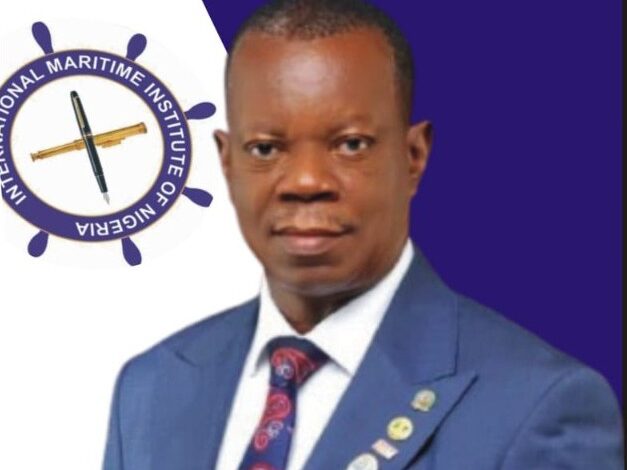
The Director General of the International Maritime Institute of Nigeria (IMION), Rear Admiral Thaddeus Udofia (Rtd.), has called for the immediate development of a national smart port strategy, warning that delays in digital transformation could further inflate logistics costs and weaken Nigeria’s trade competitiveness.
Udofia made the call at the 6th edition of the JournalNG Port Industry Town Hall Meeting held in Apapa on Friday, where he emphasised that a coordinated national framework is critical to unlocking efficiency across the country’s port system.
Represented by IMION’s Executive Director, Finance, Captain David Ajiboye, the DG said Nigeria must move swiftly to institutionalise smart port initiatives through clear policies, regulatory alignment, and phased implementation.
“Ports that deploy digital and automation systems can improve efficiency by up to 30 per cent and reduce logistics costs by as much as 25 per cent. Nigeria cannot afford to be left behind,” he said.
He noted that while key facilities such as Apapa Port and Tin Can Island Port remain central to international trade, and the Lekki Deep Sea Port reflects modern infrastructure potential, systemic inefficiencies continue to hinder performance.
According to him, congestion, delays in cargo clearance, reliance on manual processes, and fragmented agency operations have combined to raise logistics costs and reduce operational efficiency across the ports.
“Inefficiencies at ports can raise logistics costs by between 30 and 40 per cent, translating to higher prices for goods and reduced economic opportunities,” he noted.
Udofia stressed that a national smart port strategy would drive the integration of digital platforms, enable real-time cargo tracking, and improve coordination among government agencies and private operators.
“A smart port ensures that agencies work from shared platforms, cargo is tracked seamlessly, and decisions are driven by accurate data rather than manual processes. Data is now the lifeblood of modern ports,” he said.
He added that beyond technology deployment, success would depend on investments in human capital, regulatory reforms, and robust performance monitoring systems.
Highlighting IMION’s role, Udofia said the institute is prepared to support government and industry stakeholders through targeted capacity building programmes, policy advocacy, implementation research, and benchmarking against global best practices.
“We must prepare our workforce for a digital future. From port operators to logistics professionals, new skills are required to operate effectively in a technology-driven environment,” he added.
He also called for harmonised regulations and the elimination of duplication among port agencies, noting that outdated frameworks could undermine reform efforts.
As part of a phased rollout, Udofia advocated pilot projects in strategic locations such as Lekki, where digital systems can be tested and refined before nationwide adoption.
He urged stakeholders to benchmark Nigeria’s progress against leading global ports, including Port of Singapore, Port of Rotterdam, Tanger Med Port, and Port of Tema.
Udofia added that efficient ports are critical to economic growth, noting that improved port performance would reduce congestion in Apapa, accelerate cargo clearance at Tin Can Island, optimise operations at Lekki, and ultimately strengthen Nigeria’s position in global trade.
“The future of our ports will determine the future of our trade, and ultimately, the strength of our economy”, he said.