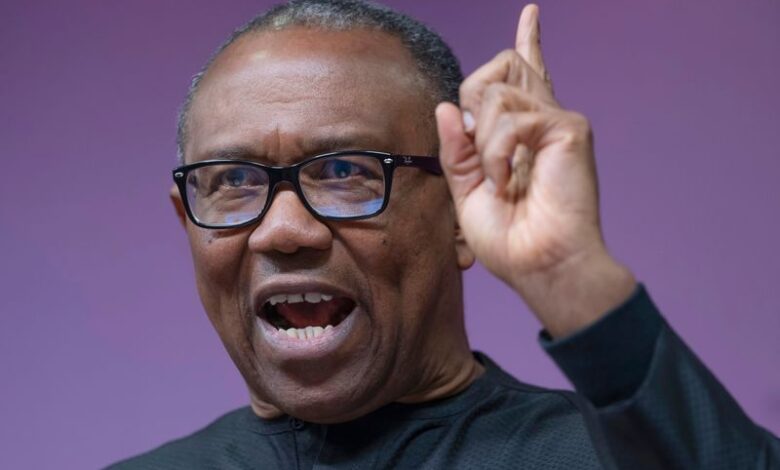
The 2023 presidential candidate of the Labour Party (LP), Peter Obi, has criticised the Federal Government’s plan to earmark $11.6 billion for Nigeria’s debt servicing in 2026, comparing the figure with allocations to critical sectors of the economy, including health and education.
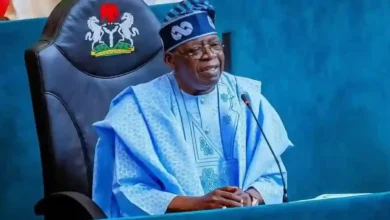
President Bola Tinubu had disclosed that Nigeria would spend $11.6 billion on debt servicing in 2026. Tinubu made the disclosure while speaking at the Africa Forward Summit in Nairobi, Kenya, on May 12.
According to data from the Central Bank of Nigeria (CBN), Nigeria spent about $5.21 billion servicing external debt obligations in 2025.
Reacting to the projected increase, Obi stated that the figure should concern anyone interested in the country’s economic future and long-term development.
He argued that there is nothing inherently wrong with borrowing when it is guided by prudence and directed towards productive investment, while highlighting other heavily indebted countries, including Japan, United Kingdom, United States, United Arab Emirates, Singapore, and Indonesia.
However, he explained that their borrowings are largely channelled into education, healthcare, infrastructure, and innovation — sectors which, according to him, generate long-term economic returns and sustain repayment capacity.
“As a result, despite high debt levels, their obligations remain more manageable because they are tied to measurable productivity,” Obi said. “Nigeria’s situation, however, is markedly different. A huge proportion of past borrowing has been directed toward consumption, with limited visible or sustainable developmental outcomes to justify the scale of indebtedness.”
Obi also noted that a significant portion of the debt currently being serviced was accumulated under Tinubu’s administration, lamenting that borrowing has continued at a significant pace.
He highlighted the current administration’s recent external borrowing, including about $6 billion (from First Abu Dhabi Bank in the UAE — $5 billion, and UK Export Finance via Citibank London — $1 billion), a further $1.25 billion under consideration from the World Bank, and an additional $516 million arranged through Deutsche Bank, bringing the latest known external loan commitments to roughly $7.8 billion.
Obi stressed that domestic borrowing through monthly bond issuances continues to add to the overall debt stock.
Comparing the figure with Nigeria’s 2026 budget allocations for critical sectors, he stated that ₦2.46 trillion was allocated to health, ₦2.56 trillion to education, and ₦865 billion to poverty alleviation — bringing the combined total for the three sectors to about ₦5.885 trillion.
“By comparison, debt servicing at about $11.6 billion (approximately ₦17–₦18 trillion, depending on exchange rate assumptions) is almost three times higher than the total allocation to health, education, and social protection combined. This imbalance highlights a troubling fiscal reality in which debt obligations increasingly crowd out investment in human capital and poverty reduction,” he decried.
Obi alleged that even within the limited allocations to these sectors, funds may not be fully released, while a significant portion of what is eventually released could be misappropriated.
He emphasised that the central issue is not borrowing itself, but whether borrowed funds are being converted into measurable productivity, inclusive growth, and improved living standards.
He further argued that without this, debt servicing could become a long-term structural burden that constrains development and deepens economic vulnerability.