Sowore Unveils Education Manifesto, Promises Free Schooling from Nursery to University
He asserted that no education system can rise above the quality of its teachers, adding that his administration will place teachers at the centre of national development by establishing Teachers' Institutes dedicated to continuous professional development.

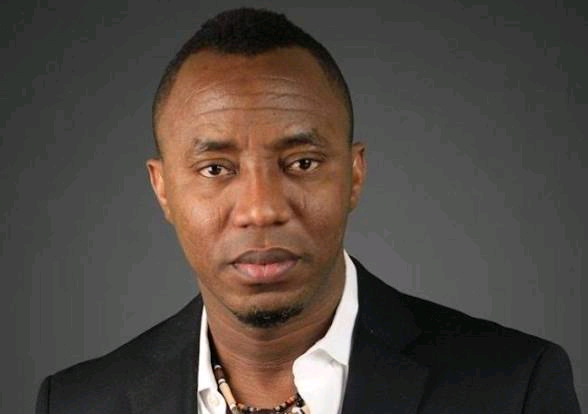
The presidential candidate of the African Action Congress (AAC), Omoyele Sowore, has unveiled his education manifesto, pledging free education for all Nigerians from nursery to tertiary level if elected president.
In the manifesto titled “Building a Modern, Free, Inclusive, and Future-Ready Education System”, Sowore asserted that education is the greatest investment any nation can make for its future, describing it as the foundation of economic prosperity, scientific advancement, democratic participation, national security, and social justice.
“A #Sowore2027 administration will place education at the centre of national development by guaranteeing every Nigerian access to free, high-quality education that nurtures knowledge, creativity, innovation, critical thinking, and productive citizenship,” he said.
He explained that his objective is not merely to prepare students to pass examinations but to develop leaders, scientists, engineers, entrepreneurs, artists, skilled professionals, and responsible citizens capable of transforming Nigeria into one of the world’s most advanced societies.
Sowore emphasised that public education will be free at every level, from early childhood through university, pledging that no Nigerian child or adult will be denied the opportunity to learn because of poverty.
He pointed out that, rather than burdening young people with exploitative student loans, students in public tertiary institutions will receive semester education grants to support their academic and living expenses.
He argued that investing directly in students is an investment in the nation’s future and that no society has ever developed by making education inaccessible to its citizens.
“My administration will restructure Nigeria’s education system to make it simpler, more efficient, and better aligned with global best practices. We will restore a 5-year primary school system followed by five years of uninterrupted secondary education. University education will generally consist of four-year bachelor’s degree programmes, except where internationally recognized professional standards require longer periods of study.
“To expand access to higher education, every Local Government Area will receive federal support to establish a Community College offering two-year associate degree programmes that provide affordable pathways into employment, entrepreneurship, vocational training, and university education,” Sowore pledged.
The presidential candidate expressed the belief that learning begins long before primary school, stating that universal early childhood education will become an integral part of Nigeria’s public education system through well-equipped nursery and pre-primary schools staffed by professionally trained educators.
According to him, every Nigerian child deserves the strongest possible educational foundation, regardless of family income or geographic location.
Sowore also argued that education in the 21st century must no longer be confined to the classroom alone, stressing that his administration will establish an integrated system of physical and virtual learning that gives every learner access to quality education, irrespective of where they live.
He stated that every public educational institution will be connected to high-speed broadband internet and equipped with digital classrooms, virtual laboratories, cloud-based learning platforms, and online libraries.
“Through technology, students in the most remote communities will have access to educational opportunities comparable to those available anywhere in the world. Artificial intelligence and digital technology will become central components of learning rather than privileges available only to a few. AI-assisted personalized learning will help students progress at their own pace while enabling teachers to identify learning gaps and provide targeted support.
“Coding, digital literacy, robotics, artificial intelligence, cybersecurity, data science, and computational thinking will become core elements of the national curriculum beginning in primary school,” he said.
Sowore added that every graduate should leave school equipped with the skills required to succeed in today’s economy while preparing for the technologies of tomorrow. He further stated that community colleges will become pillars of local development throughout Nigeria.
He revealed that every Local Government Area will operate a community college offering associate degrees, technical certifications, adult education, continuing education, entrepreneurship training, digital skills programmes, and workforce development initiatives tailored to the needs of local communities.
Sowore explained that the institutions will expand access to higher education while supporting local economic growth and reducing educational inequality between urban and rural communities.
“Technical and vocational education will enjoy the same status, funding, and public respect as traditional university education,” he said. “Nigeria cannot industrialize without highly skilled technicians, engineers, artisans, and innovators.
“Training programmes will focus on renewable energy, manufacturing, construction, agriculture, aviation, maritime industries, healthcare technologies, software engineering, artificial intelligence, and the creative industries. Our objective is to produce graduates who can create jobs, build industries, and compete successfully in global markets. The long-standing and discriminatory divide between universities and polytechnics will finally end.”
He declared that all polytechnics and monotechnics will be upgraded into universities with specialised mandates in engineering, applied sciences, technology, industrial innovation, entrepreneurship, and research.
Sowore said that the reform will remove artificial barriers to educational advancement while strengthening Nigeria’s capacity for technological development.
He asserted that no education system can rise above the quality of its teachers, adding that his administration will place teachers at the centre of national development by establishing Teachers’ Institutes dedicated to continuous professional development.
He announced that every teacher, regardless of previous qualifications, will undergo periodic advanced training in modern pedagogy, educational technology, digital learning, artificial intelligence, curriculum development, classroom leadership, and contemporary teaching methods.
“Teachers will also receive significantly improved salaries, better housing support, expanded research opportunities, and greater professional recognition,” he stated. “Universities must remain centres of independent thought rather than instruments of political control. Our administration will guarantee genuine academic, financial, and administrative autonomy for universities while maintaining strong systems of public accountability.
“Vice-Chancellors and governing councils will be selected through transparent, democratic, and merit-based processes free from partisan political interference. Academic freedom will be fully protected. Students and lecturers will enjoy the constitutional rights to research, teach, publish, organize, criticize public policy, and participate peacefully in democratic life without intimidation from government or security agencies. Nigerian campuses will once again become centres of intellectual inquiry, innovation, and democratic debate.”
The human rights activist added that independent student unionism will also be fully restored and protected, arguing that students have the democratic right to organise themselves, defend their welfare, advocate for reforms, and participate in institutional governance.
He continued: “No student will face victimization, suspension, expulsion, or prosecution for engaging in legitimate and peaceful activism. Nigeria must become a producer of knowledge rather than merely a consumer of discoveries made elsewhere. Our administration will dramatically increase funding for research and innovation across universities and research institutes. Priority investment will support research in medicine, renewable energy, artificial intelligence, biotechnology, agriculture, climate science, manufacturing, transportation, defence technology, public health, and other fields capable of driving national development.
“Research grants will be awarded transparently on the basis of merit, measurable impact, and relevance to Nigeria’s developmental needs. To support learning and innovation nationwide, we will establish a National Education and Innovation Cloud providing every student and teacher with free access to digital libraries, academic journals, AI learning assistants, virtual laboratories, educational software, research databases, and open educational resources.”
He reiterated that access to knowledge should never depend on geography or personal wealth, pledging that his administration will undertake the largest investment in educational infrastructure in Nigeria’s history.
Sowore also promised that every school will be equipped with modern classrooms, functional laboratories, libraries, renewable electricity, clean water, reliable internet connectivity, sports facilities, creative arts centres, and infrastructure accessible to persons living with disabilities.
He noted that university campuses will feature AI-powered smart hostels with modern security systems, efficient energy management, digital student services, and technology-enabled learning environments.
“No child should attempt to learn while hungry. We will establish a nationwide school nutrition programme providing healthy daily meals for pupils in public primary and secondary schools using food sourced from Nigerian farmers. Student welfare will also include accessible healthcare, counseling services, mental health support, menstrual hygiene programs, and comprehensive wellbeing initiatives designed to improve educational outcomes.
“Our education system will be fully inclusive. Children and adults living with disabilities will receive equal educational opportunities through accessible infrastructure, assistive technologies, Braille and sign-language instruction, specialized teaching personnel, and individualized learning support. Every Nigerian deserves an education regardless of physical or cognitive ability,” he remarked.
He argued that education must develop the whole person, adding that Nigerian schools will place renewed emphasis on sports, music, literature, theatre, visual arts, film, and cultural education. “Modern sports facilities and creative arts centres will become standard features of educational institutions, enabling young Nigerians to develop their talents while strengthening national identity and cultural confidence.”
Sowore pointed out that Nigeria is blessed with one of Africa’s largest communities of scholars and professionals abroad, noting that, through a National Academic Return Programme, his administration will encourage Nigerian academics, scientists, researchers, innovators, and professionals in the diaspora to contribute to national development by offering competitive remuneration, research funding, modern laboratories, housing support, and flexible academic appointments.
He emphasised that their expertise will strengthen teaching, research, mentorship, and international collaboration across Nigerian institutions.
While asserting that learning should continue throughout life, he stated that every Nigerian will have opportunities to acquire new knowledge and skills through flexible online learning platforms, community colleges, vocational education centres, continuing education programmes, and lifelong learning initiatives designed to keep pace with changing technologies and labour markets.
“Education will be recognized and protected as a fundamental constitutional right. Every level of government will have a legal obligation to provide quality education to every Nigerian without discrimination based on income, gender, disability, ethnicity, religion, or place of residence.”
Sowore reaffirmed that his administration’s commitment to education will be matched by its commitment to good governance. “A #Sowore2027 administration will allocate 30 percent of the national budget to education, treating it as a strategic investment rather than a recurring expense. Every allocation will be subject to complete transparency through open budgeting, digital procurement, independent audits, and public reporting.”
He further assured that corruption in education financing will not be tolerated, saying that funding for schools, universities, and research institutions will be distributed transparently through blockchain technology and linked to measurable improvements in learning, research, innovation, and national development.
He equally pledged that his administration will establish a National Research and Innovation Fund to support groundbreaking discoveries and ensure that publicly funded research delivers practical solutions to Nigeria’s economic, technological, environmental, and social challenges.
Sowore described his vision as an education system that is free, inclusive, technology-driven, research-intensive, democratic, globally competitive, and firmly rooted in the belief that every Nigerian deserves the opportunity to develop their full potential.
“Our goal is not simply to produce graduates, but to produce thinkers, innovators, creators, scientists, artists, entrepreneurs, skilled workers, and leaders who will build a prosperous, just, technologically advanced, and truly liberated Nigeria,” he added.