
Obi Warns Against ‘Consumption Borrowing,’ Says Nigeria’s Debt Strategy Undermines Economic Growth

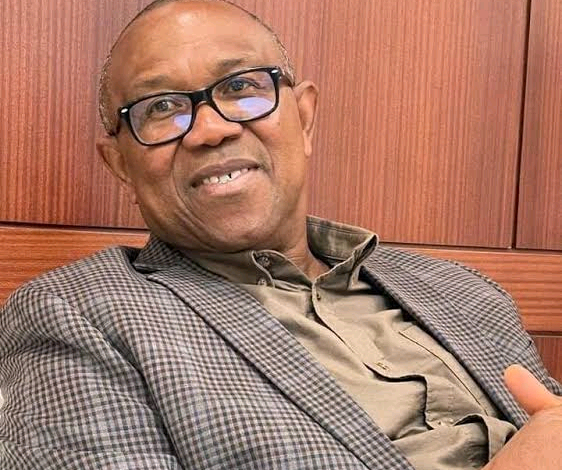
Presidential aspirant under the African Democratic Congress (ADC), Peter Obi, has warned against what he described as “consumption borrowing,” saying Nigeria’s current debt strategy undermines economic growth.
Obi noted that borrowing becomes harmful when it is used for consumption rather than productive investment, emphasising that such practices weaken national development.
“Borrowing for consumption slowly eats away at the health, reputation, and autonomy of a nation. One of the major “leprosy” afflicting Nigeria today is not just debt, but debt without productivity. Debt that is not tied to measurable economic value. Debt that does not translate into jobs, growth, or improved living standards for the Nigerian people,” he said.
Obi stated that no serious economy borrows recklessly, stressing that nations that borrow do so with discipline, clear purpose, and a defined repayment plan anchored on productive investment.
He cited the Fiscal Responsibility Act 2007, saying: “Any government in the Federation or its agencies and corporations desirous of borrowing shall, specify the purpose for which the borrowing is intended and present a cost-benefit analysis, detailing the economic and social benefits of the purpose to which the intended borrowing is to be applied.”
According to him, such analysis should clearly show how borrowed funds will be applied, how they will contribute to economic growth, and how they will improve the welfare of citizens in measurable terms.
“Most of the borrowings by this government do not satisfy the requirements of law or the requirements of economic common sense. The humongous borrowing so far does not show how the projects for the loans enhance the productive capacity of the nation and the welfare of Nigerian citizens,” he asserted.
Obi argued that the loans are also dangerous because they place a heavy burden on the country’s future economic capacity, noting that Nigeria currently has one of the highest debt service ratios in the world.
He reiterated that what matters most is not only the debt-to-GDP ratio but also the debt servicing ratio, as the latter determines the government’s ability to fund critical sectors that drive human development and economic growth.
“If the money is wrongly spent as we do in Nigeria currently, it becomes double jeopardy because you are using current revenue to service debts that did not add to revenue or improve capacity for more production in the future,” Obi added.
He further argued that a responsible government does not merely defend borrowing, but clearly explains and justifies it, ensuring that borrowed funds are used in ways that benefit the people.





I am actually grateful to the holder of this web site who
has shared this impressive paragraph at at this place.
Also visit my site; b52 club